



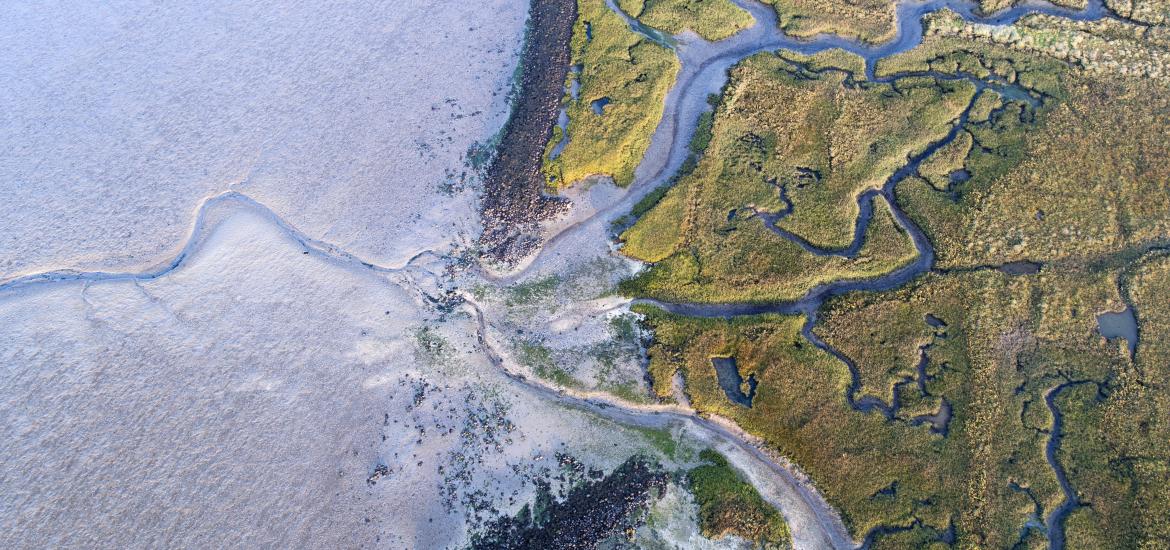
SED’UP aims to develop innovative solutions for marine sediment reuse
CONTEXT
Each year, millions of tonnes of marine sediments are dredged from ports and waterways across the Atlantic Area to maintain safe navigation and economic activity. Traditionally, these materials are treated as waste and largely disposed of at sea, these sediments are now at the centre of significant environmental, regulatory and territorial challenges.
OUR AIM
SED’UP proposes a different path: transforming dredged marine sediments into local and valuable resources through circular economy strategies. By combining research and innovation, market-driven solutions, and pilot actions, the project promotes the development of sustainable value chains and practical alternatives to sea disposal.
SED'UP APPROACH
Through a transnational and multidisciplinary approach, SED’UP connects ports, local authorities, businesses, researchers and communities to co-create solutions that are environmentally responsible, economically viable and socially accepted.
The project supports the emergence of circular economy loops, particularly in construction, landscaping and urban development, helping territories turn dredged sediments into locally available resources and a strategic pillar of territorial development.
With pilot actions in Cork Harbour (Ireland) and Morlaix (France), SED’UP moves from experimentation to large-scale structuring, delivering concrete, replicable solutions for sustainable sediment management across Atlantic coastal regions.
Pillar 1
Analyse
Building knowledge, strategy and shared foundations
This first step establishes the scientific, regulatory and territorial foundations for sediment reuse. It focuses on knowledge capitalisation, stakeholder mapping, policy analysis and the creation of a shared knowledge base. It builds the conditions for safe, accepted and viable reuse strategies.
(Oct 2025 – Jun 2026)
Pillar 2
Innovate
From science to solutions: Development of science-based and market-based solutions
This phase develops science-based, market-driven and policy-oriented solutions. It combines laboratory research, innovation calls, market engagement and decision-support tools to identify viable reuse pathways for marine sediments.
(Mar 2026 – Feb 2027)
Pillar 3
Pilot
Real-world testing in Cork and Morlaix
Innovative solutions are tested and validated through real-world pilot actions in Ireland and France, linking experimentation with large-scale territorial structuration.
(Mar 2027 – Mar 2028)