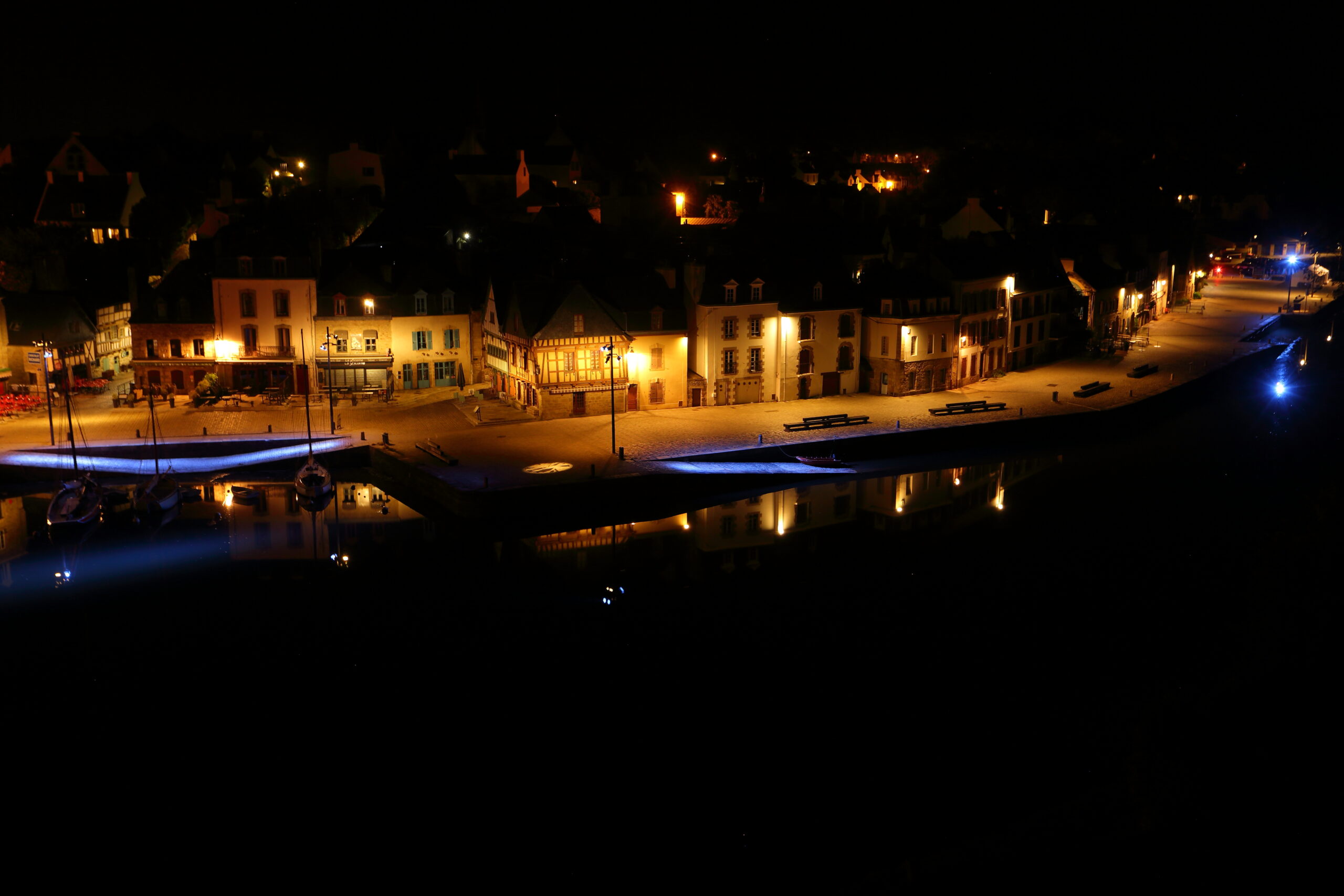
Noz Bihan
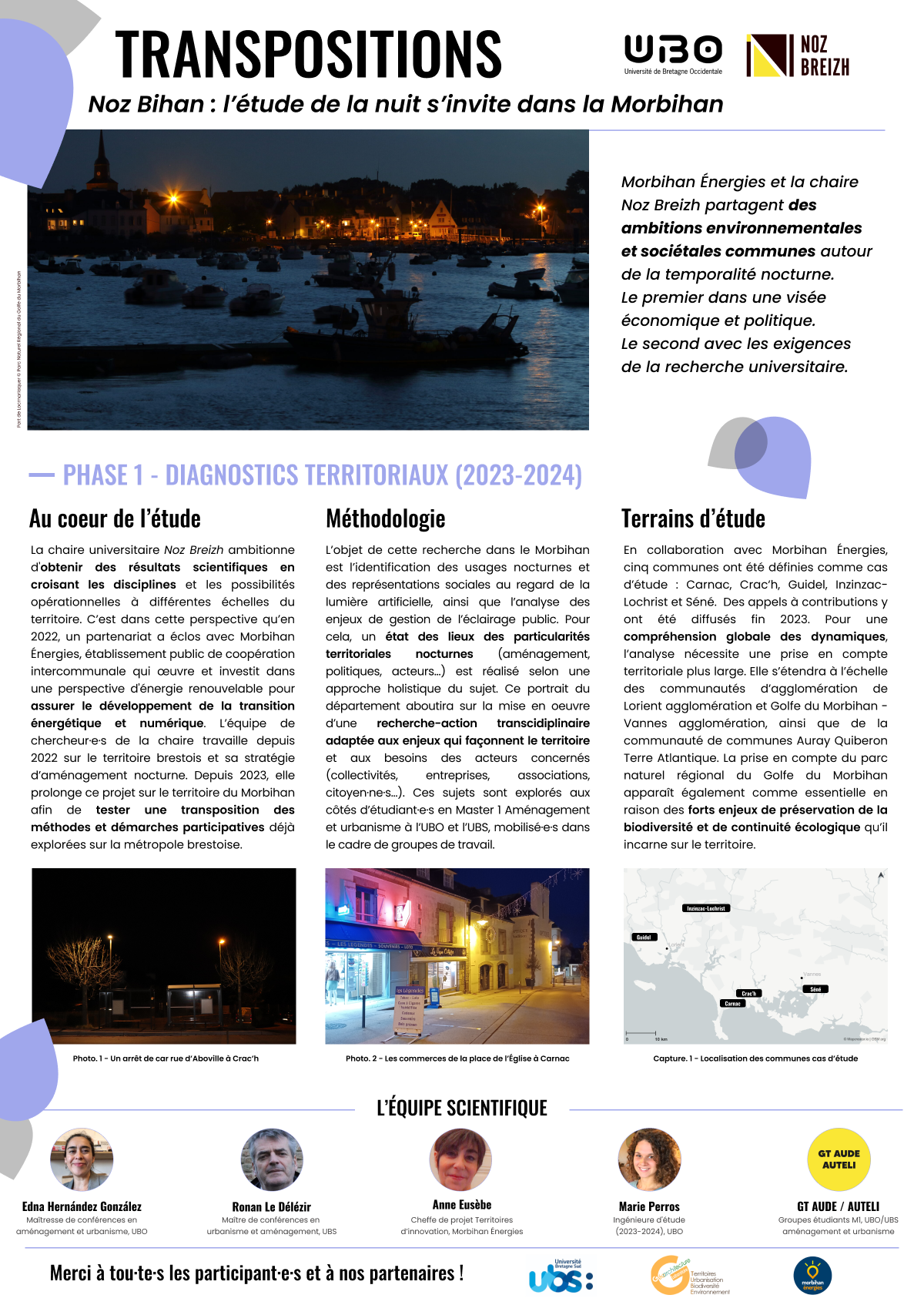
Morbihan Énergies and the Noz Breizh chair share the same environmental and societal ambitions around nocturnal temporality, the former with an economic and political focus, the latter with the requirements of university research.
The Noz Breizh chair aims to achieve scientific results by crossing disciplines and operational possibilities at different territorial scales.
With this in mind, a partnership has been signed with Morbihan Énergies, an Établissement public de coopération intercommunale, which works and invests in renewable energy to ensure the development of the energy and digital transition.
Since 2022, the chair's team of researchers has been studying Brest's territory and its night-time development strategy, using a holistic, multidisciplinary approach.
In 2023, we extend our project to the Morbihan area so as to test a transposition of the methods and participatory approaches currently explored in Brest metropolitan area.
To that extent, a first step consists in an inventory of the specific territorial characteristics (regional planning, local policies, players, etc.) related to nightlife and night-time planning in Morbihan.
The aim of this research is to identify the issues involved in managing public lighting at local authority level, and to understand the practices, representations and feelings of residents and users of public spaces at night. These topics are explored alongside students involved in AUDE/AUTELI workshops between October 2023 and April 2024.
These portraits of communes will enable us to move towards the implementation of research-action adapted to the issues shaping the territory and the needs of the players involved (local authorities, businesses, associations, citizens...).
In 2024, the qualitative survey continues with semi-structured interviews and a questionnaire. Participatory events will also be organized for consultation and to raise exchange and awareness. The results of the survey will be used to identify ideas for future night-time planning.
In collaboration with Morbihan Énergies, five municipalities were defined as case studies: Carnac, Crac'h, Guidel, Inzinzac-Lochrist and Séné. But for an overall understanding of the dynamics, the analysis requires a broader territorial consideration. Hence it will cover the Lorient agglomeration, Golfe du Morbihan - Vannes agglomeration and the Auray Quiberon Terre Atlantique community of communes.
Taking into account the presence of the Golfe du Morbihan Regional Nature Park is also crucial, as it embodies a strong commitment to preserving biodiversity and ecological continuity.
On the one hand, it supports local authorities in the implementation of dark ecological networks to reduce the effects of light pollution. On the other hand, actions are designed to inform and raise awareness among the general public of the issues surrounding artificial light.
Results and outlook
Based on the assessment conducted in four municipalities—combining observations, interviews, and methodological experiments (notably through photo-elicitation interviews)—our initial findings reveal that residents have a generally positive relationship with the night, although variations exist depending on individual profiles and contexts.
However, these perceptions contrast with limited nighttime activities, which are mainly confined to essential trips or indoor activities. This discrepancy can partly be attributed to inadequate urban planning, a lackluster nightlife scene, and the perception of nighttime as a period of inactivity.
Besides, conflicting expectations are revealed among residents in regards to street lighting, ranging from a desire to preserve the nighttime environment to specific safety needs related to urban planning. These findings underscore the importance of a localized approach to address light pollution, one that takes into account actual uses and varying patterns of activity over time.
Ultimately, in these less urbanized areas, issues lie less in a “fear of night” than in the way night is socially and spatially organized. This initial research opens up interesting avenues for rethinking the territorialization of local policies related to night life.
Building on the work carried out by Lenaïg Salliou, now a PhD student, a LEADER grant is expanding Noz Bihan study to other municipalities in Pays d’Auray (2025–2026) under the supervision of Ronan Le Delezir, MCF at Université Bretagne Sud.

Our publications regarding Noz Bihan
Posters
Citation : Chaire Noz Breizh (2024), Noz Bihan : l’étude de la nuit s’invite dans la Morbihan, présenté dans le cadre du colloque Smart Noz, Brest, 18-20 mars 2024
Scientific publications
Forthcoming
Assessments
- Preliminary assessment Noz Bihan - Guidel, 2024
- Preliminary assessment Noz Bihan - Inzinzac-Lochrist, 2024
Conference papers and panel discussions
- Saliou L., Eusèbe A., Le Délézir R., Noz Bihan, la nuit s’invite dans le Morbihan : suites et perspectives, Colloque International Noz Breizh, Avril 2025, Brest, France.
- Bardou M., Eusèbe A., Le Délézir R., Concilier aménagement du territoire nocturne et réduction de la pollution lumineuse dans le Golfe du Morbihan, Colloque International Smart Noz, Mars 2024, Brest, France.
- Howe A., Lucas A., Macé M., Muller T., Zidane E., Poirier L., La balade nocturne comme outil de sensibilisation et espace de discussion : de la réflexion à la réalisation, Colloque International Smart Noz, Mars 2024, Brest, France.
Contributions
Our meetings
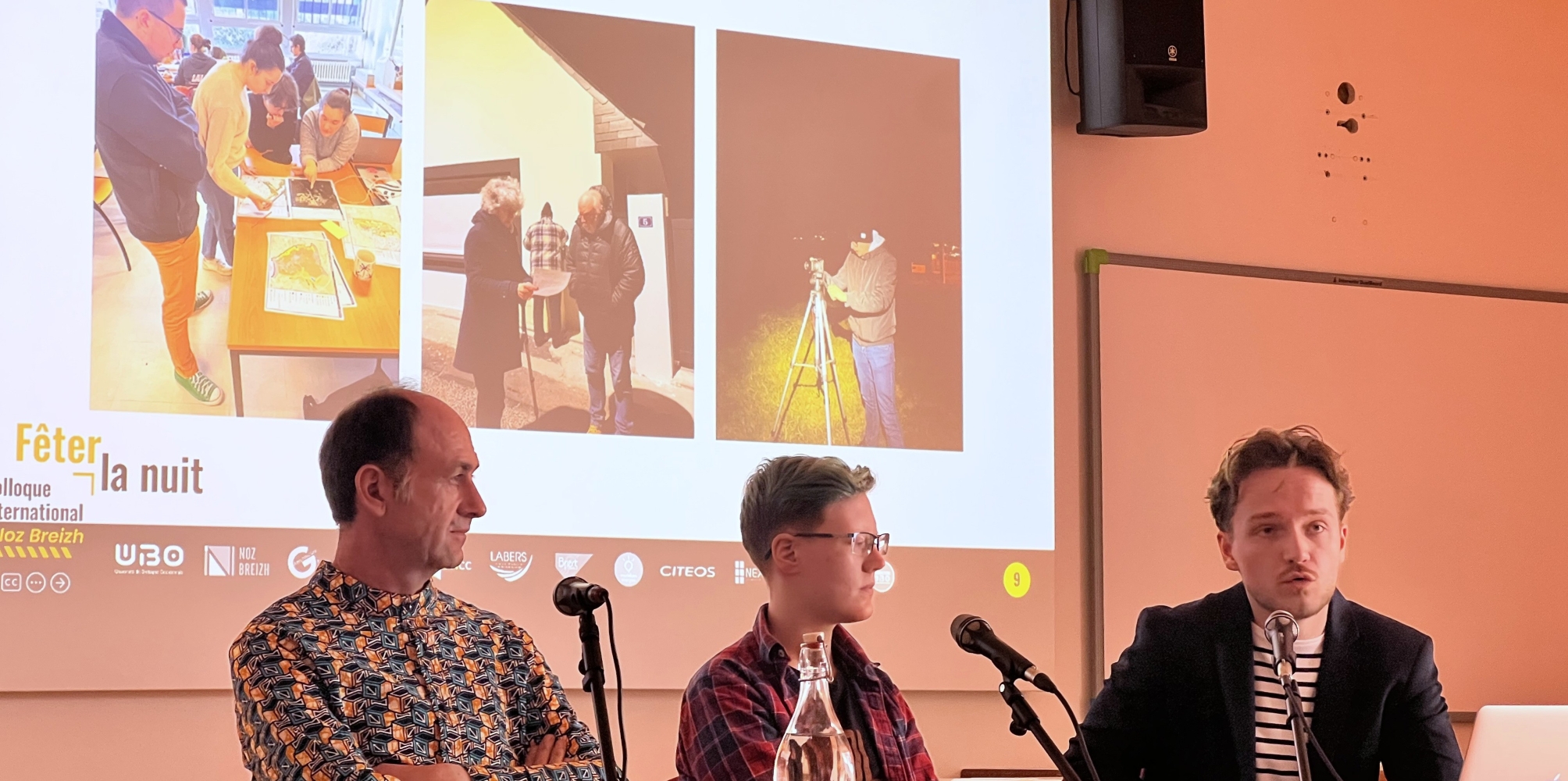
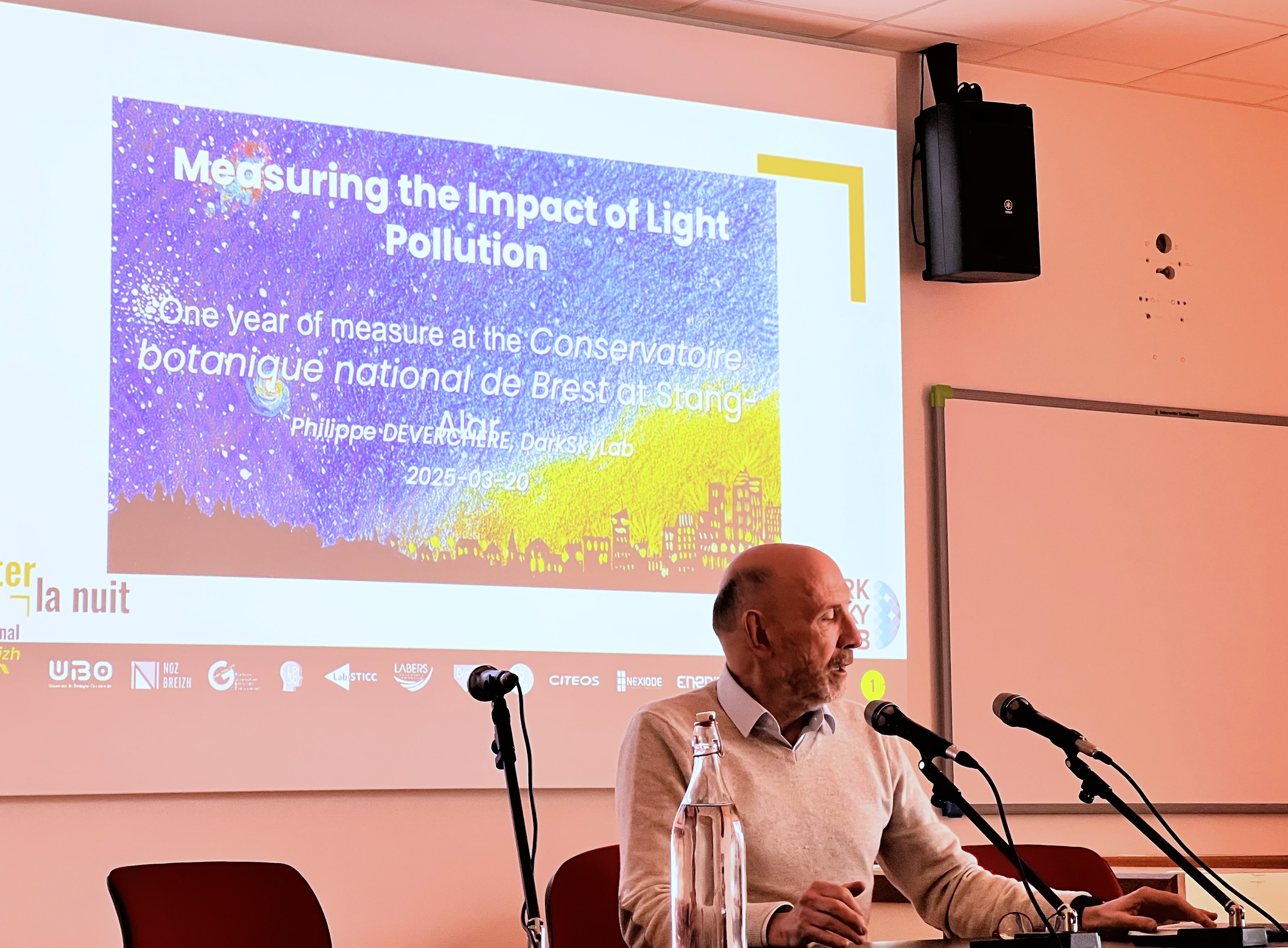
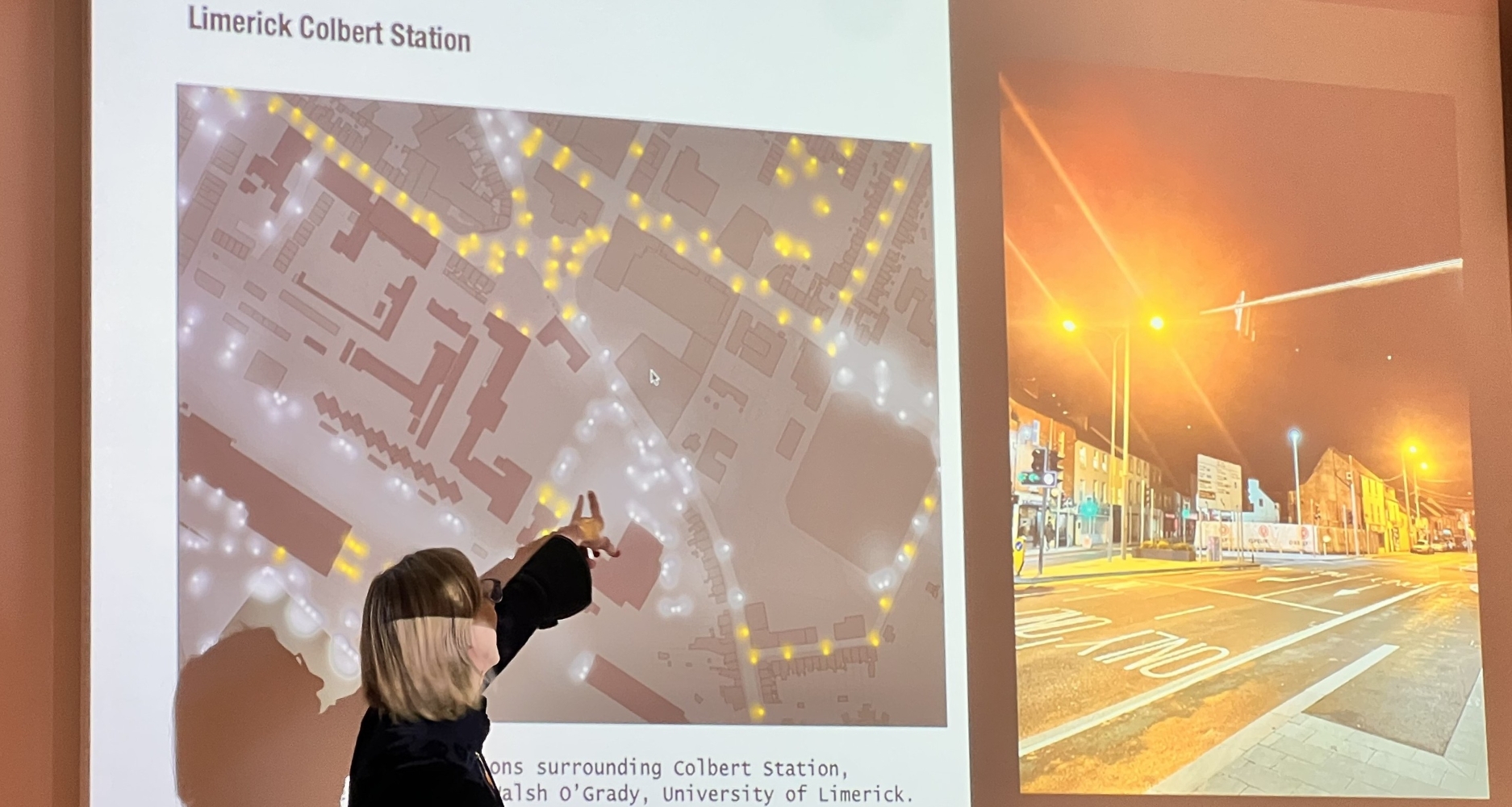
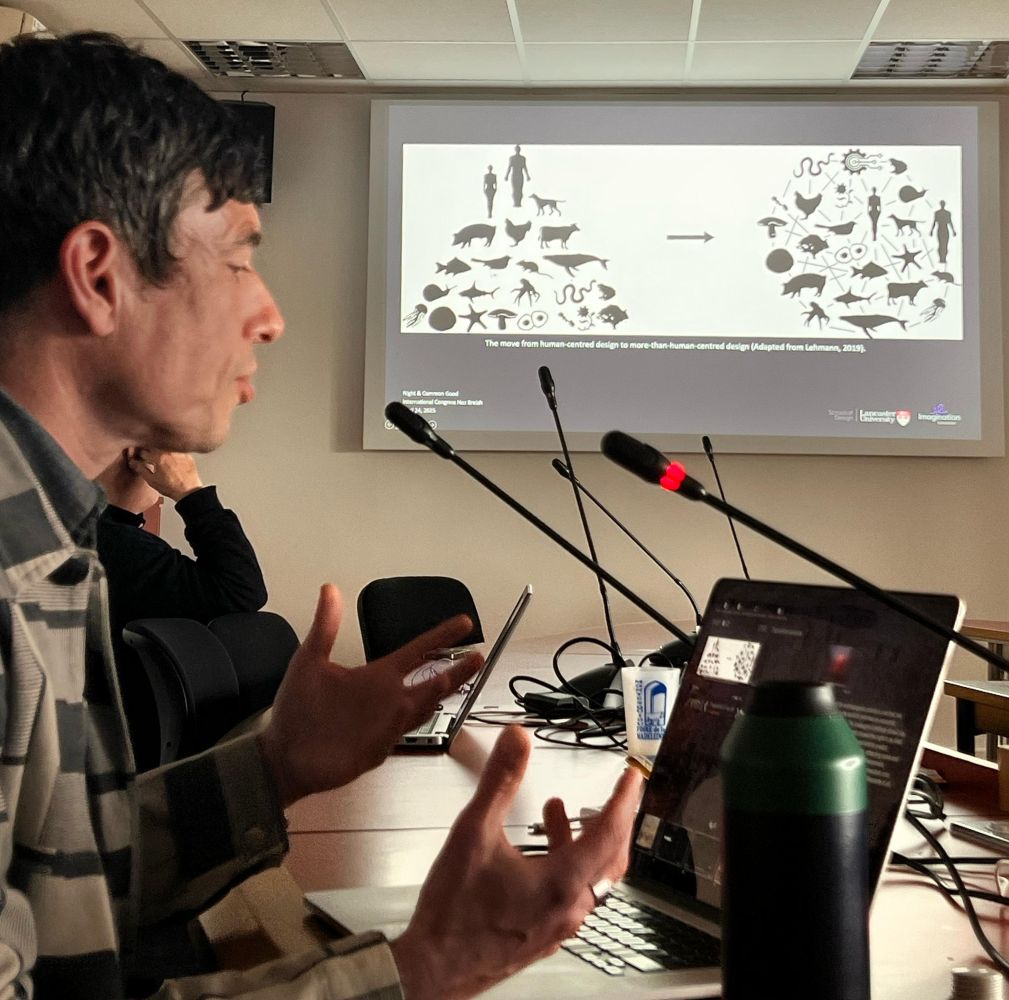
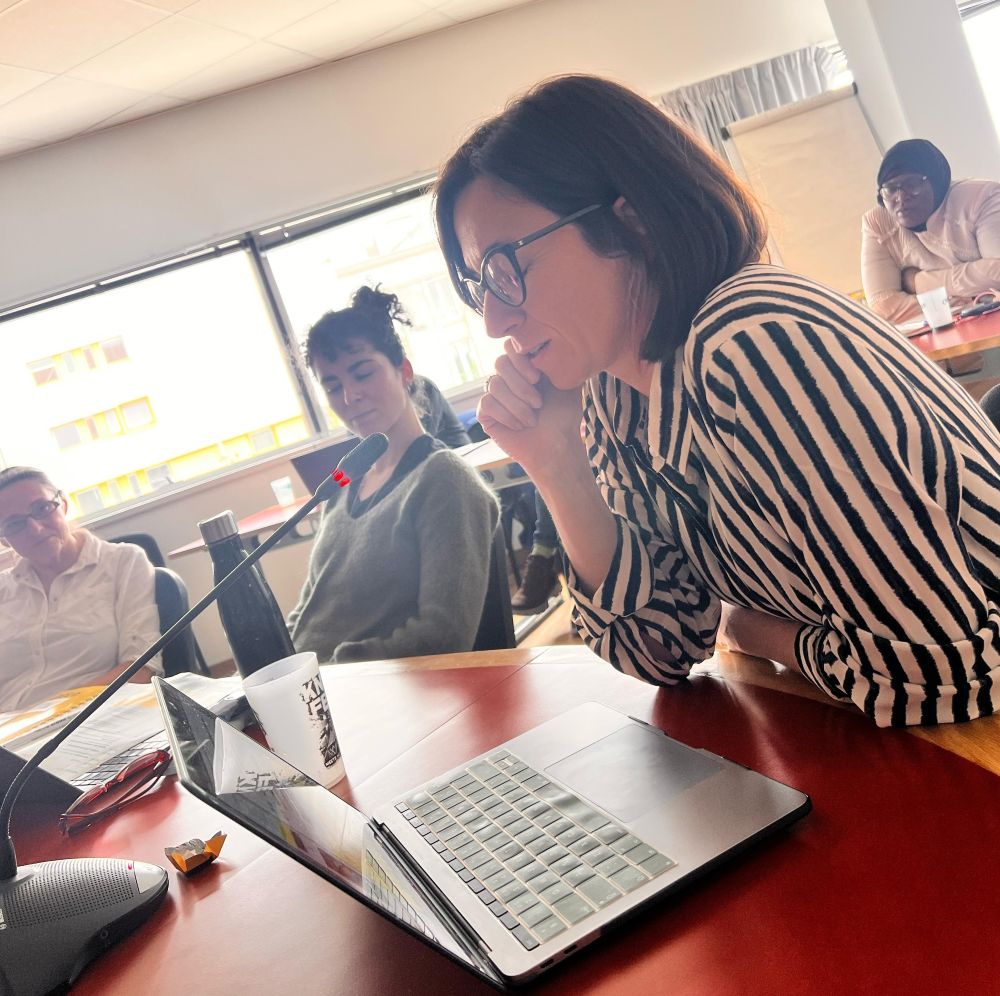
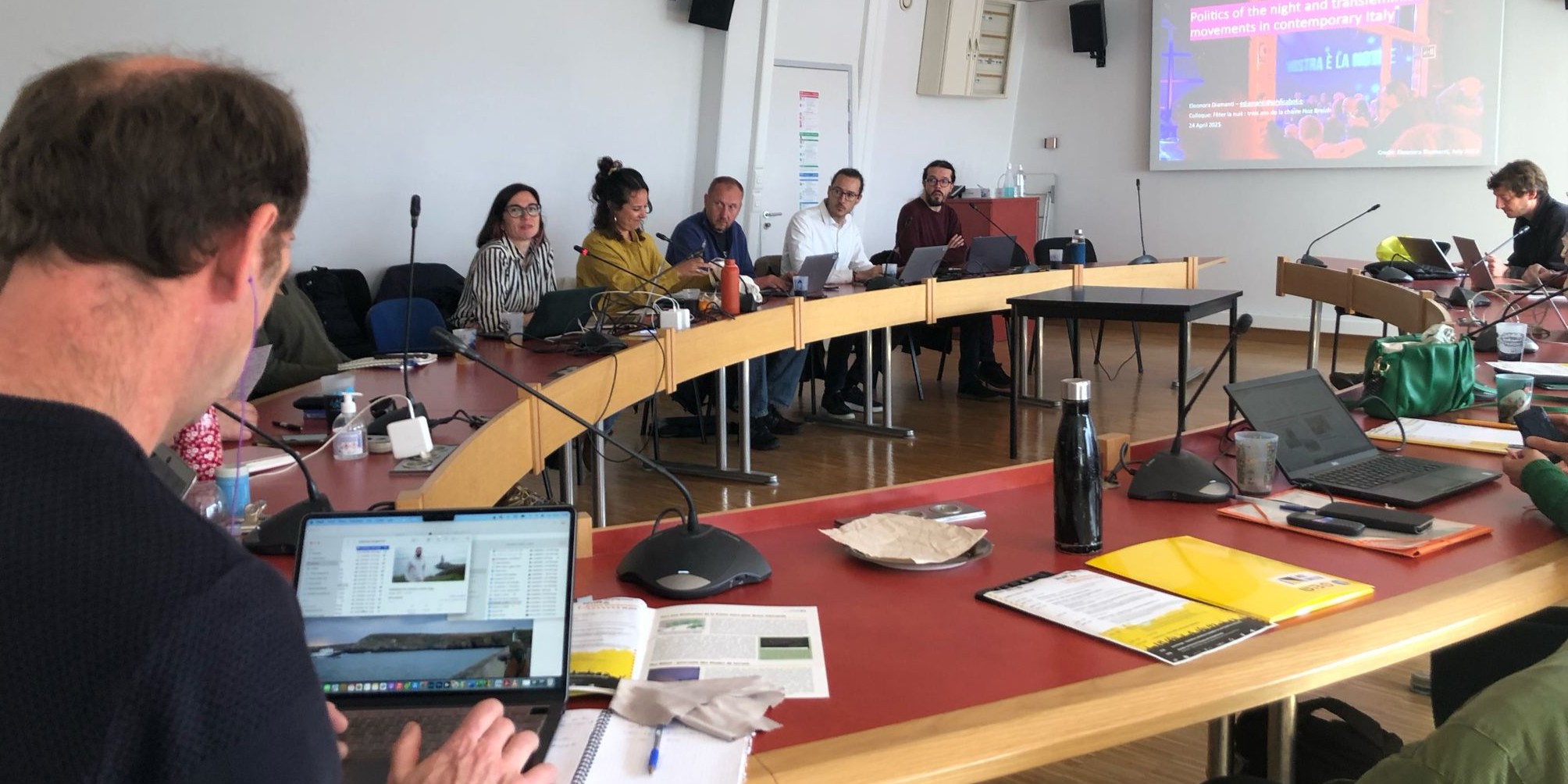
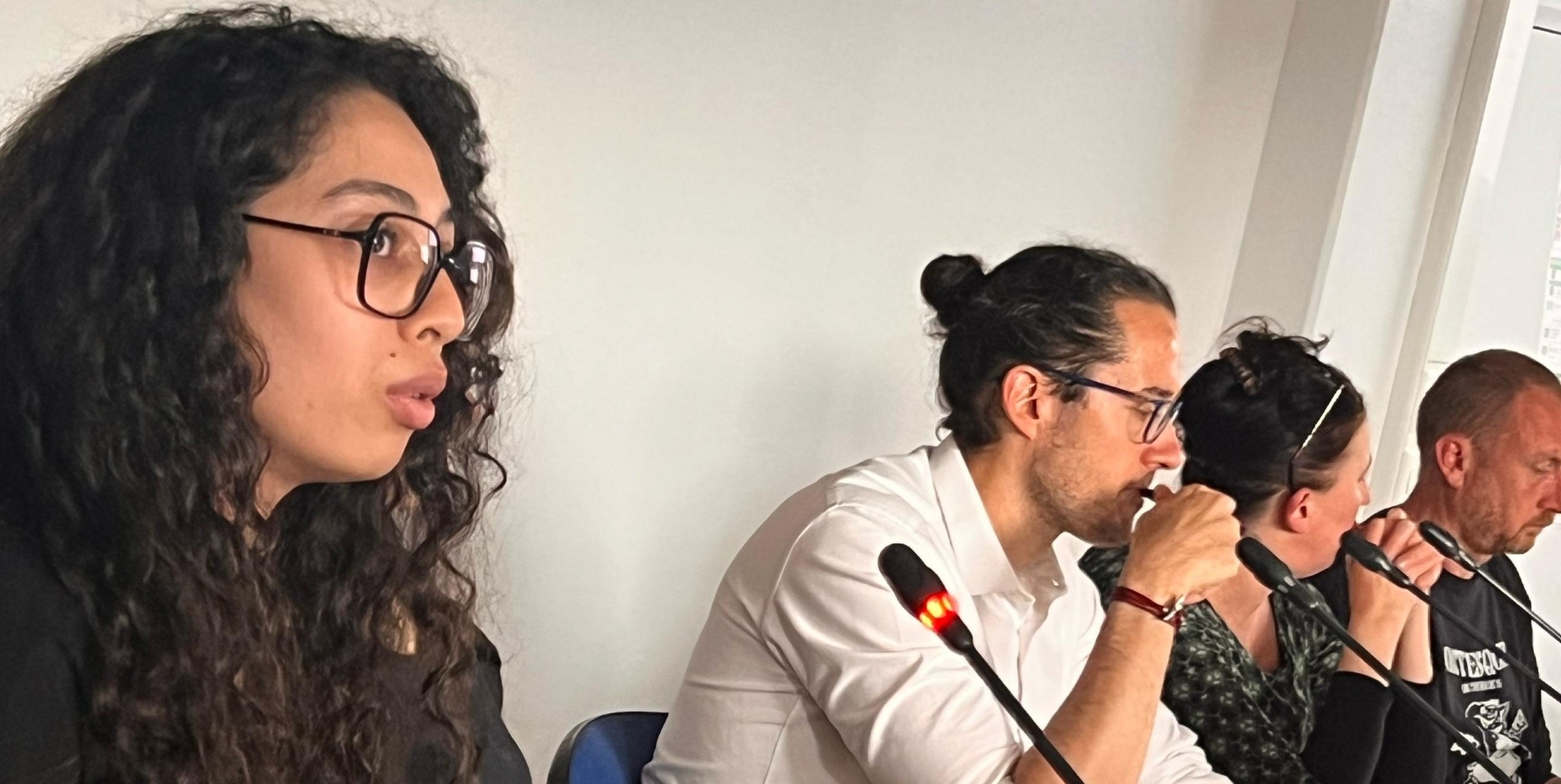
Au printemps 2025, l’UBO a accueilli Fêter la nuit, un colloque international destiné à clôturer trois ans de la vie de la chaire Noz Breizh. Le colloque a réuni ~60 intervenant·e·s afin d’explorer les dimensions et temporalités multiples que recouvrent les pratiques nocturnes urbaines dans le cadre de trois journées thématiques :
- 20 mars - Nuit & Société
- 24 avril - Nuit & Bien commun
- 15 mai - Nuit & Politique
Outre les conférences, tables rondes, posters, démonstrations et animations au programme, les échanges scientifiques ont été enrichis par diverses propositions traitant de la nuit en hybridant les formes créatives et participatives.
Merci aux organisateurs et aux participants !
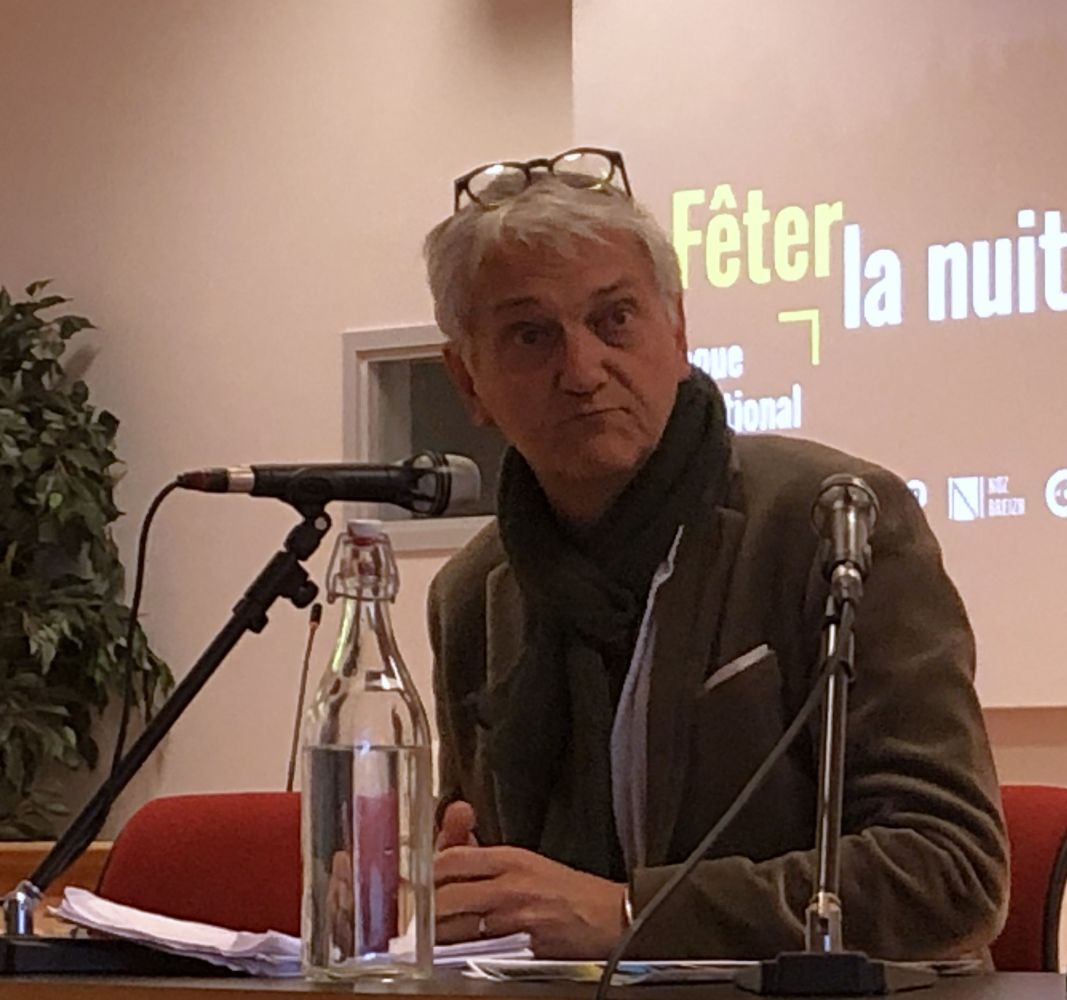
En ouverture du colloque
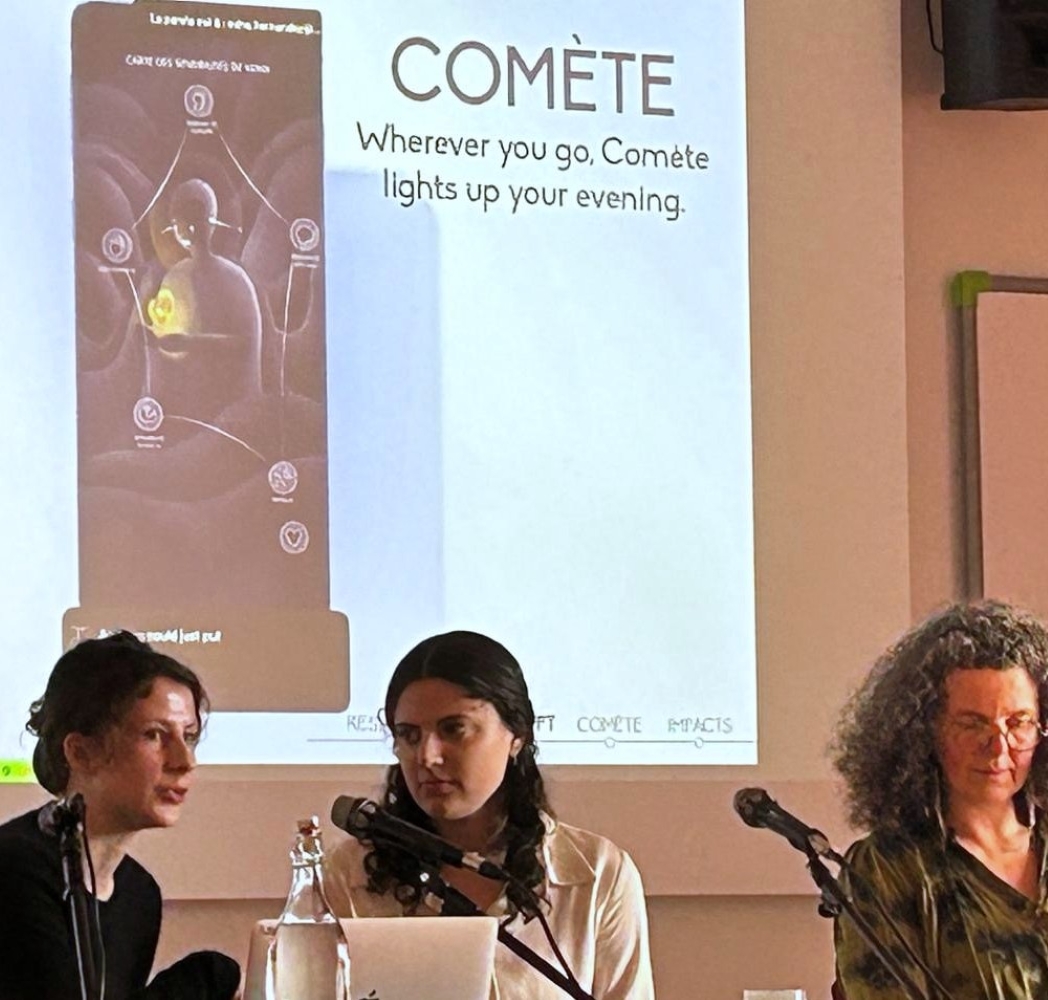
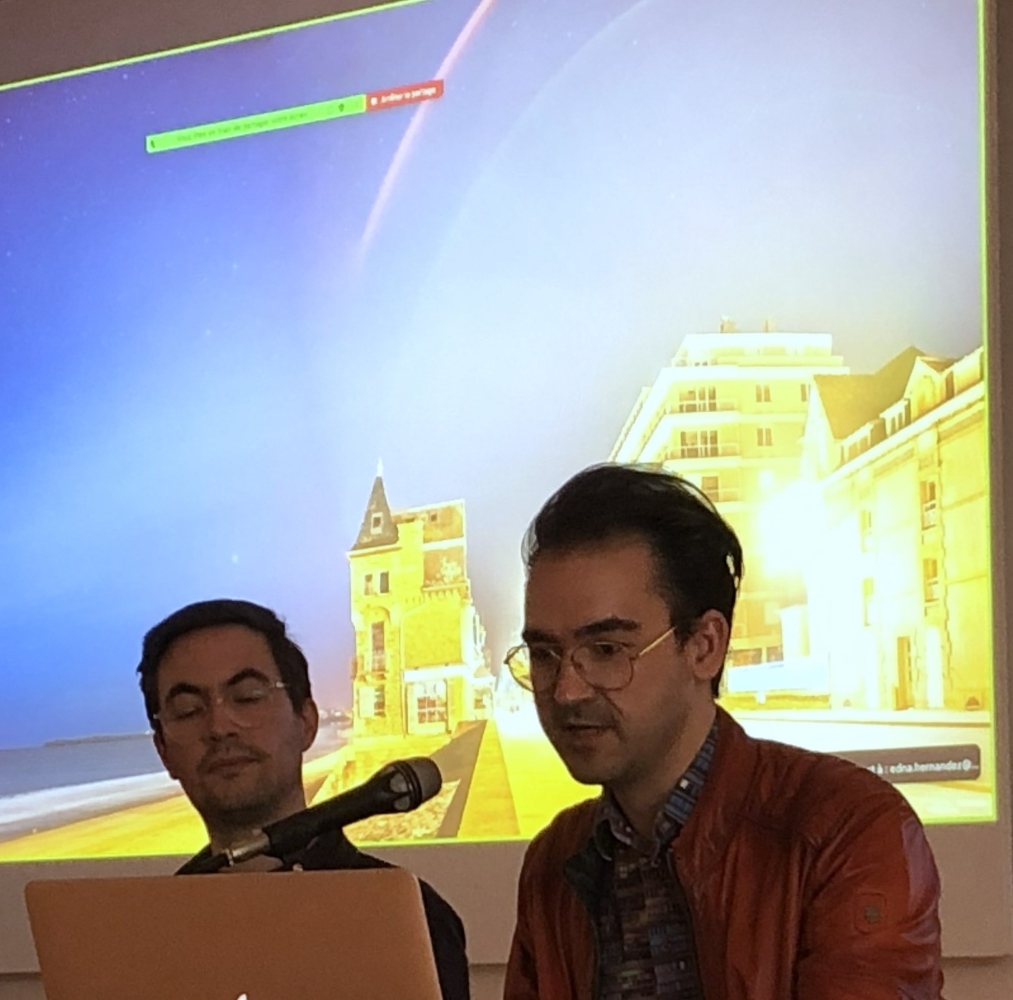
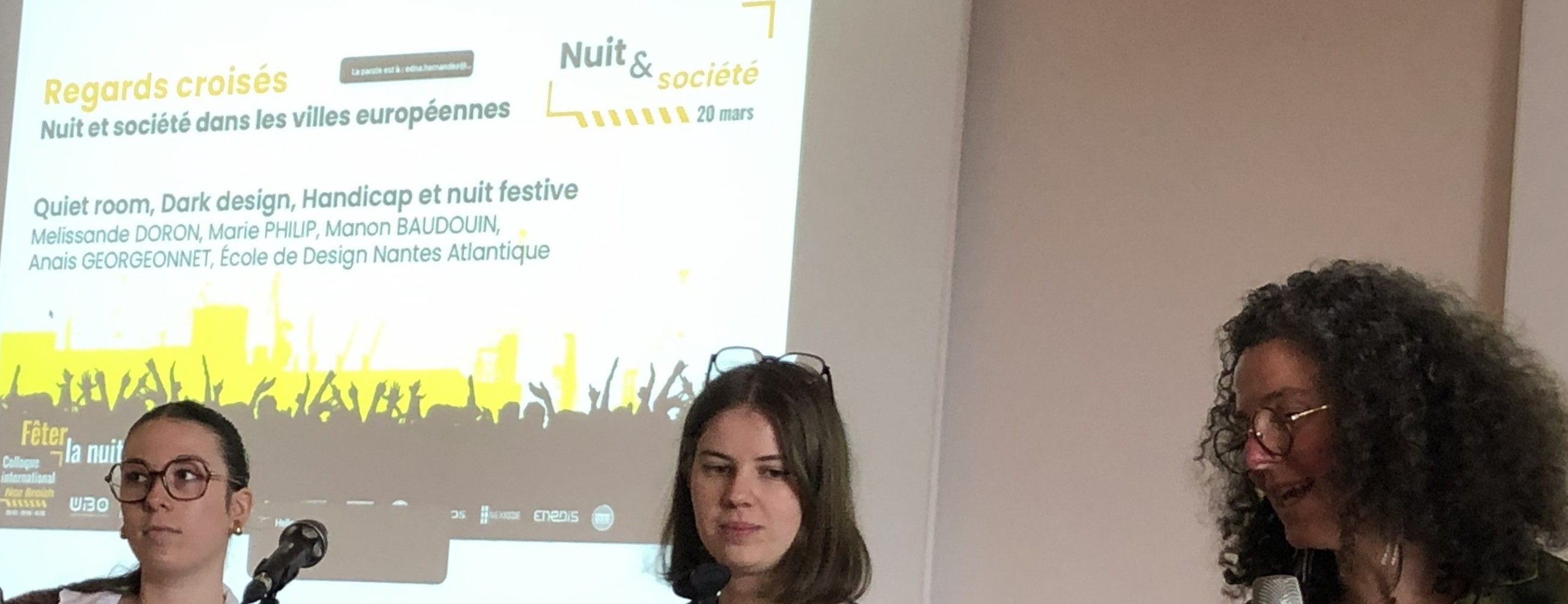
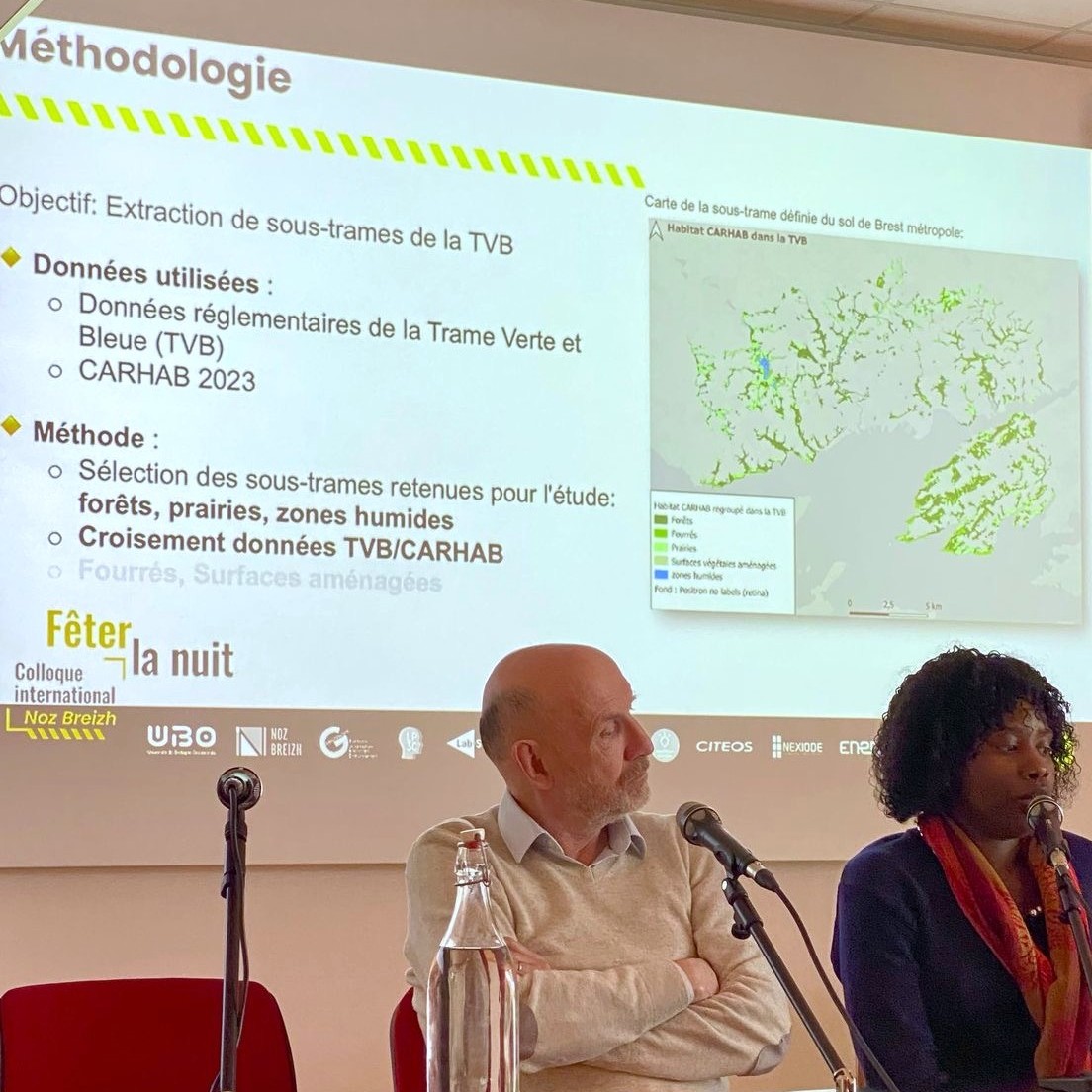
L’équipe du projet Noz Bihan a eu le plaisir de participer à une table ronde intitulée Partageons la nuit : les enjeux de la pollution lumineuse, organisée à Carnac par la médiathèque Terraqué, l’occasion de présenter les études menées dans le département du Morbihan.

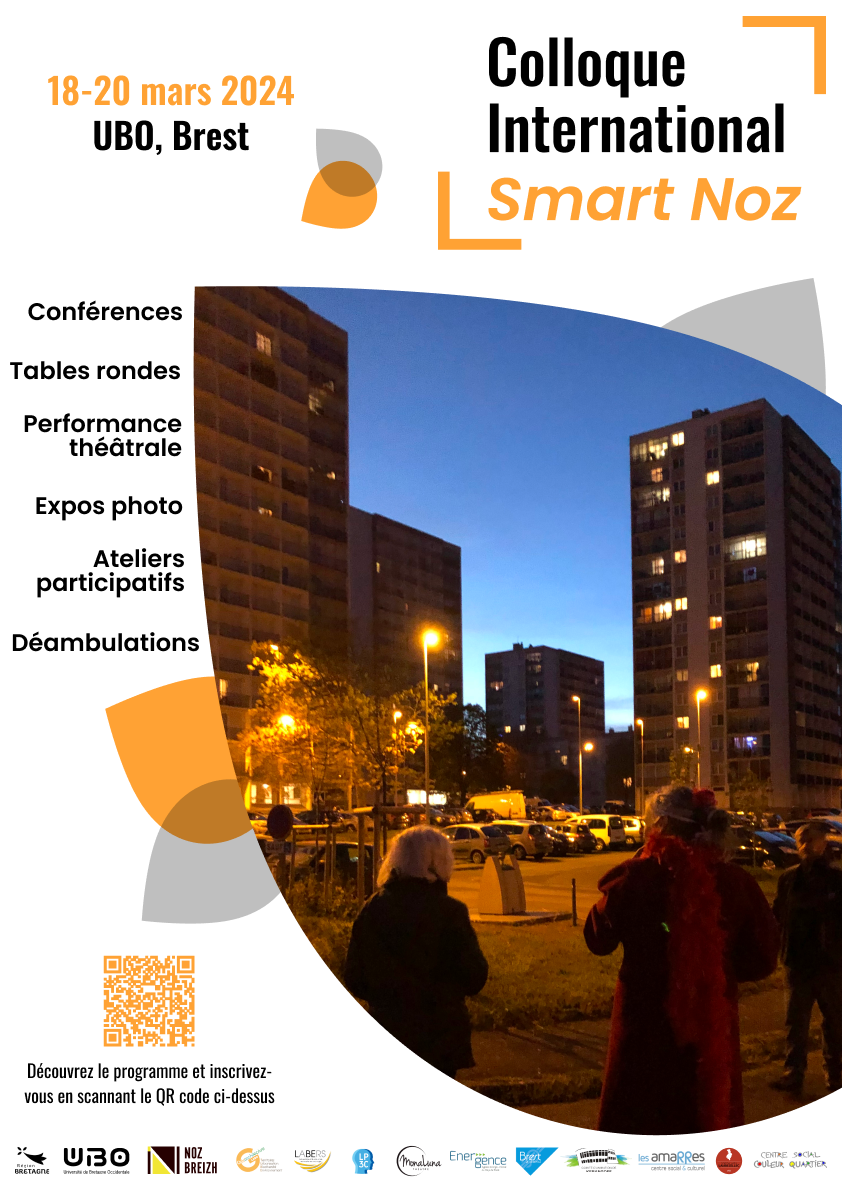
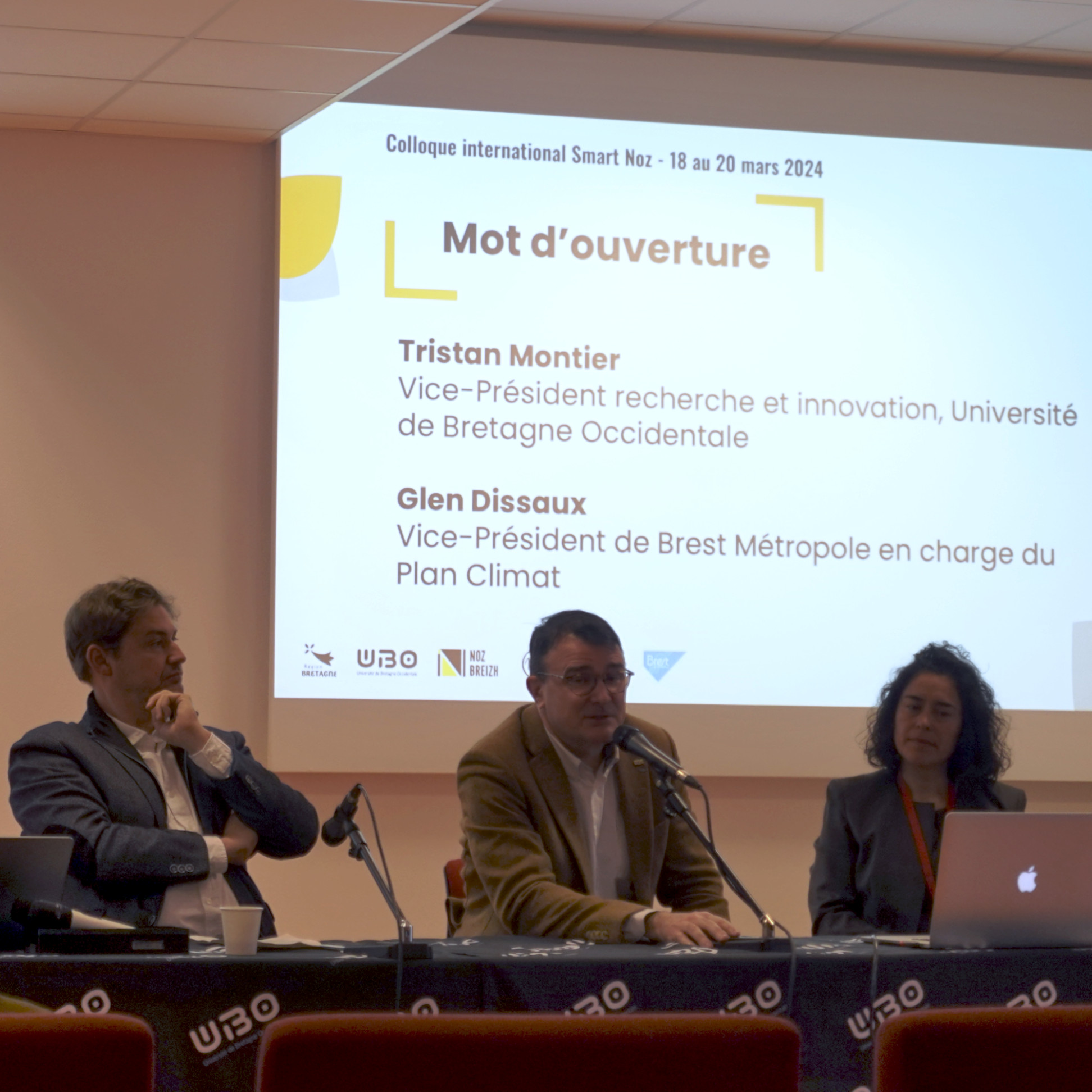
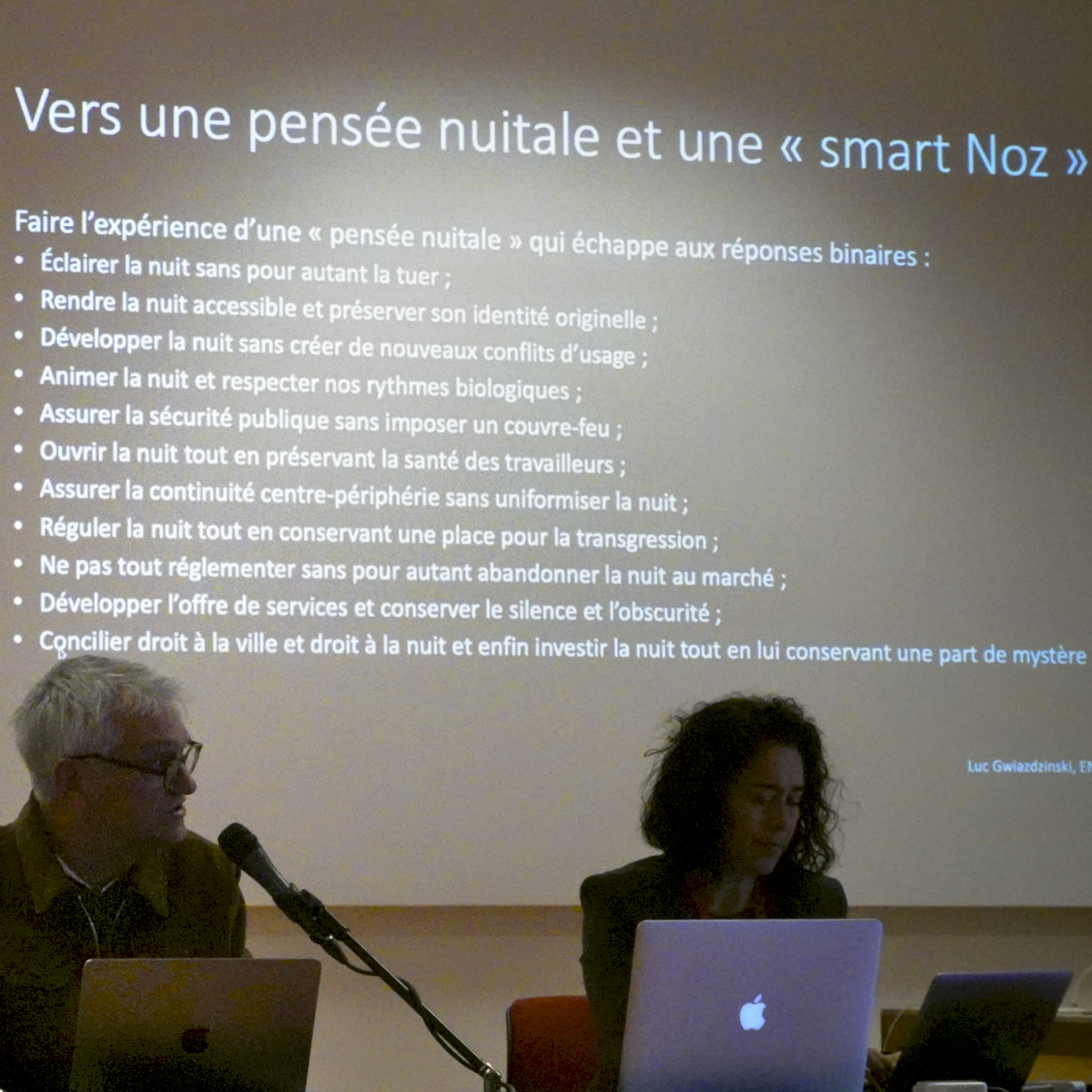
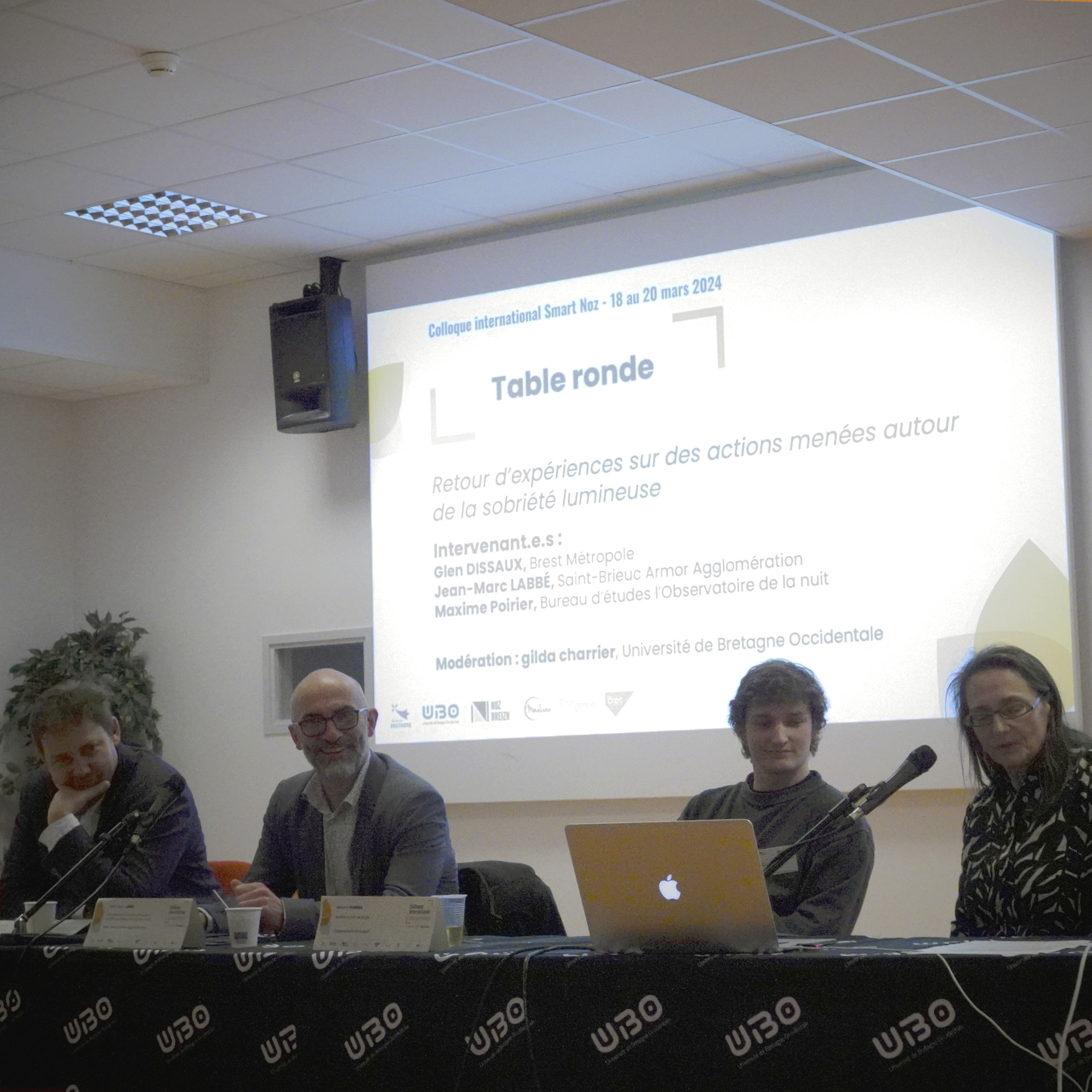
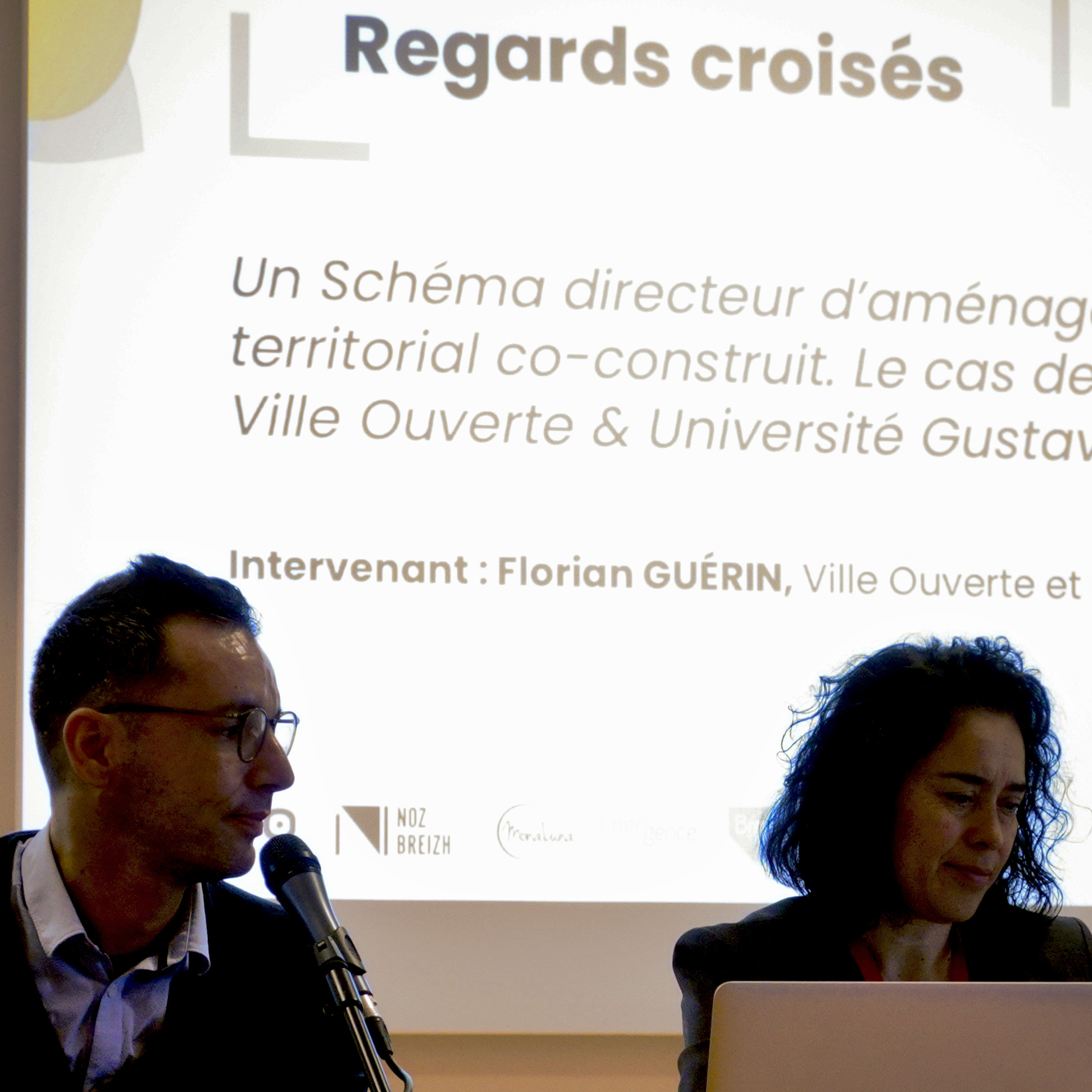
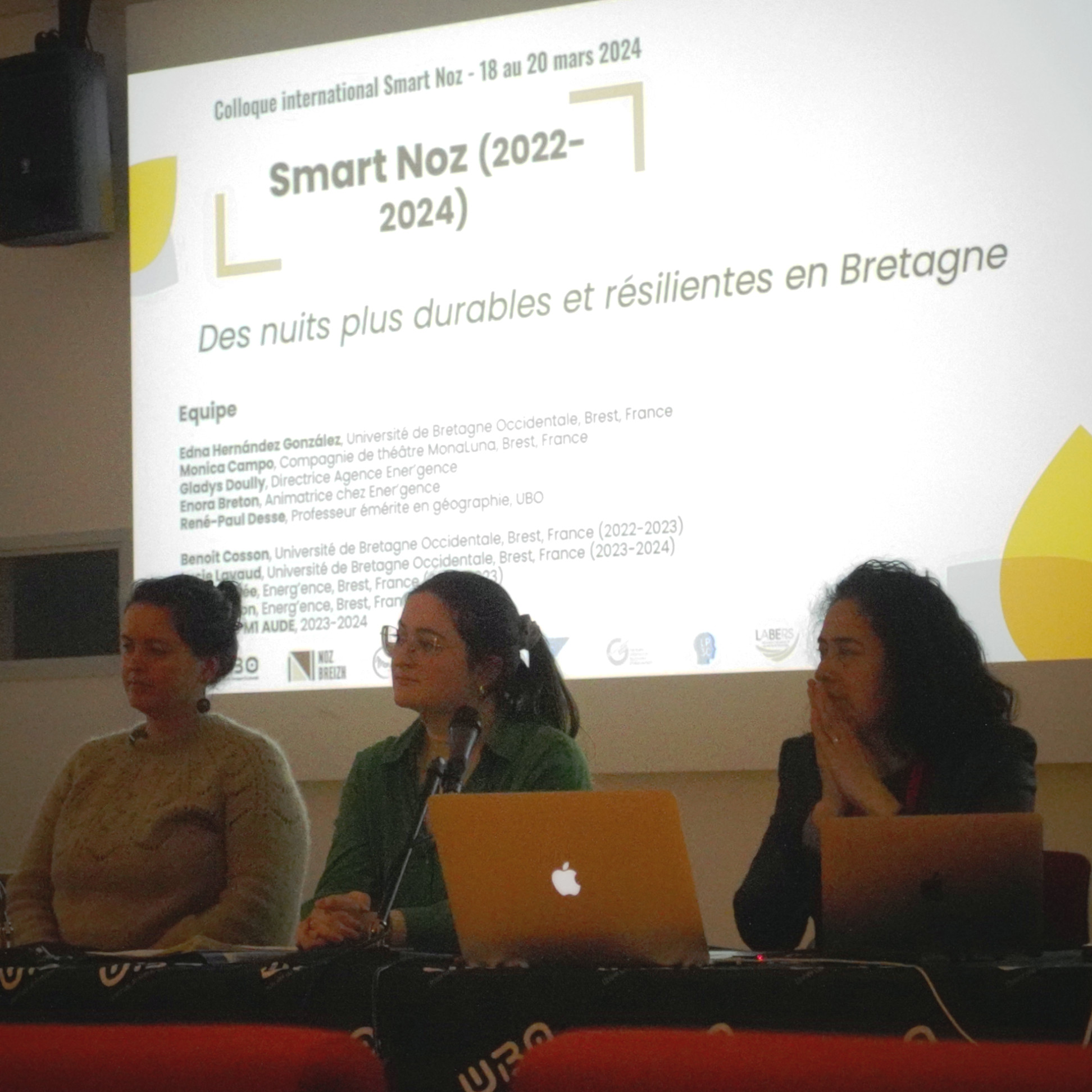
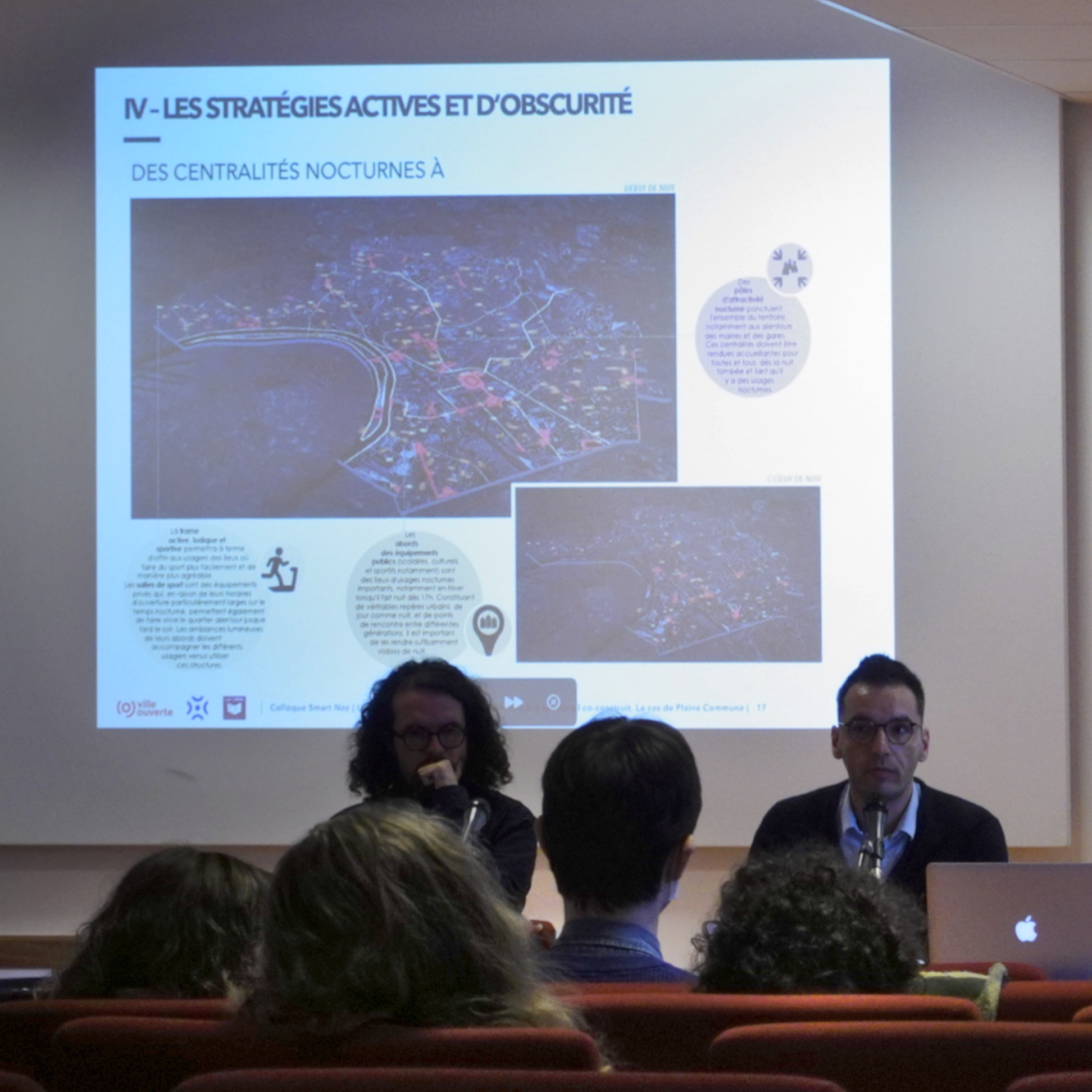
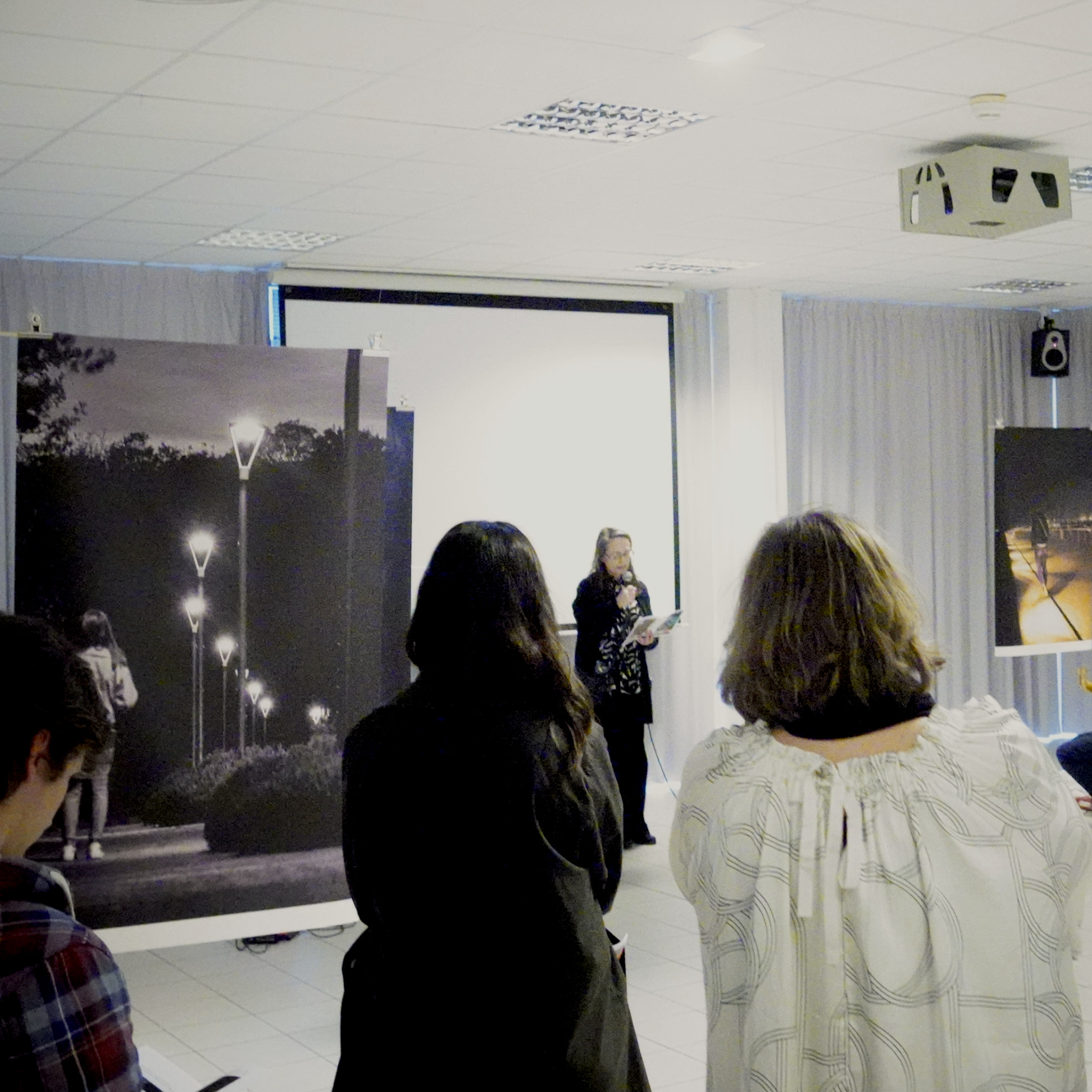
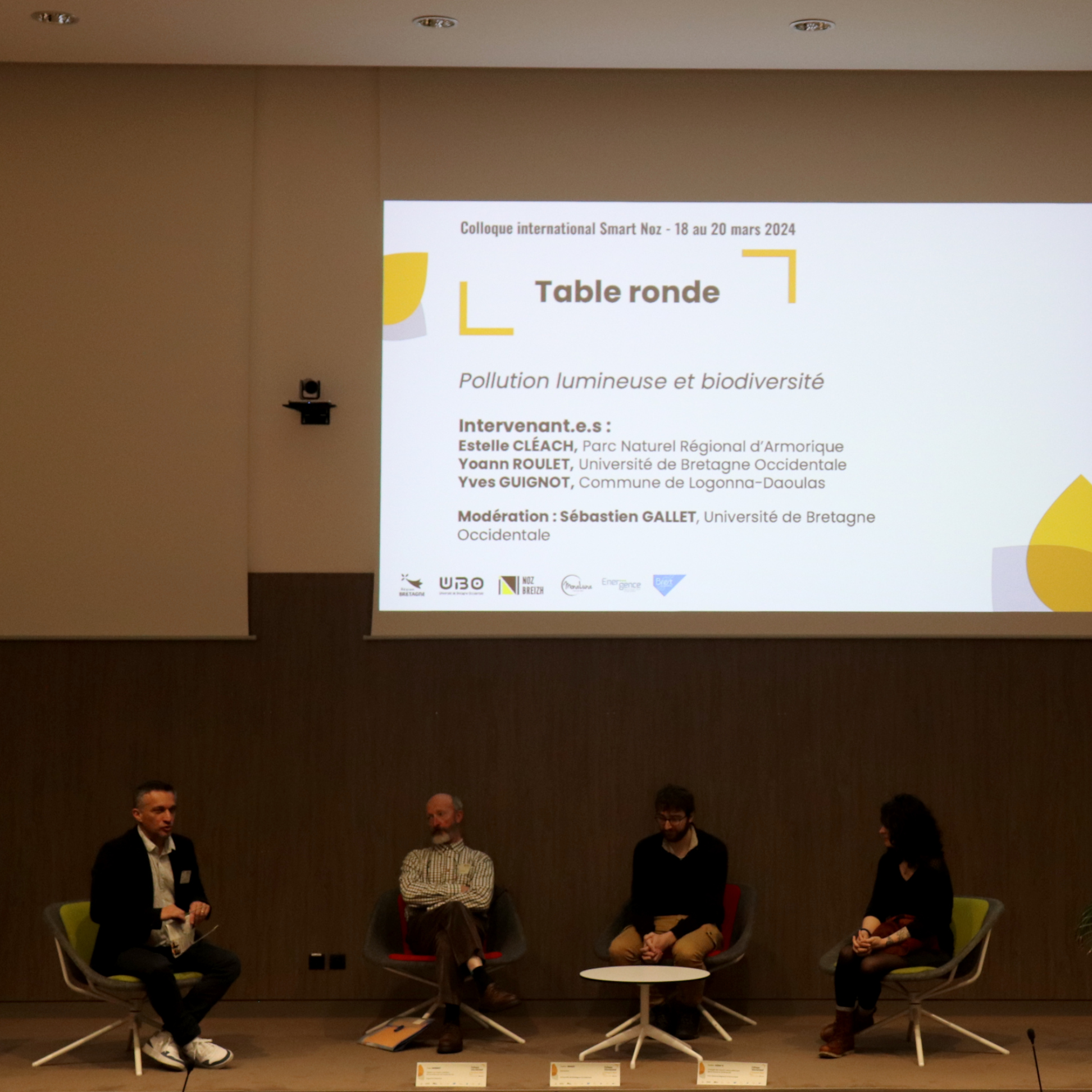
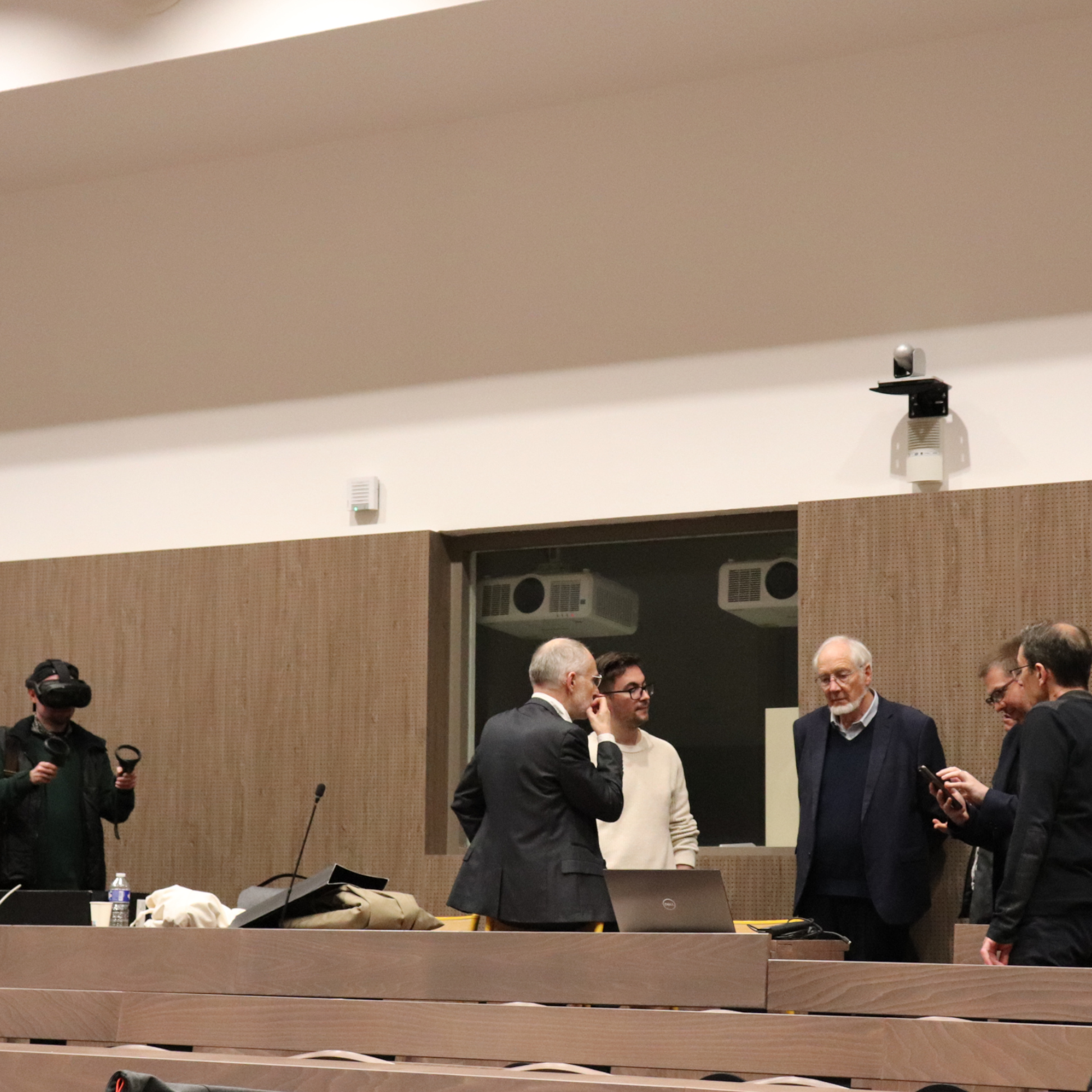
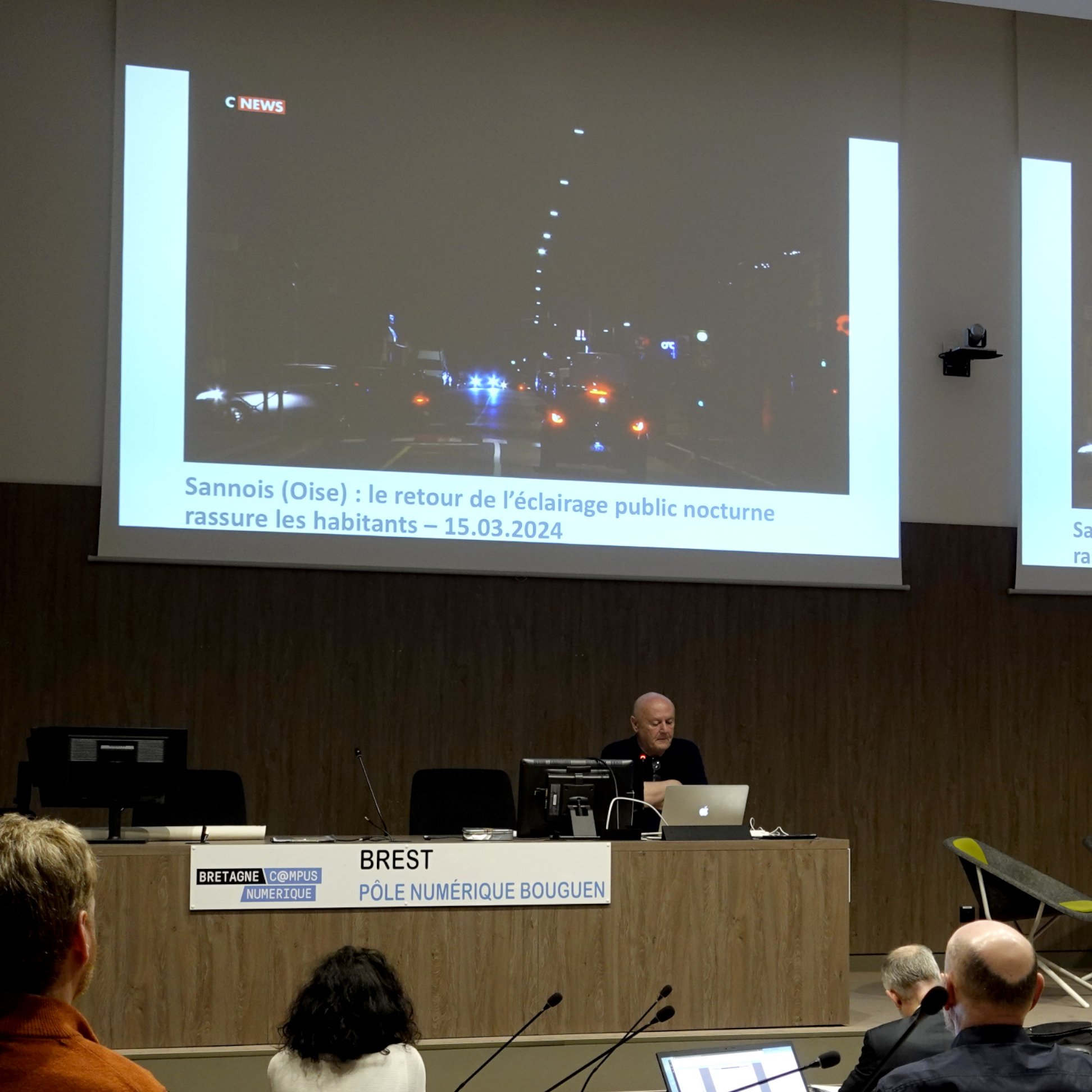
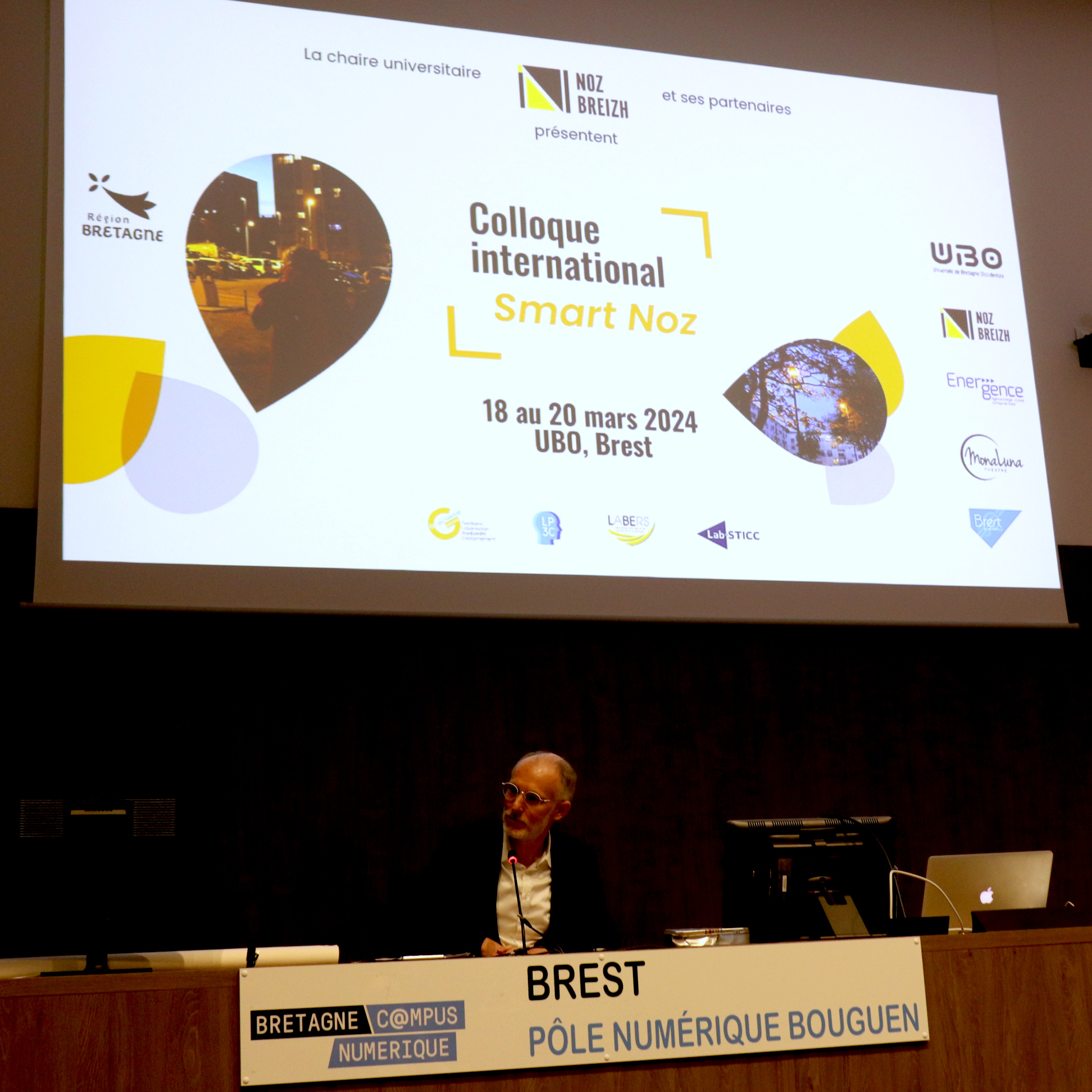
Du 18 au 20 mars 2023, l’UBO a accueilli un colloque international destiné à clôturer le projet Smart Noz, réunissant plus de 40 intervenant·e·s pour l'occasion, dont certain·e·s ont effectué le déplacement depuis l'Espagne, le Canada ou la Pologne.
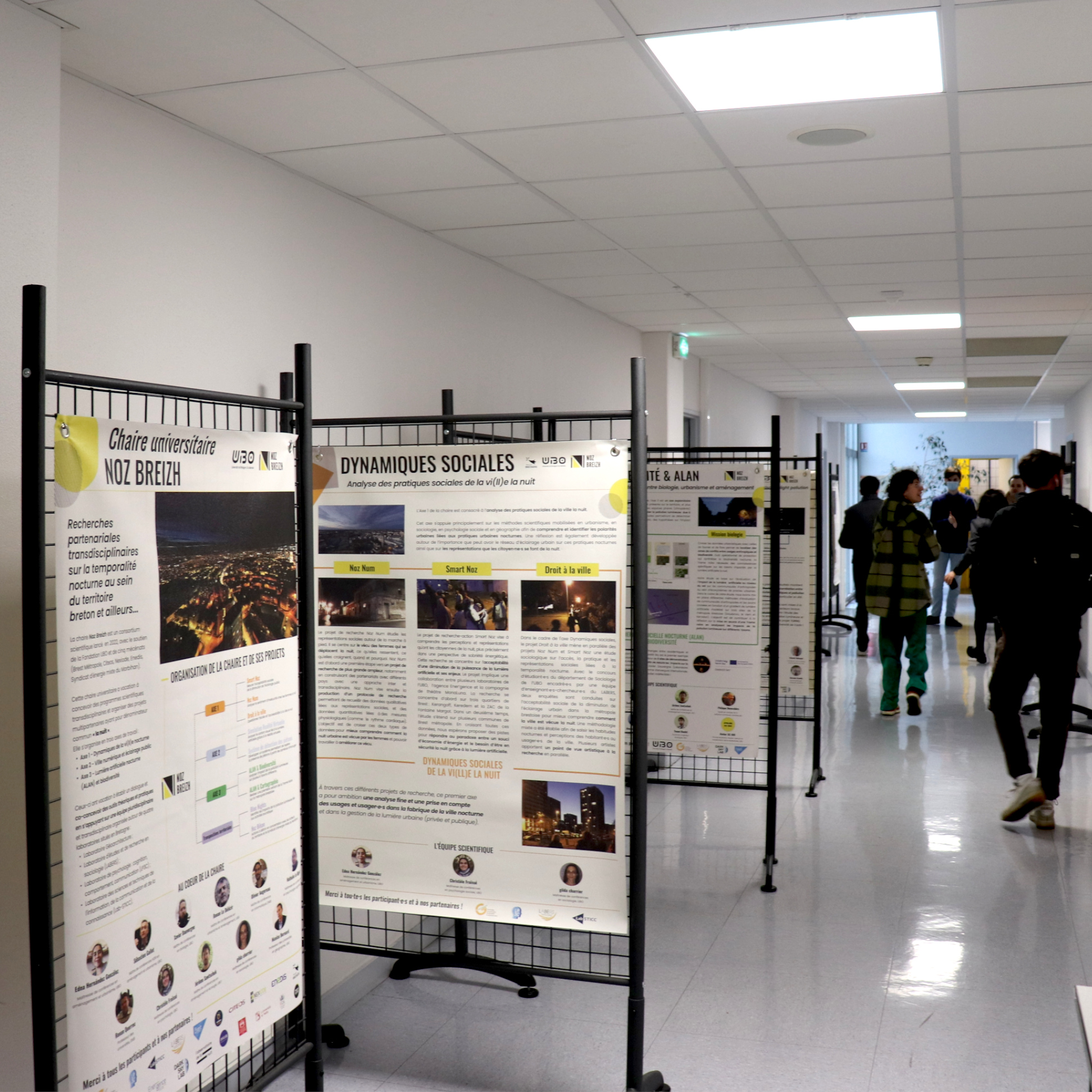
Au-delà des conférences, tables-rondes, présentations de posters, démonstrations et autres animations qui étaient au programme, nos échanges scientifiques ont été enrichis grâce à deux expositions:
- la première, intitulée « Partager la nuit », a été coordonnée par gilda charrier, maîtresse de conférence en sociologie à l’UBO, pour inviter le public à se questionner à partir des nuits contrastées de Brest (France) et de La Plata (Argentine), grâce aux xylogravures de María Renati et aux photographies de Bénédicte de Kersabiec et Nathalie Le Roux.
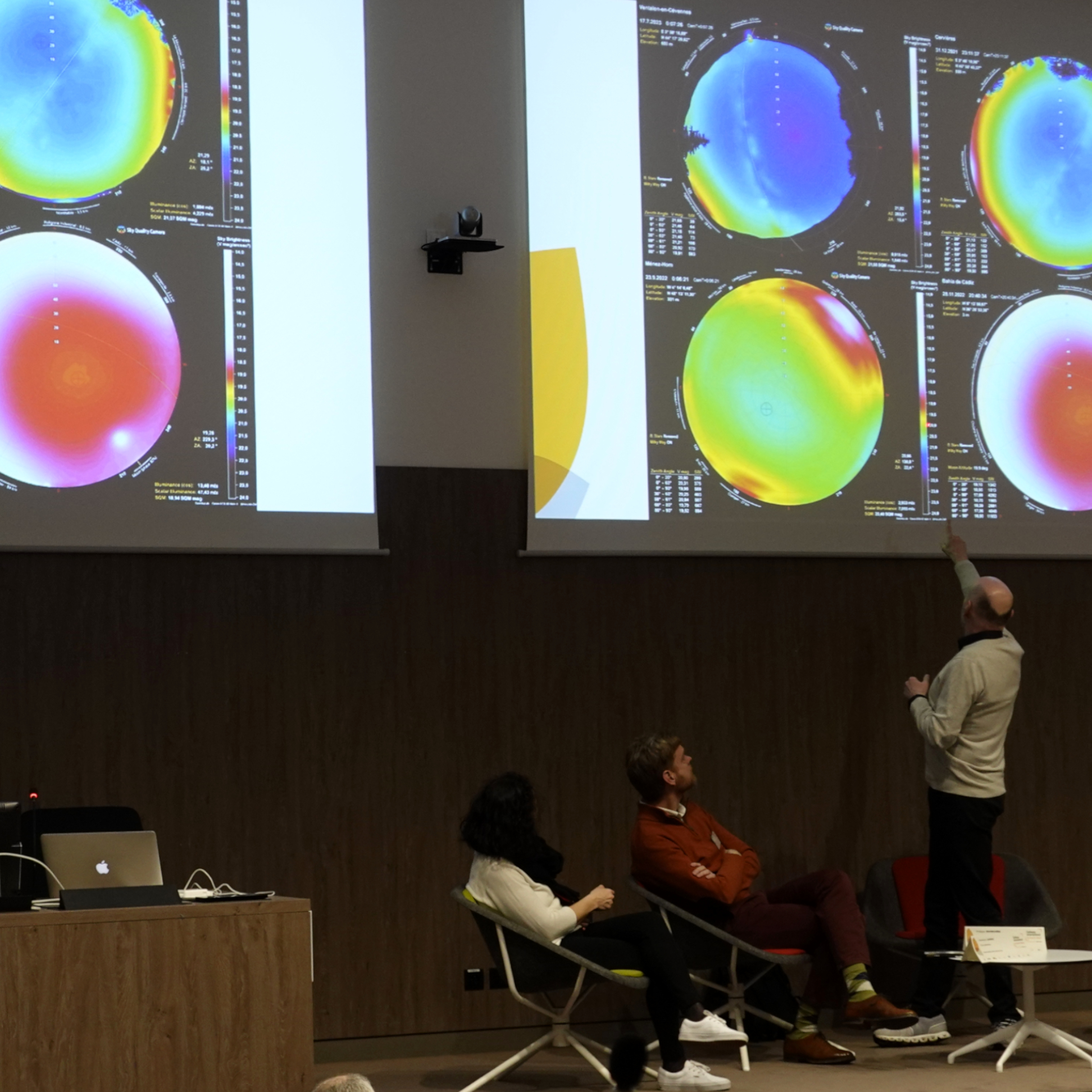
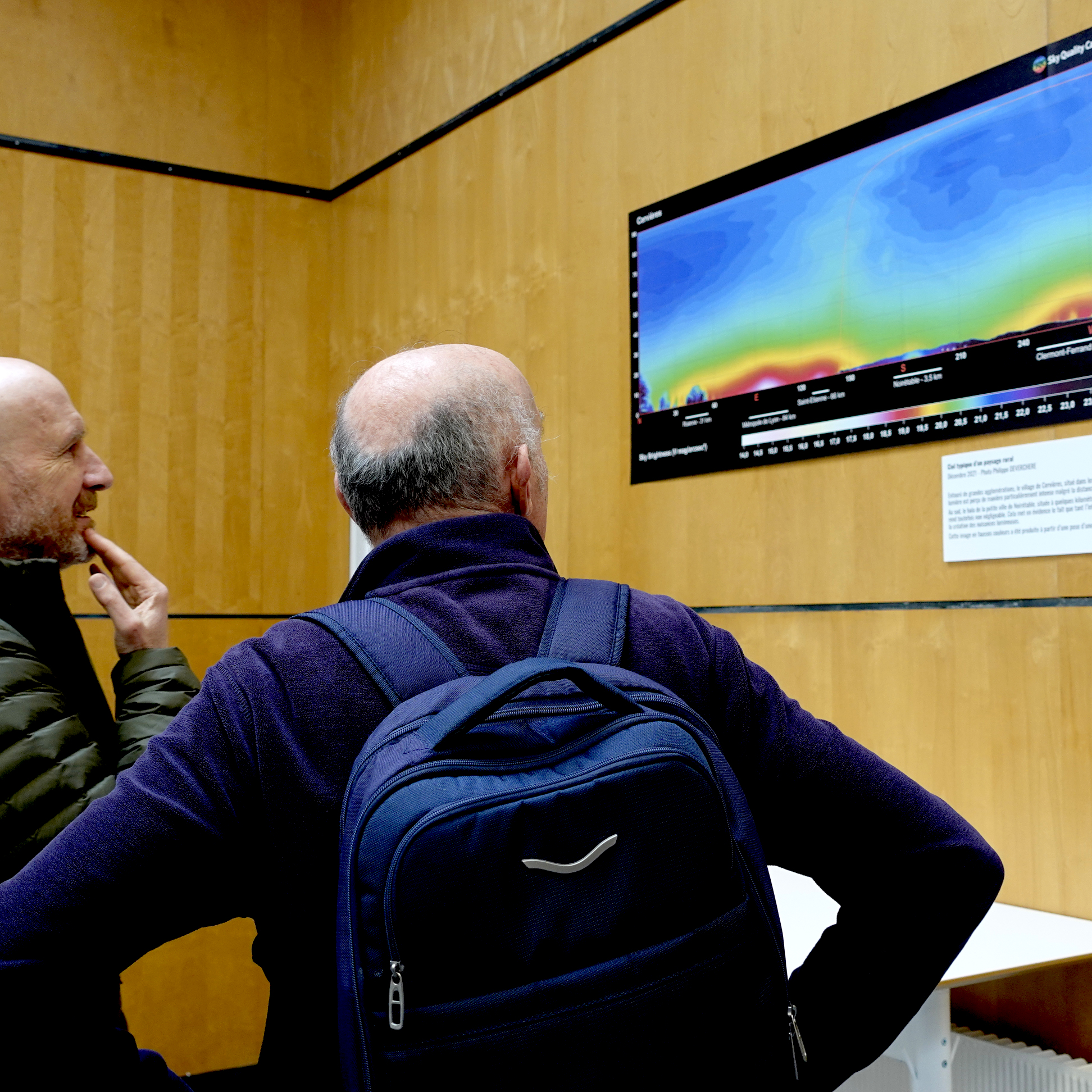
- la seconde, intitulée « Nights & Lights », a été organisée par Edna Hernández González, coordinatrice de la chaire, afin de mettre en valeur les travaux de Philippe Deverchère (DarkSkyLab) autour de la pollution lumineuse.
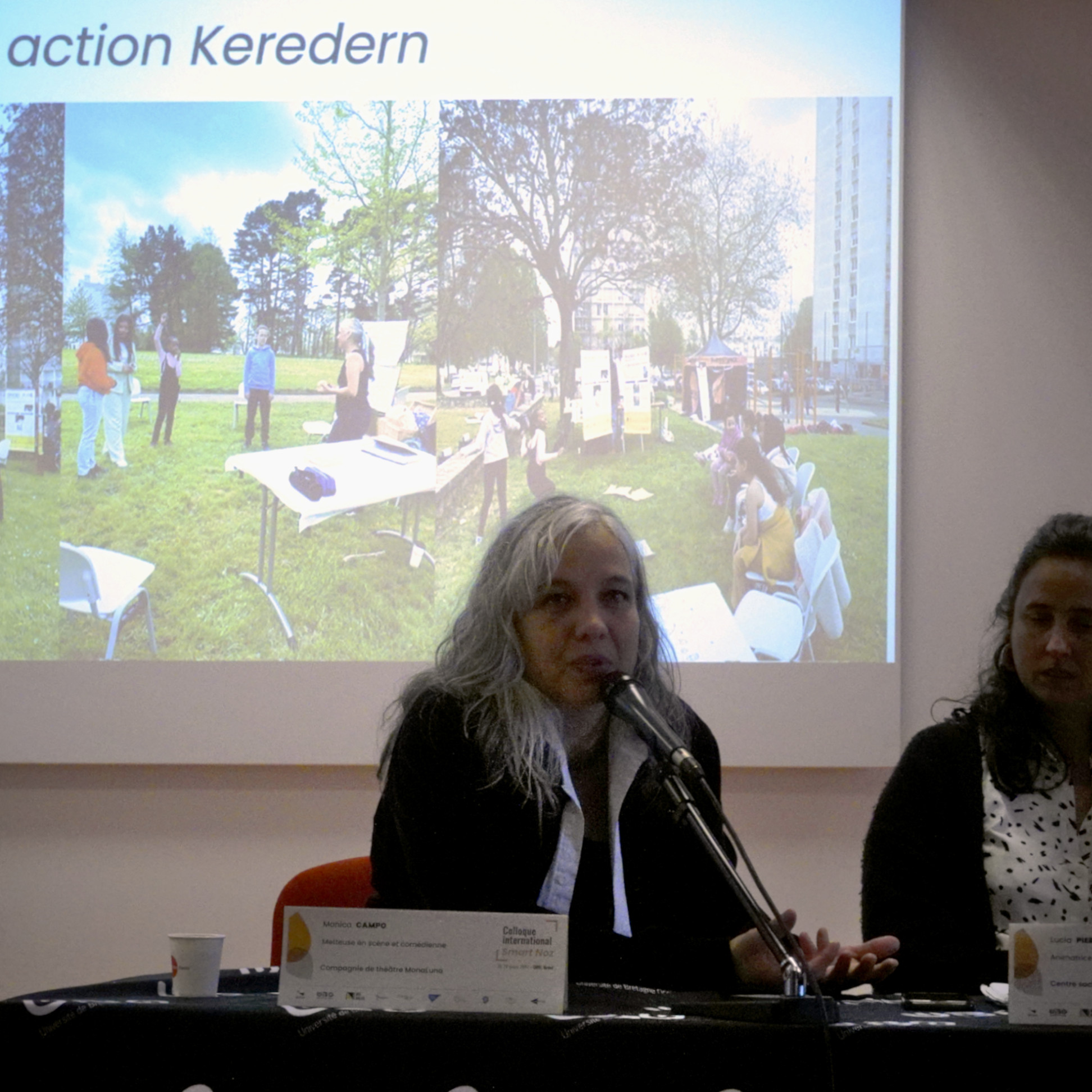
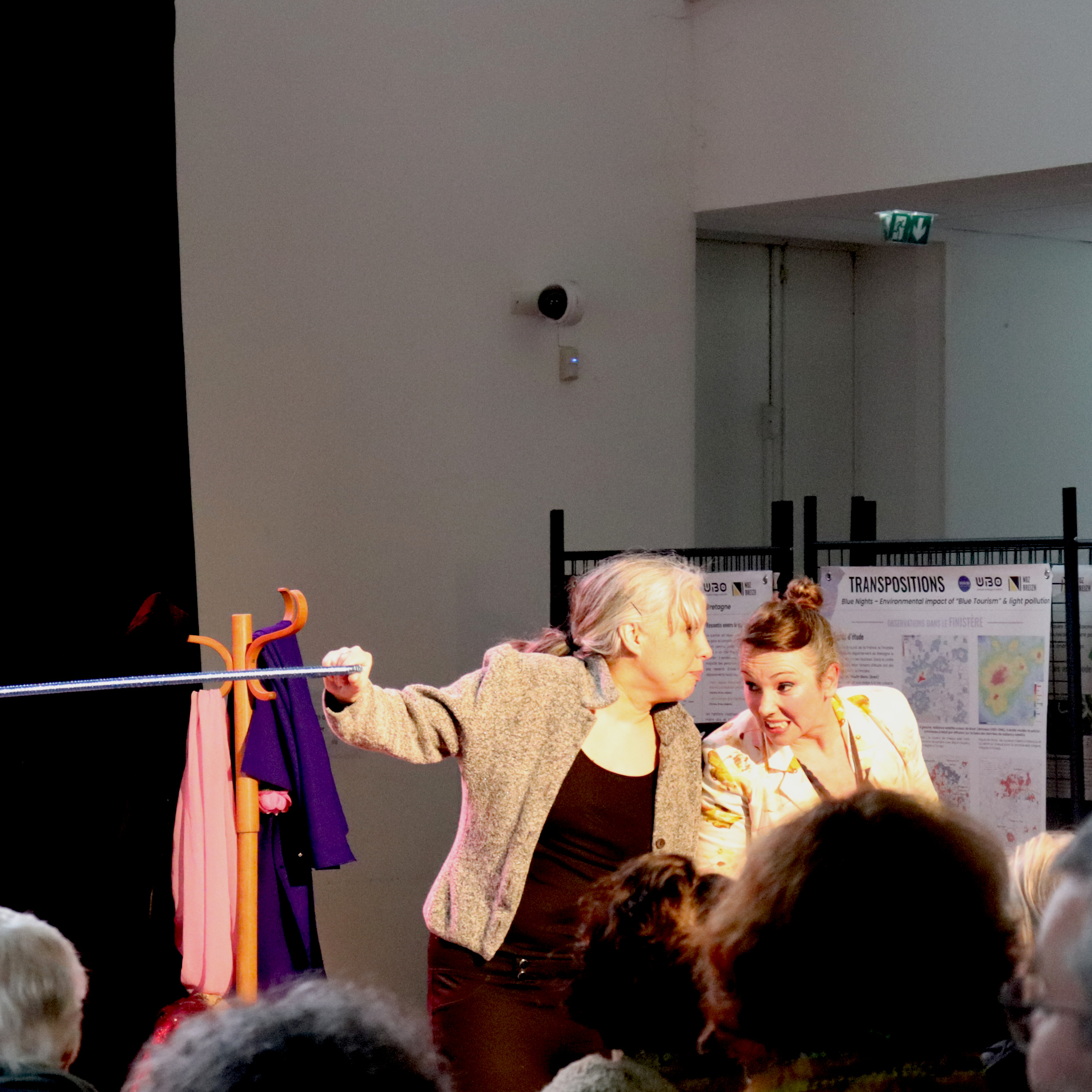
Nous avons également eu le plaisir de pouvoir assister au spectacle Les Lumières de la nuit, restitution théâtrale de la parole des habitant·e·s des quartiers de Brest selon une mise en scène qui retrace les échanges qui ont eu lieu entre l’équipe du projet de recherche-action Smart Noz et les Brestois·e·s entre 2022 et 2024, proposée par la Cie MonaLuna sous la direction de Monica Campo.
Merci aux organisateurs et aux participants !

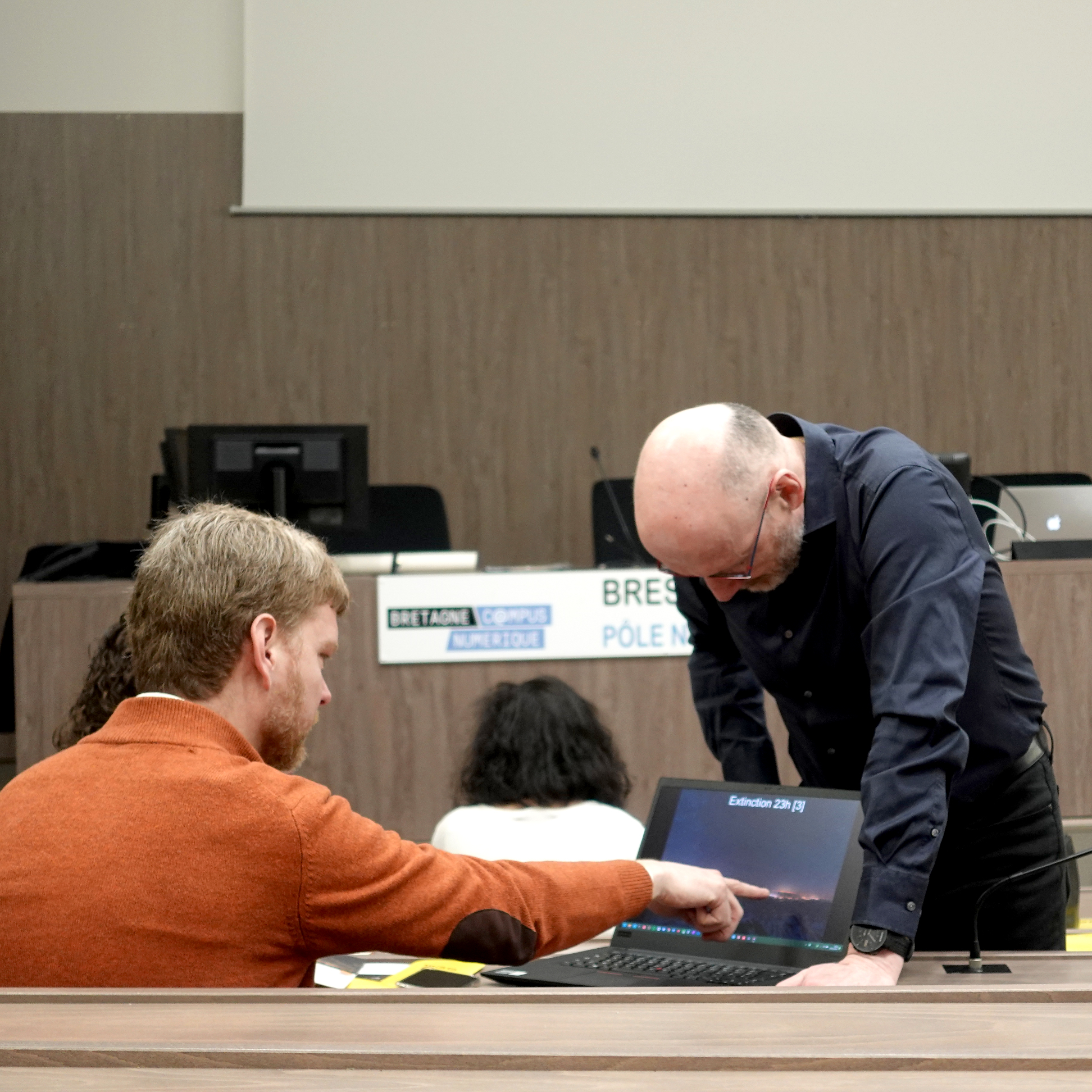
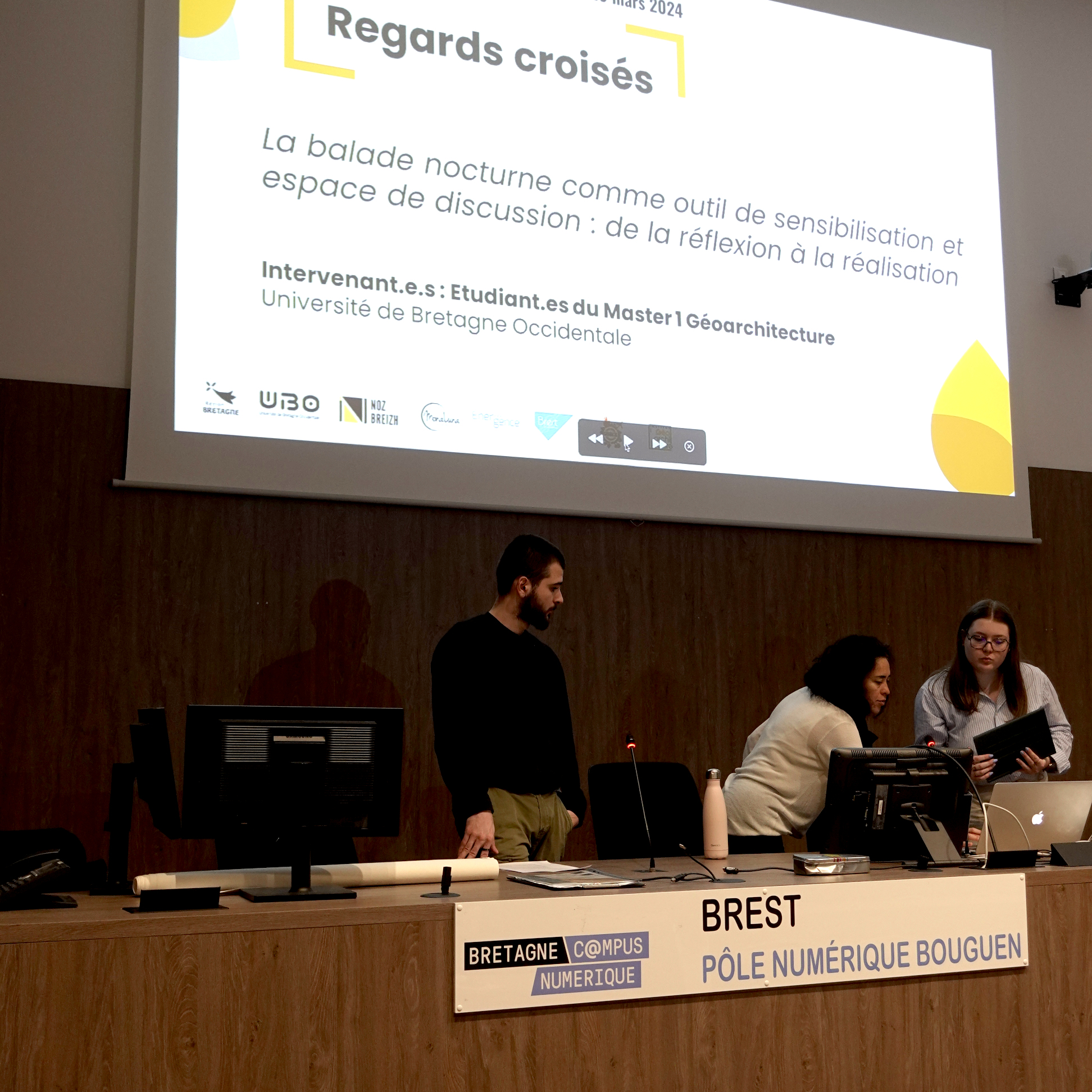

A group of seven students from the Master 1 Aménagement et urbanisme program at Université de Bretagne Occidentale (Institut de Géoarchitecture), supervised by Edna Hernandez Gonzalez and Malou Allagnat, have first carried out a territorial diagnosis about night-time development in the municipalities of Guidel and Inzinzac-Lochrist.
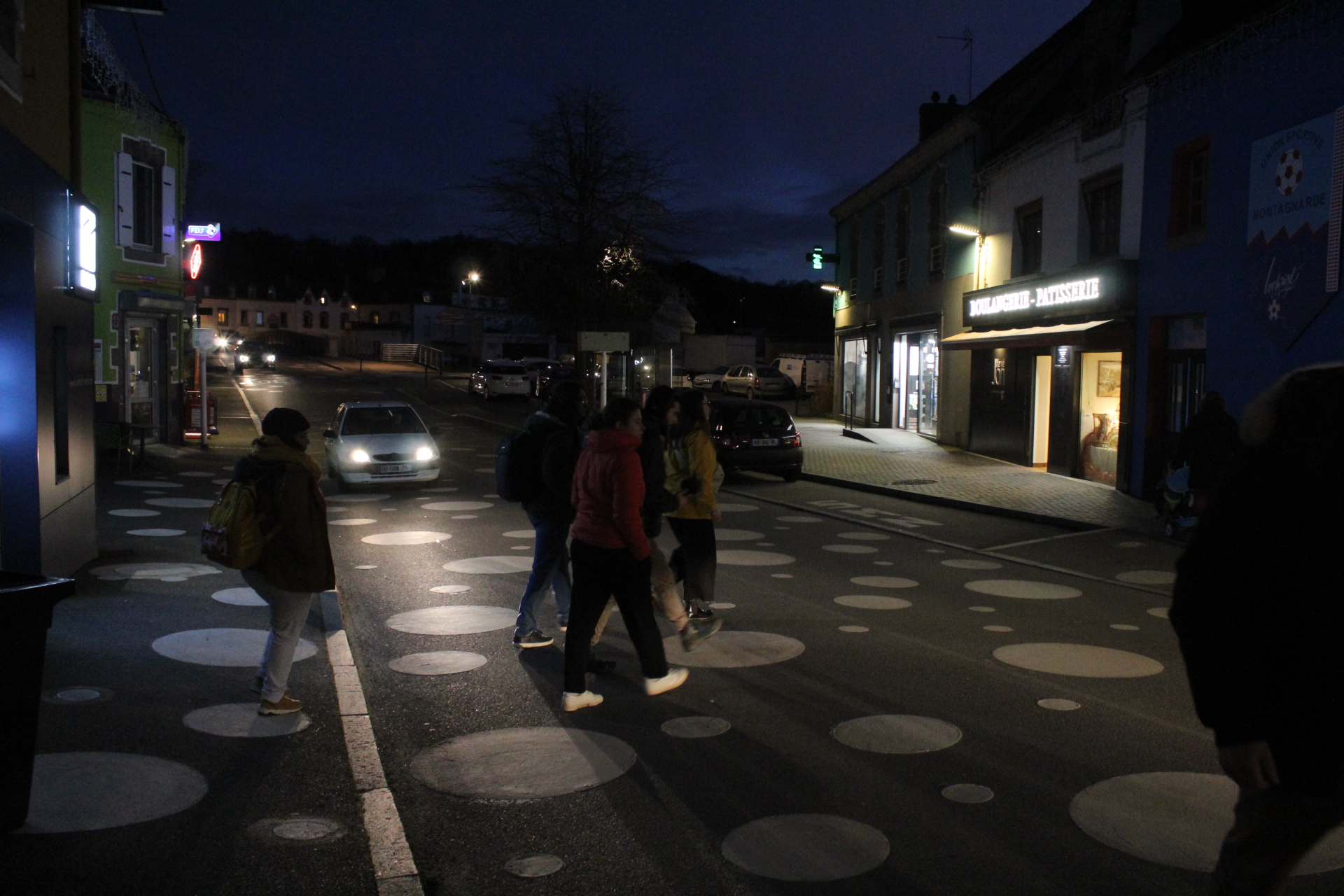
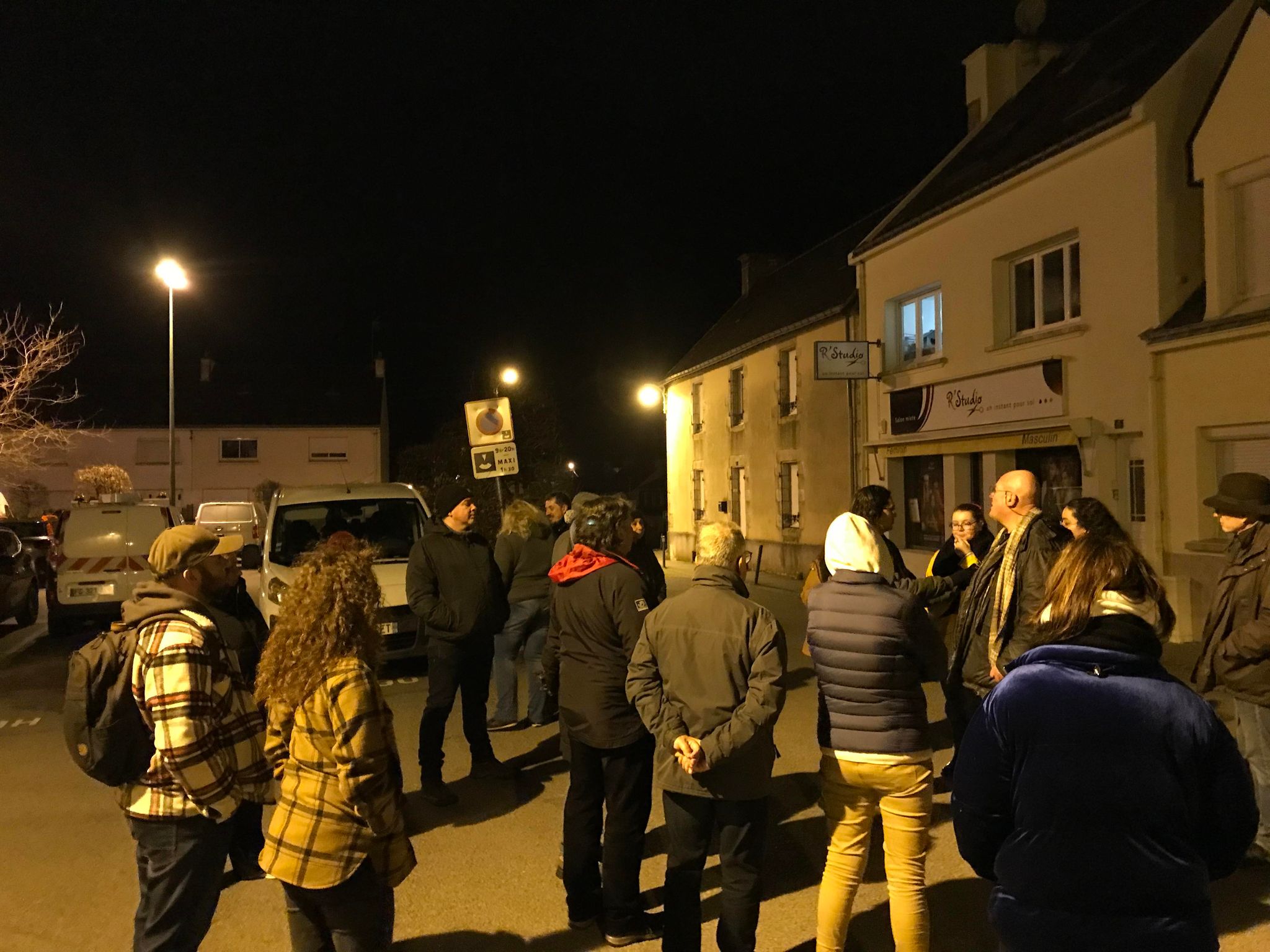
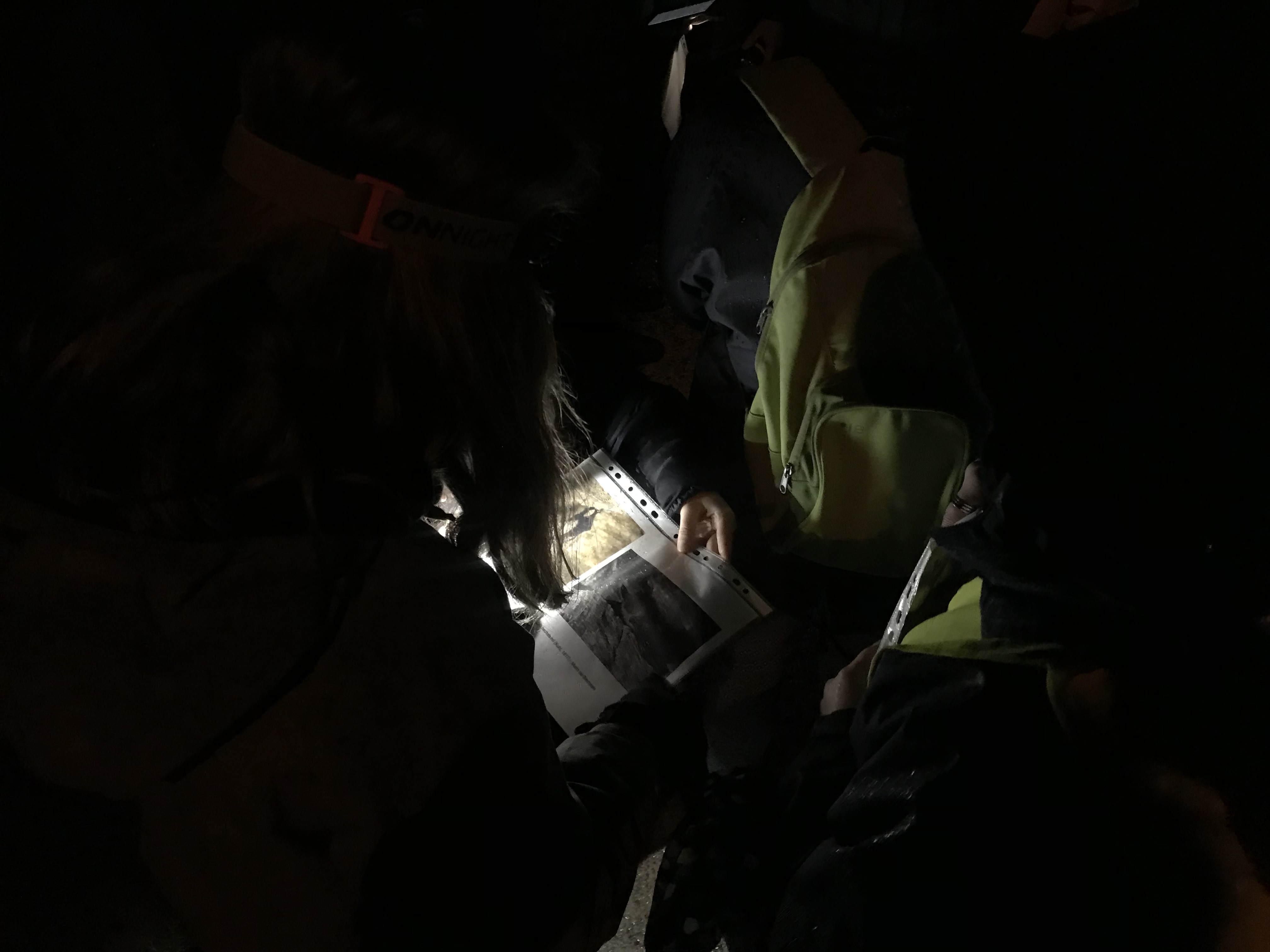
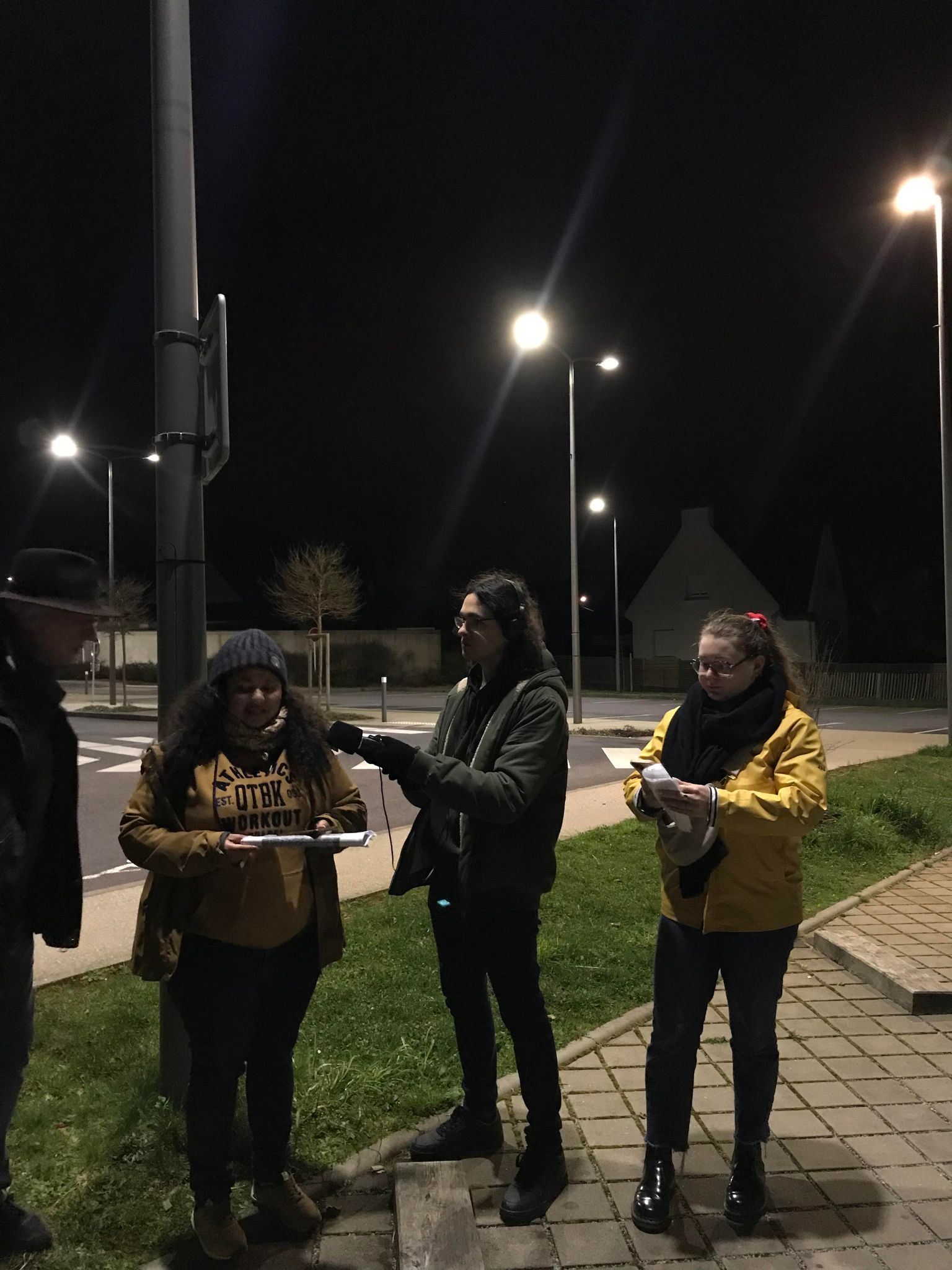
Then, in light of the issues identified, participatory science tools were implemented, namely commented night walks and podcasts. These activities create spaces to foster discussion, information and awareness, involving all stakeholders concerned by night and light pollution.
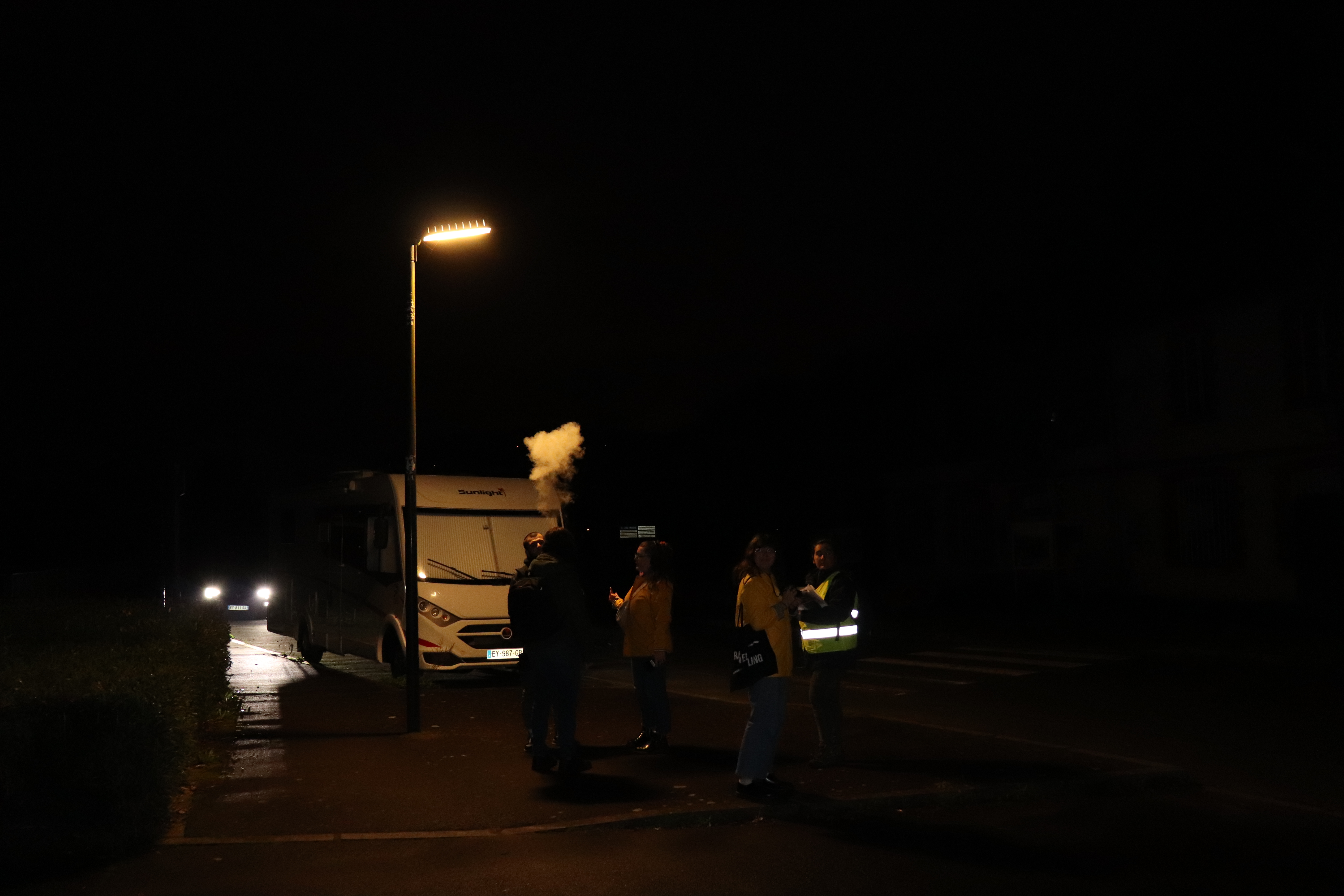
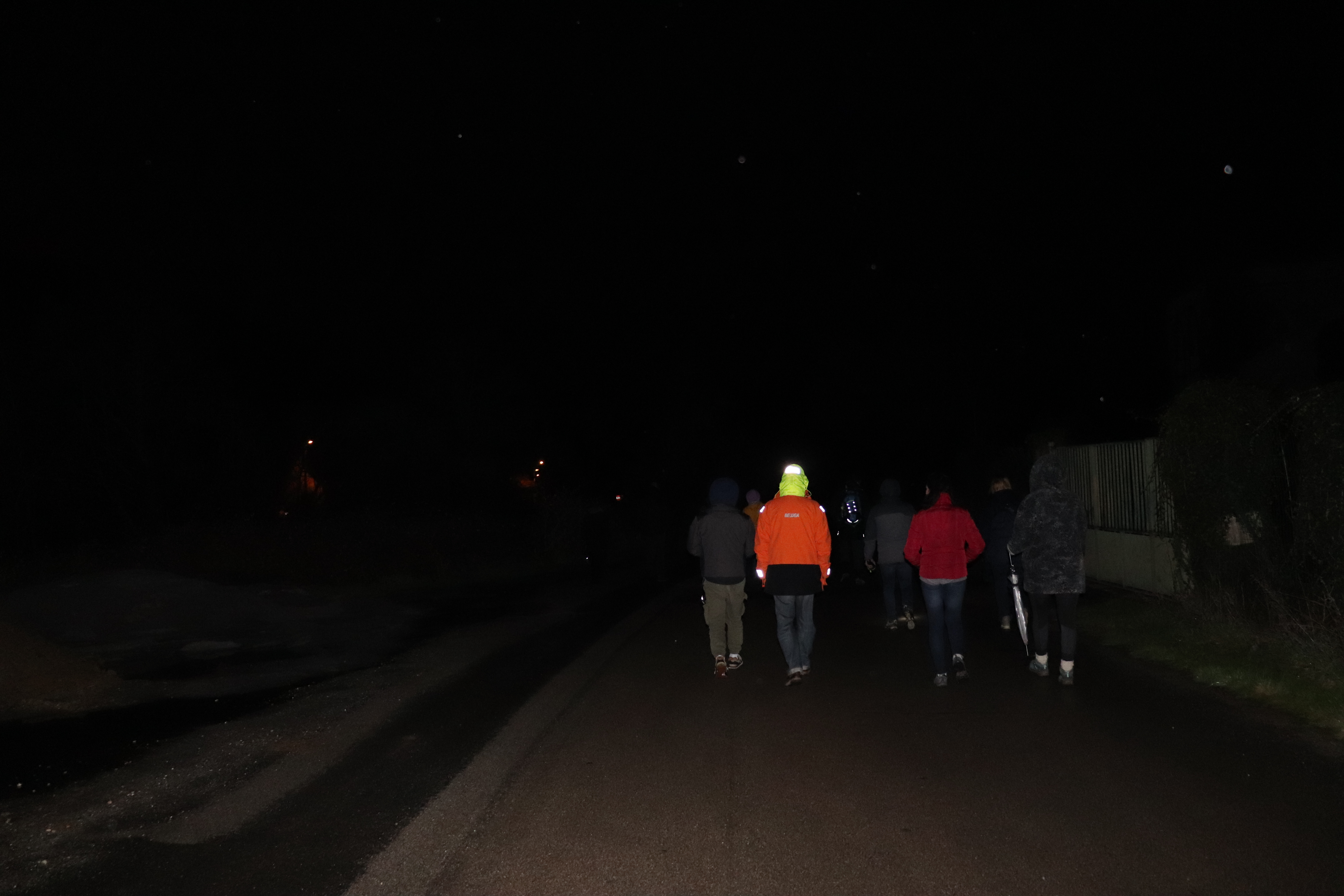
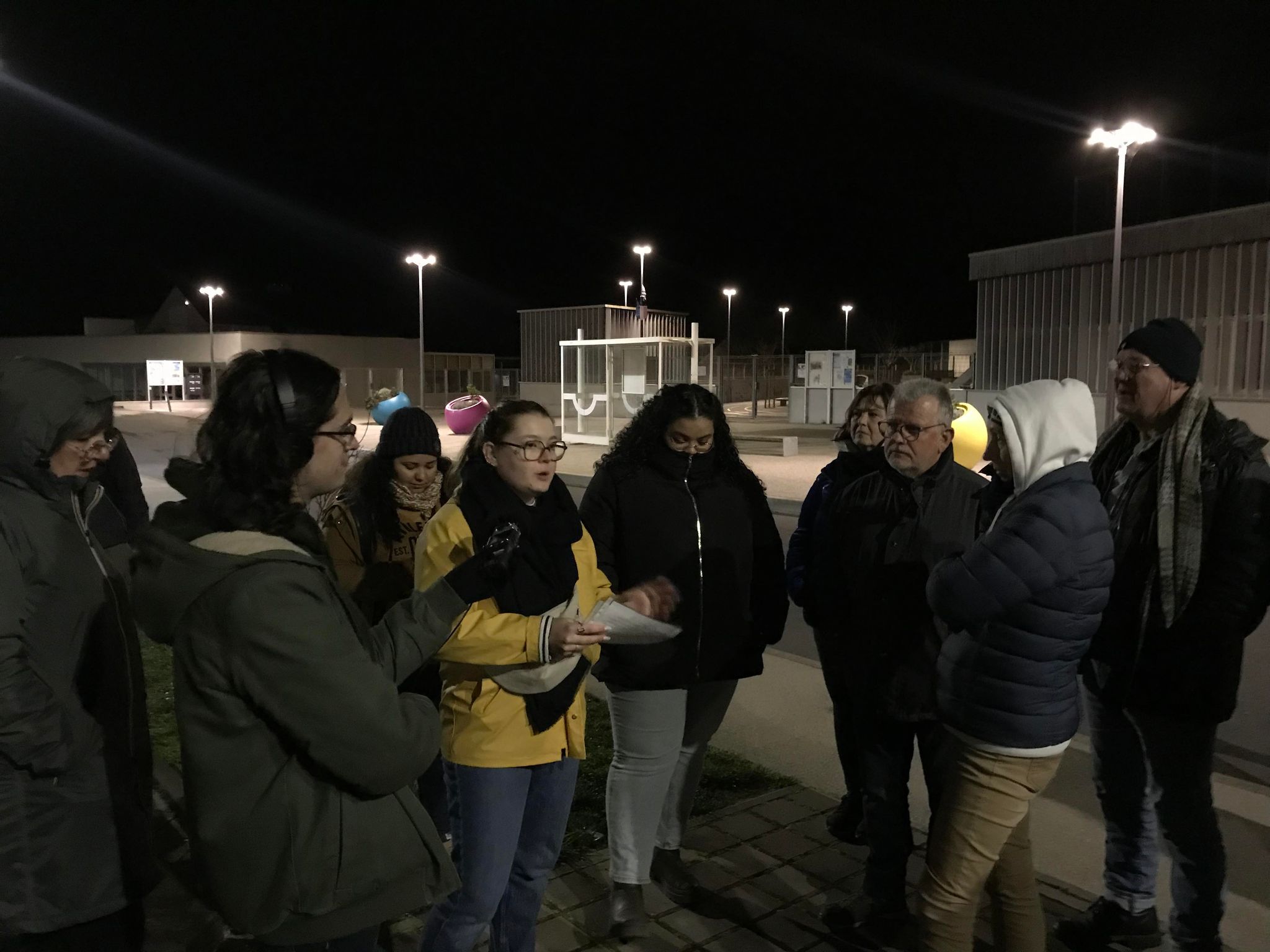
In early March 2024, night-time walks were organized in two Morbihan communes: Inzinzac-Lochrist and Guidel. The initiative was spearheaded by the students, who also invited Bernard Goumon, President of Sterenn, the astronomy association of Lorient, to take part in the events.
A total of 35 people took part in these events meant to raise awareness of the impact of light pollution on the starry sky and biodiversity, and to question our individual and collective representations of the night...
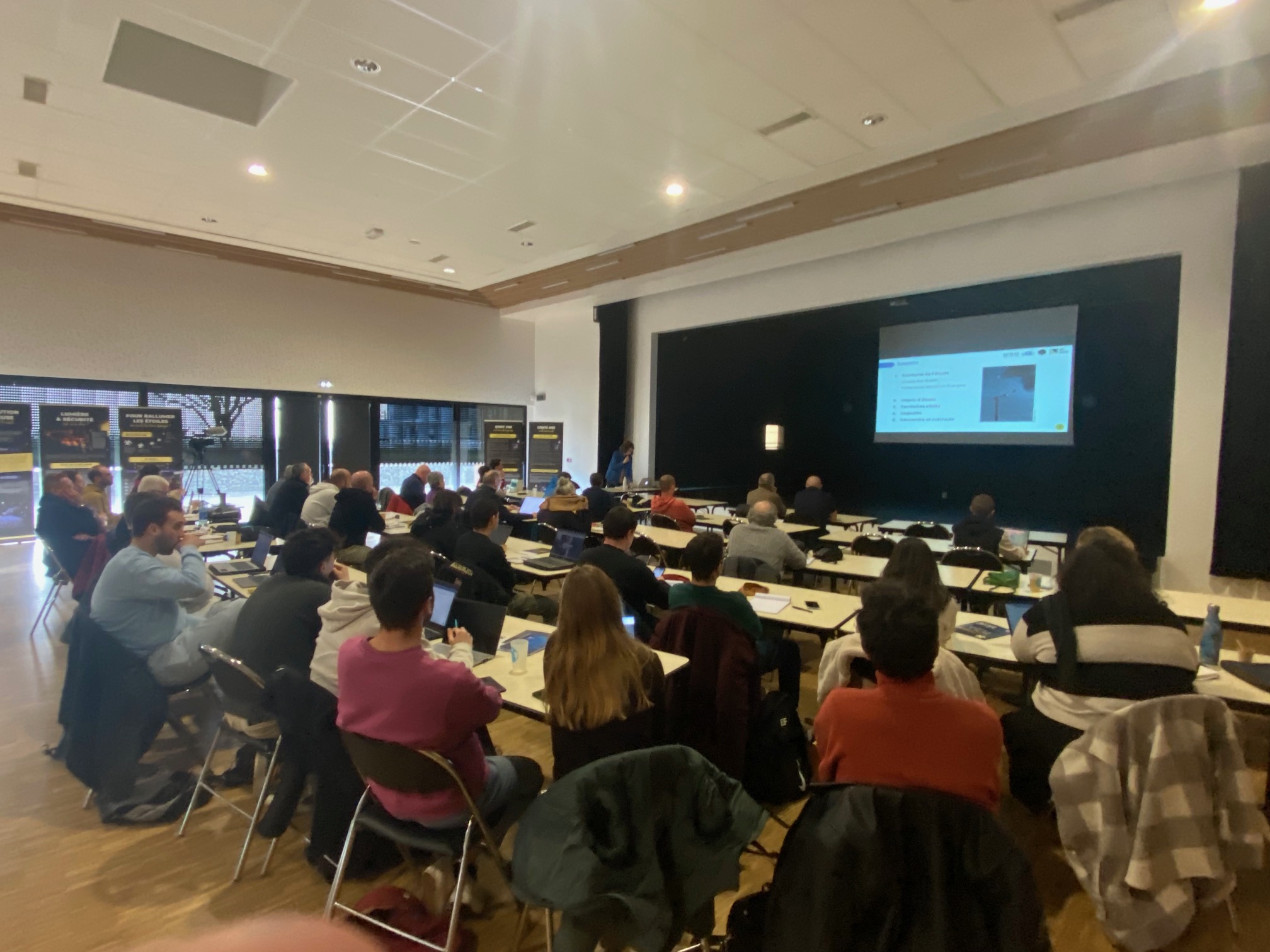
As part of the territorial transpositions and Noz Bihan research project, the Chair was pleased to take part in a training session on "Light pollution and dark ecological networks" organized by the Golfe du Morbihan Regional Nature Park, on Monday January 22, 2024 in Saint-Avé.
This was an opportunity to present the context and objectives of the study carried out in Morbihan to elected representatives and technicians from the area.