Right to the city (2022 - 2025)
As part of the Social dynamics axis of the Noz Breizh Chair, the project Right to the city aims to provide a better understanding of how the city is experienced at night. During three years, researchers from the Noz Breizh chair conducted several studies on access, usage, and social perceptions related to nighttime. To gain insights into nighttime habits and perceptions of city residents and users, as well as their perceptions of the nighttime environment, several mixed-methodologies and approaches were established.
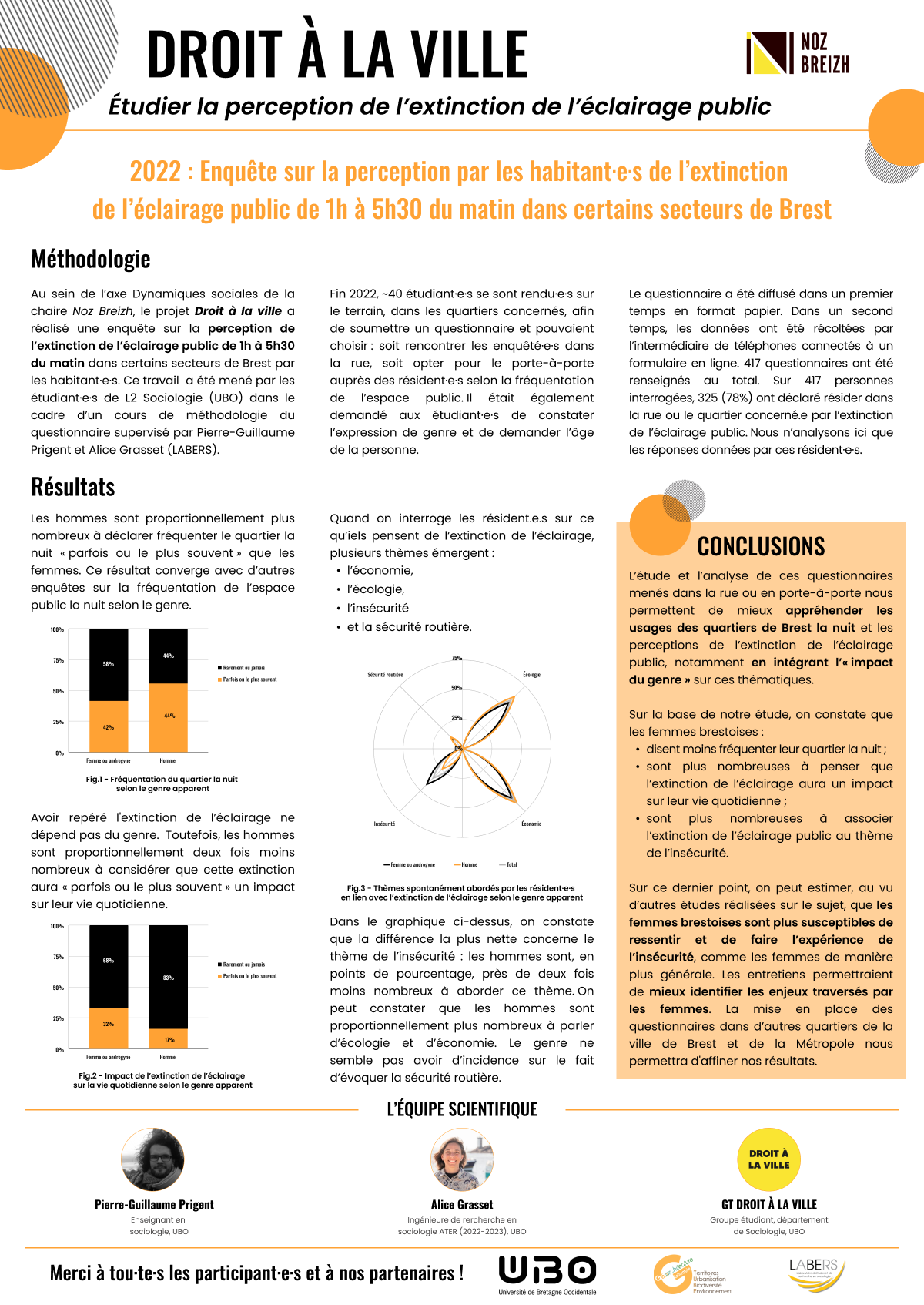
2022–2023: Residents’ perceptions of decreased artificial lighting
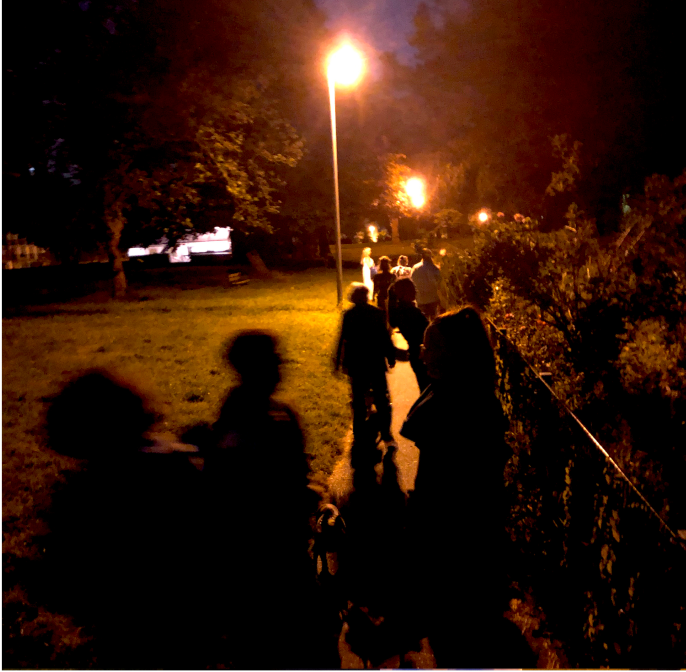
During the autumn 2022, students from the Department of sociology at UBO participated in a sociological study regarding the social acceptability of decreased artificial lighting in some districts of Brest métropole, supervised by a team of teacher-researchers from LABERS. In order to capture the nocturnal habits and perceptions of the inhabitants of the city, a hybrid methodology has been established:
- Students in their first year of bachelor's degree in sociology have created a survey notebook that the participants were invited to fill in every day: what are
their nocturnal trips, their activities, their sociability in Brest at night? To complete the work, semi-structured interviews were conducted. - At the same time, students in their second year of bachelor's degree in sociology designed and administered a survey on the perception of the extinction of public lighting at night in several suburban and residential districts of Brest.
2024–2025: Festive practices, Atelier Bibus, Alcohol plan
In the fall of 2024, the Noz Breizh chair organized a Parcours RESPI group internship for first-year Master’s students in psychology at UBO. Led by Christèlle FraÏssé, a lecturer in psychology (LP3C, UBO), the working group’s mission is to explore festive practices in Brest, and more specifically to characterize the governance of festive nightlife.
To this end, the students examine the control, monitoring, and mediation mechanisms adopted by the city, as well as the initiatives implemented by key players of this nightlife scene, including bars, restaurants, and venues owners. A research report will be submitted to Brest métropole, followed by a document providing a summary of the study’s findings for a wider audience.
Planning to review and improve their nighttime transportation services, RD Brest, a subsidiary of RATP DEV, also enlisted the help of Master’s students in AUDE program at Institut de Géoarchitecture—supervised by Liudmila Morillon, Assistant Professor, and Edna Hernández González, Associate Professor—to conduct a study on Noctybus. As part of a strategic review to adapt nighttime transportation services to the changing needs and territorial dynamics of the metropolitan area, this project was organized into three phases:
- developing a comprehensive territorial analysis of Brest’s nighttime networks,
- creating several scenarios for the proposed night transportation service,
- and refining the most relevant scenario while taking budgetary and technical constraints into account.
Finally, a group of 4-6 Master’s students was also asked to conduct a quantitative study focusing on the evolving behaviors in psychoactive substance use related to partying and adjustments needed in public policies in response to various contexts:
- the disappearance of large gatherings and associated prevention initiatives (student health insurance groups, government services, Addictions France, etc.);
- the persisting use of substances in fringe public spaces, before or after visiting bars, nightclubs, concert venues, etc.;
- the relative proportion of alcohol consumption in public spaces compared to that in bars and nightclubs;
- the rise of private parties and/or young people’s reduced interest in “partying”;
- the motivations underlying the decline in binge drinking and the rise of other substances known as “new drugs”.


2025–2026: Working at night
Working with undergraduate sociology students, a new survey using semi-structured interviews was conducted among 70 women and men, aged 18 to 57, with an overrepresentation of young people aged 18 to 25, living in ordinary households in the Brest metropolitan area.
This survey led to an analysis of the nighttime practices of women and gender minorities in the city and the development of a framework for understanding differentiated socialization patterns at night.
2023–2025: Artistic approaches
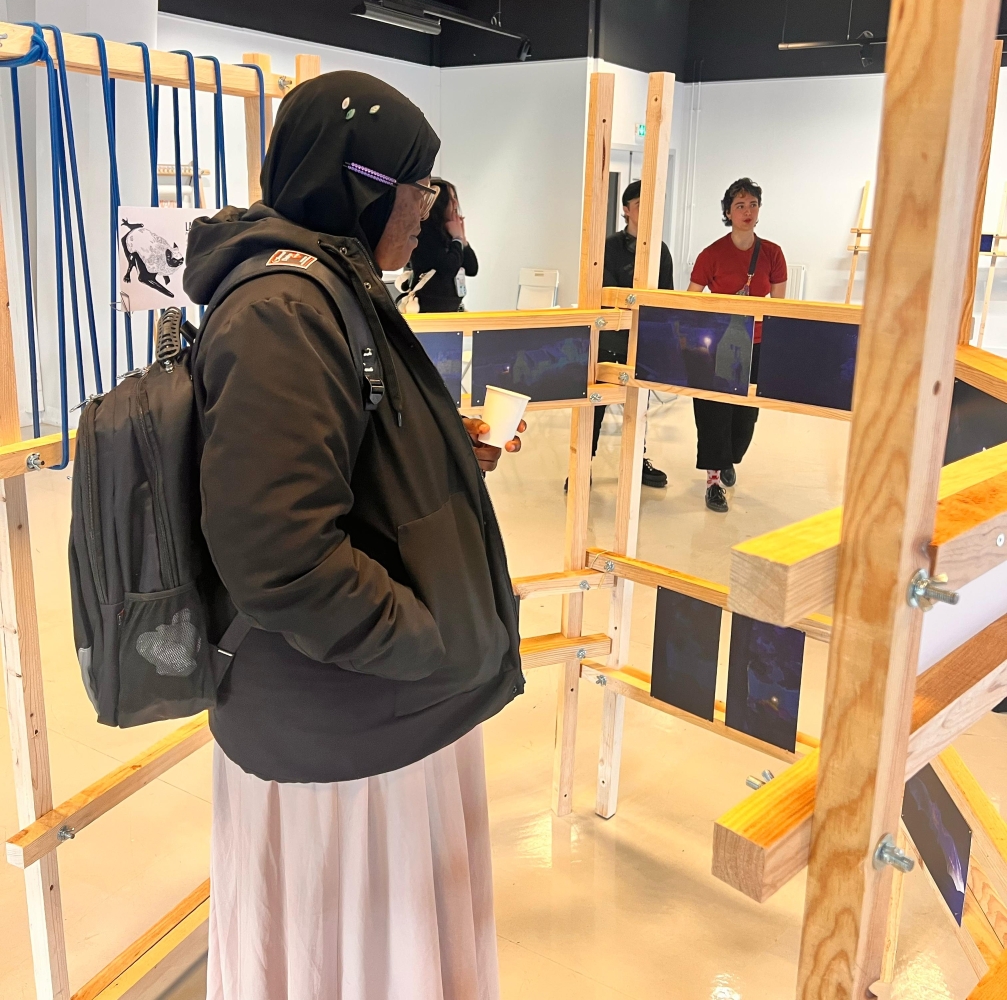
Finally, the academic exchanges conducted as part of Droit à la ville have been enriched by three collective exhibitions blending photography, illustration, oral expression, sound art, sociology, ethnology, biology, astronomy, and journalism:
- Traverser la nuit (2023): An exhibition of photographs by Nathalie Le Roux and Bénédicte de Kersabiec, presented as part of the Noz Num symposium at UBO in March 2023 and later exhibited by ZAAT as part of a temporary exhibition.
- Partager la nuit (2024): Exhibition of woodcuts by María Renati and photographs by Bénédicte de Kersabiec and Nathalie Le Roux, presented as part of the Smart Noz symposium at UBO in March 2024.
- Cohabiter la nuit (2025): Collective exhibition and workshops in conjunction with Fêter la nuit, the symposium marking the 3rd anniversary of the Noz Breizh chair, held at UBO between March and May 2025.
Curated by gilda charrier, associate professor of sociology at UBO, these three exhibitions have fostered a dialogue between data from field research and the artists’ work, approached with sensitivity.
A research project carried out by

Press review
Our publications regarding Right to the city
Assessments
- Assessment of the Right to the city study group (2022-2023)(2022-2023)
- Report of the closing symposium Noz Num, walking in the city at night
Conference papers
- charrier g., Comment s’approprier la ville la nuit quand on est sous contrôle social ? Expériences et représentations d’usager·es de Brest métropole. Colloque International Noz Breizh, Mai 2025, Brest, France. halshs-05546336
- Prigent P.-G., Étudier les représentations et la perception de l'éclairage public à Brest : une enquête par questionnaire, Colloque International Noz Breizh, Mai 2025, Brest, France.
- charrier g., Atravesar la ciudad de noche: representaciones y prácticas de género. Nov 2024, Mar Del Plata, Argentina. halshs-05546307
- Prigent P.-G., Les rapports sociaux d’âge et de sexe dans une étude par questionnaire sur la perception de l’extinction de l’éclairage public à Brest, Colloque International Smart Noz, Mars 2024, Brest, France.
Contributions
Citation :
Chaire Noz Breizh (2025), Droit à la ville, étudier la perception par les habitant⸱e⸱s de l’extinction de l’éclairage public, présenté lors du colloque Noz Breizh, Brest, 20 mars - 15 mai 2025

Citation :
Chaire Noz Breizh (2024), Droit à la ville, étudier la perception de l’extinction de l’éclairage public (1ère enquête, méthode du carnet), présenté lors du colloque Smart Noz, Brest, 18-20 mars 2024
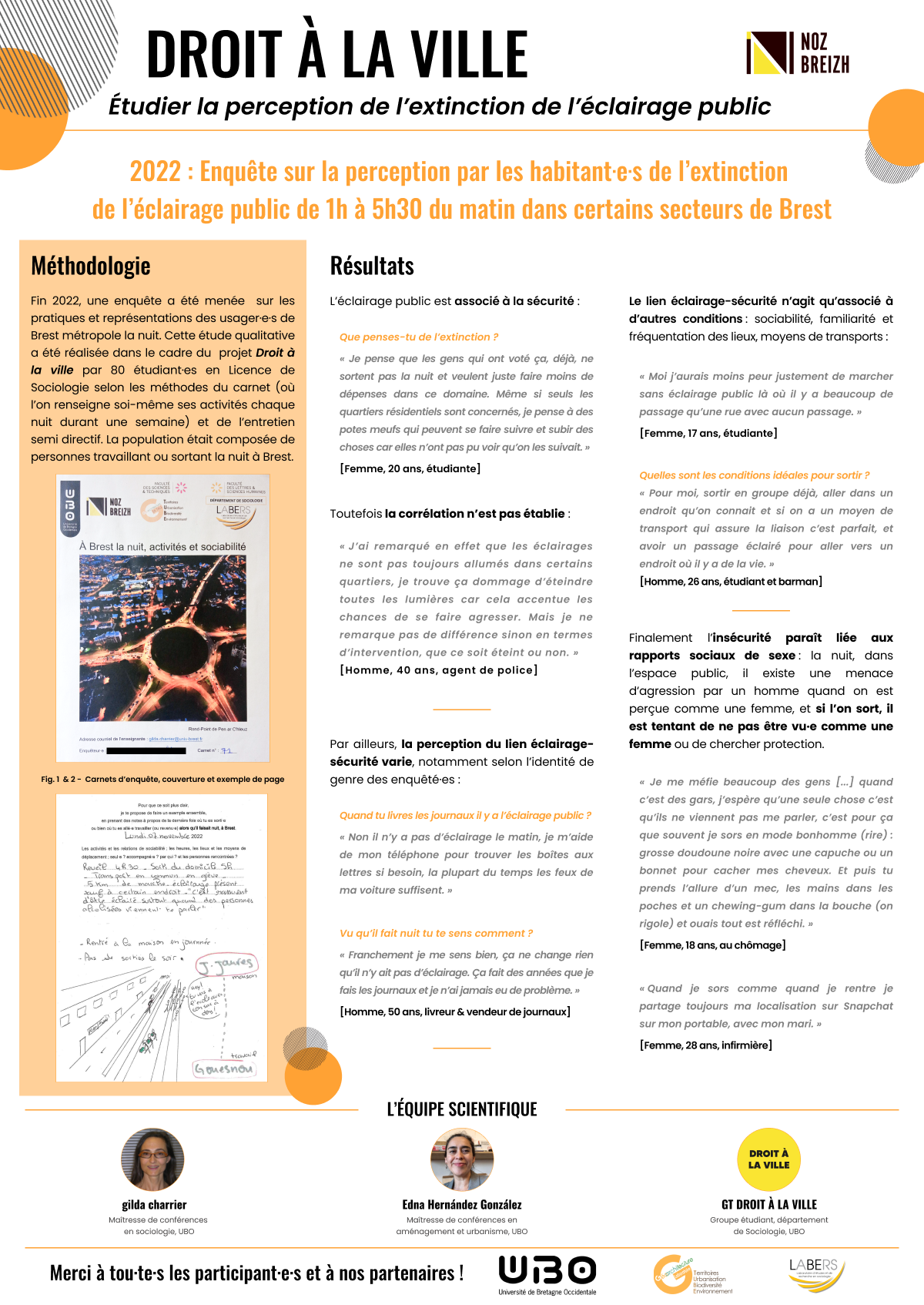
Citation :
Chaire Noz Breizh (2024), Droit à la ville, étudier la perception de l’extinction de l’éclairage public (2e enquête, questionnaire), présenté lors du colloque Smart Noz, Brest, 18-20 mars 2024
Our meetings
En parallèle du colloque international Fêter la nuit, la chaire Noz Breizh a coorganisé l'exposition collective Cohabiter la nuit, accueillie par la salle Les Abords et la BU de la faculté de lettres à l'UBO pour offrir au grand plublic l’occasion de découvrir la nuit et ses enjeux au travers d’expositions, de balades nocturnes et d'animations prolongeant les travaux scientifiques menés au sein de la chaire durant trois ans.
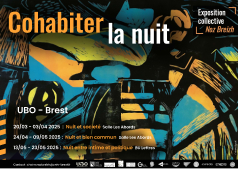
Inscrite dans le prolongement des travaux de Noz Breizh, Cohabiter la nuit a permis de restituer trois ans de travaux scientifiques menés au sein de la chaire à travers une rétrospective plastique collective, articulée en trois temps et trois thématiques à travers six expositions :
- Entre émancipation et oppressions, la nuit (Margot Dejeux)
- Relou (Martine Vieilledent)
- Nocturne, Les effets de la pollution lumineuse sur les humain.es, et la faune et la flore (Benjamin Vanderlick)
- Visions Nocturnes (Malou Allagnat et Yoann Roulet)
- Lights and Nights (Philippe Deverchère)
- Expériences graphiques (Maria Renati)
Merci aux organisateurs et aux participants !
Ces expositions ont été ponctuées de temps de médiation scientifiques mêlant ateliers, rencontres, balades, émission radiophonique
- S’approprier la ville la nuit ? (gilda charrier)
- Balade nocturne à l’écoute de la biodiversité (Yoann Roulet)
- Lecture de textes élaborés au cours du projet Smart Noz (Monica Campo)
- Radio Insomnia à Brest (Anabelle Lacroix et Nicolas Montgermont)
- Prise de photos des espaces pratiqués la nuit (Benjamin Vanderlick)
- Dessiner l’impact de la lumière artificielle (Malou Allagnat)
- Techniques d'impression pour une fresque collective (Maria Renati)
- Maquette simulant la vision animale la nuit (CERV)
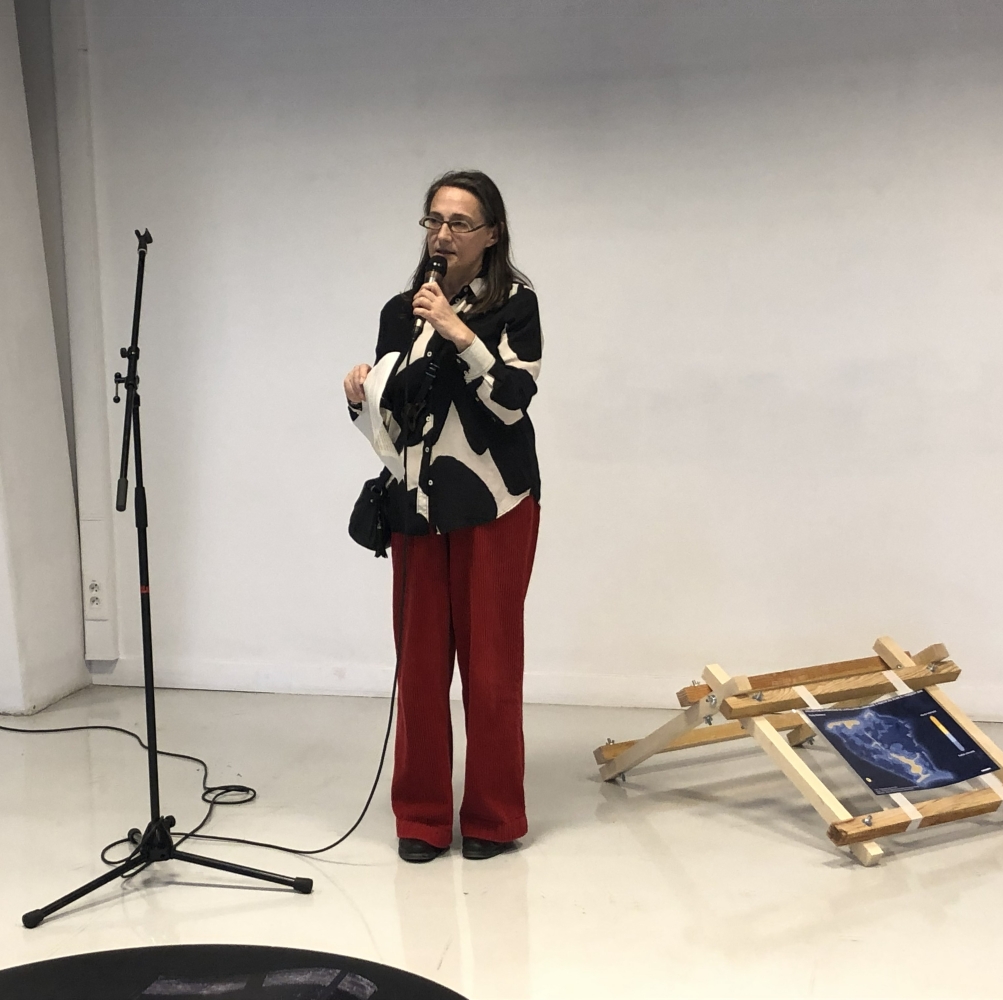
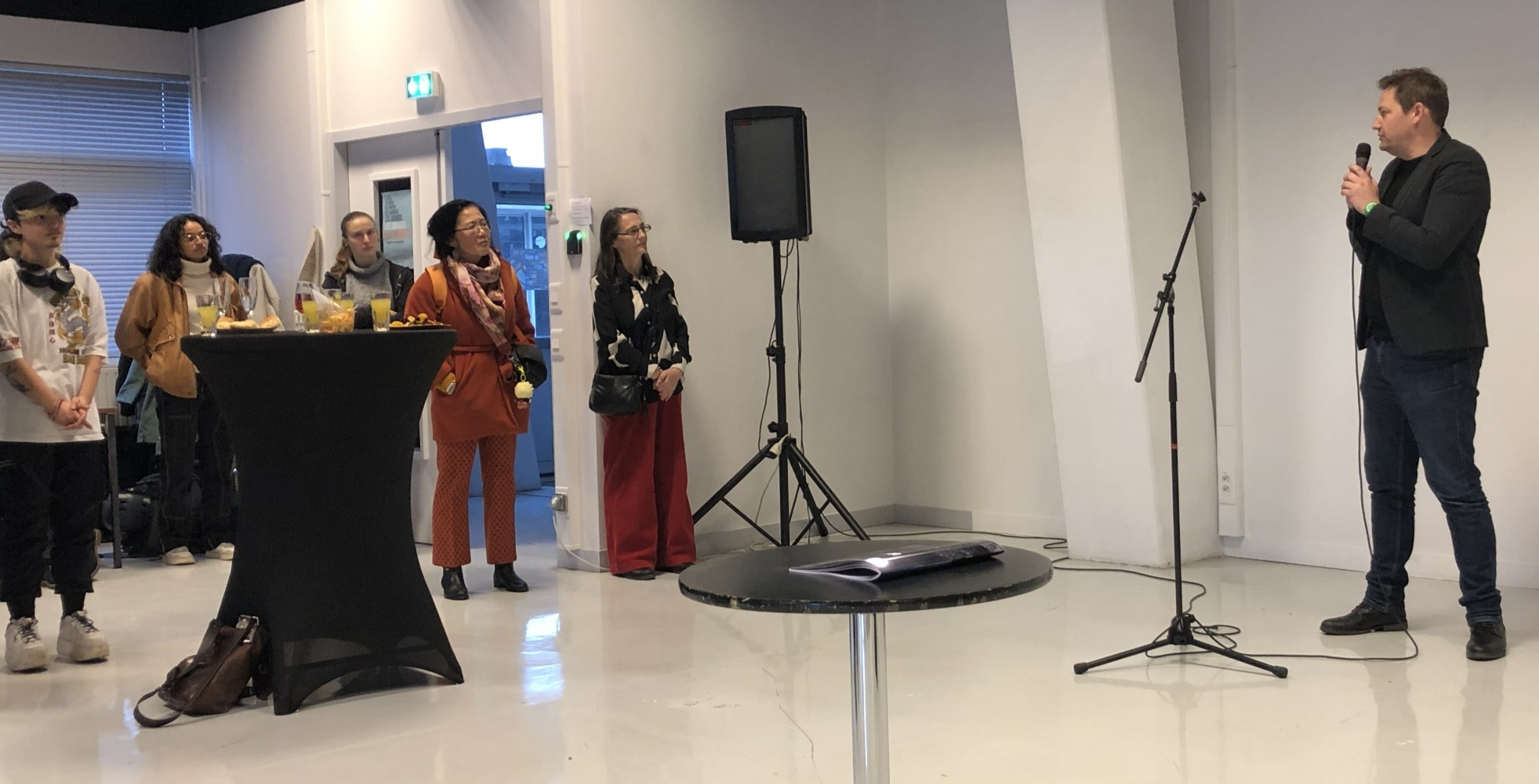
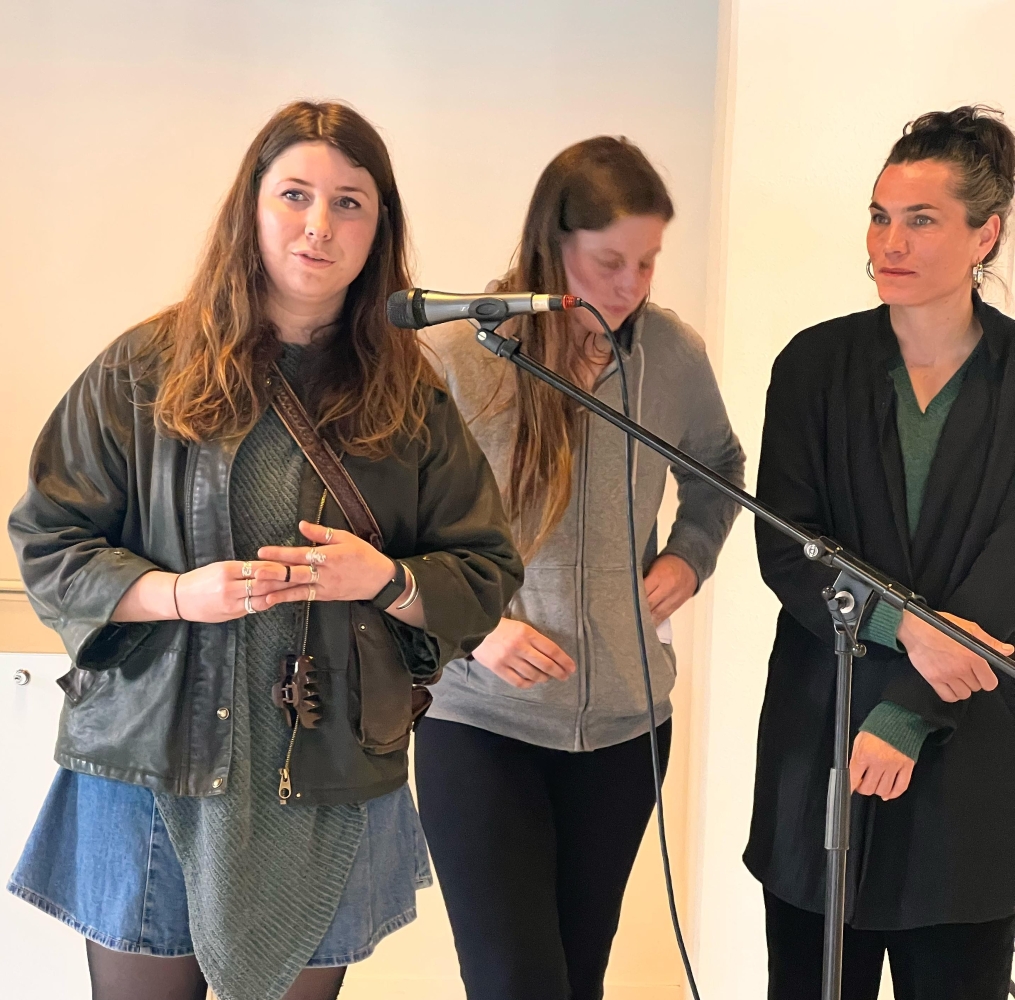
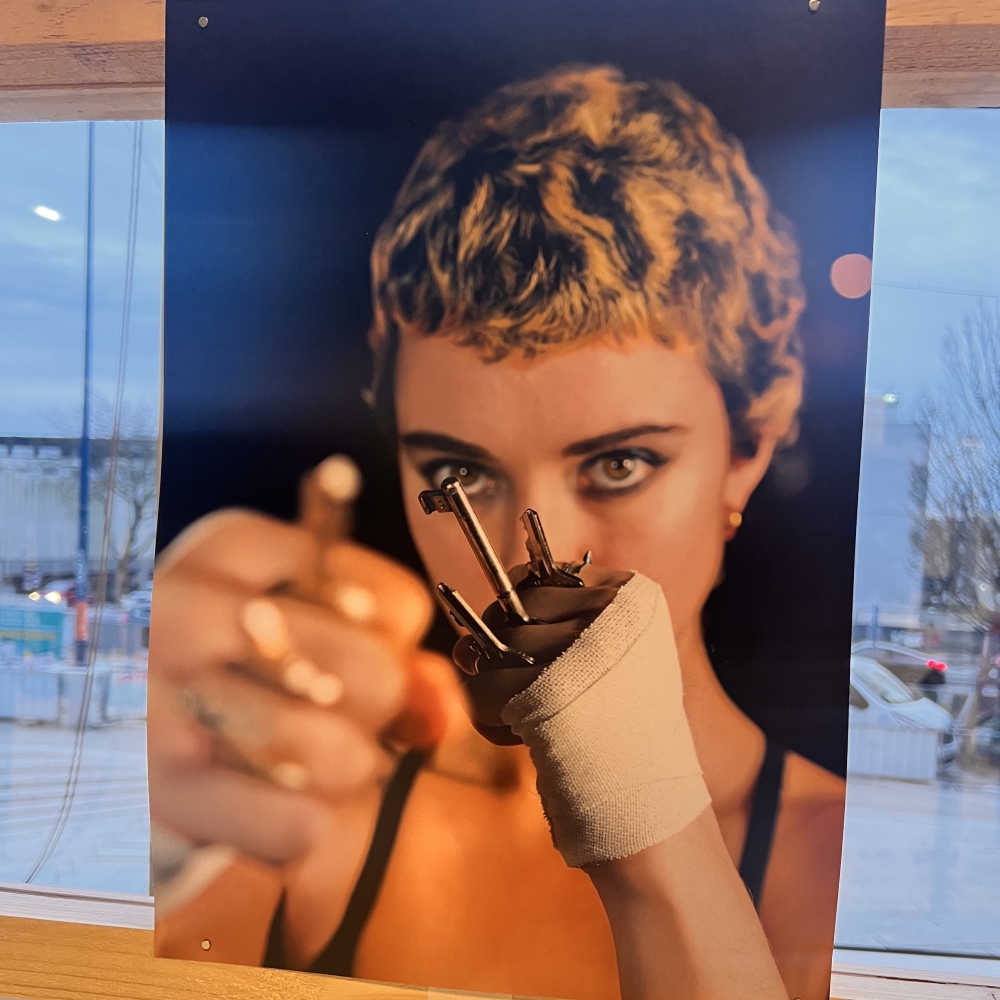
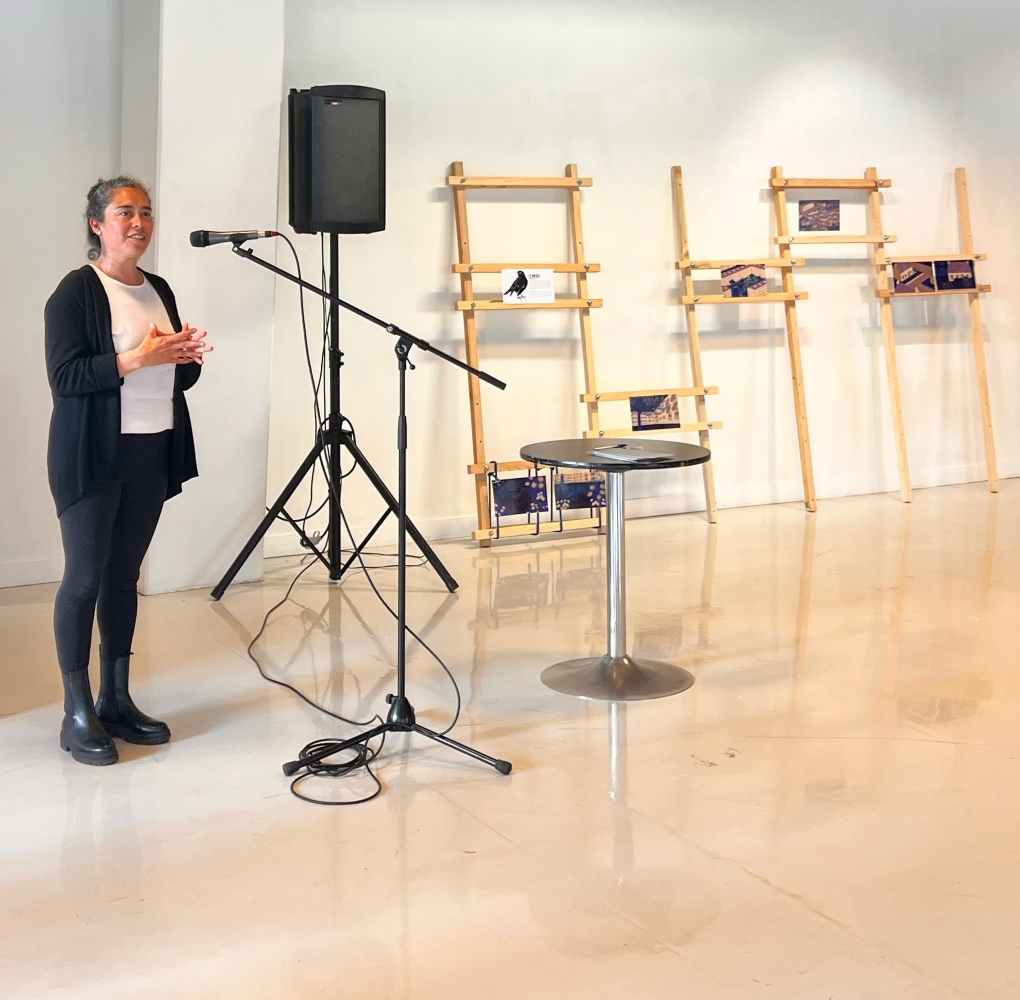
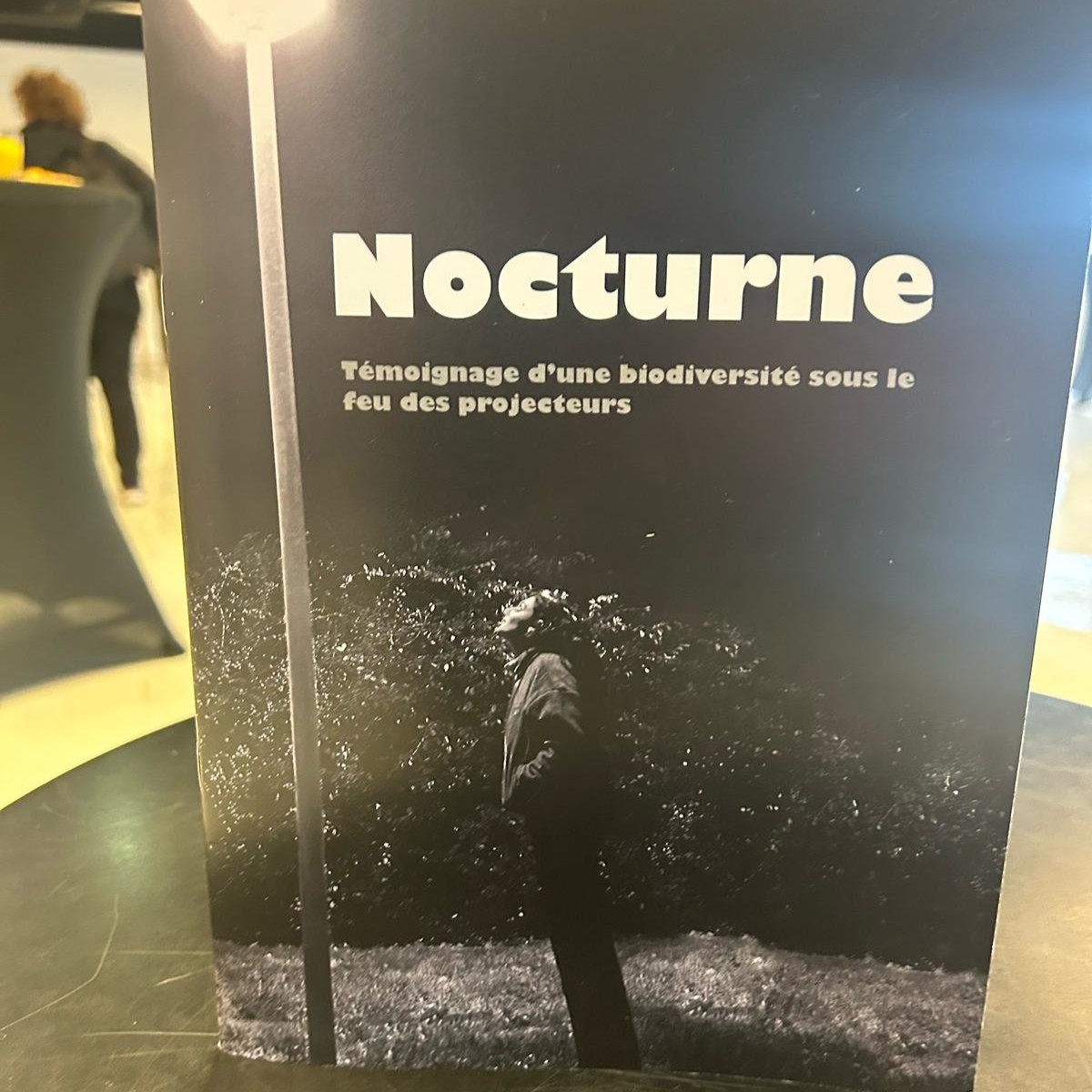
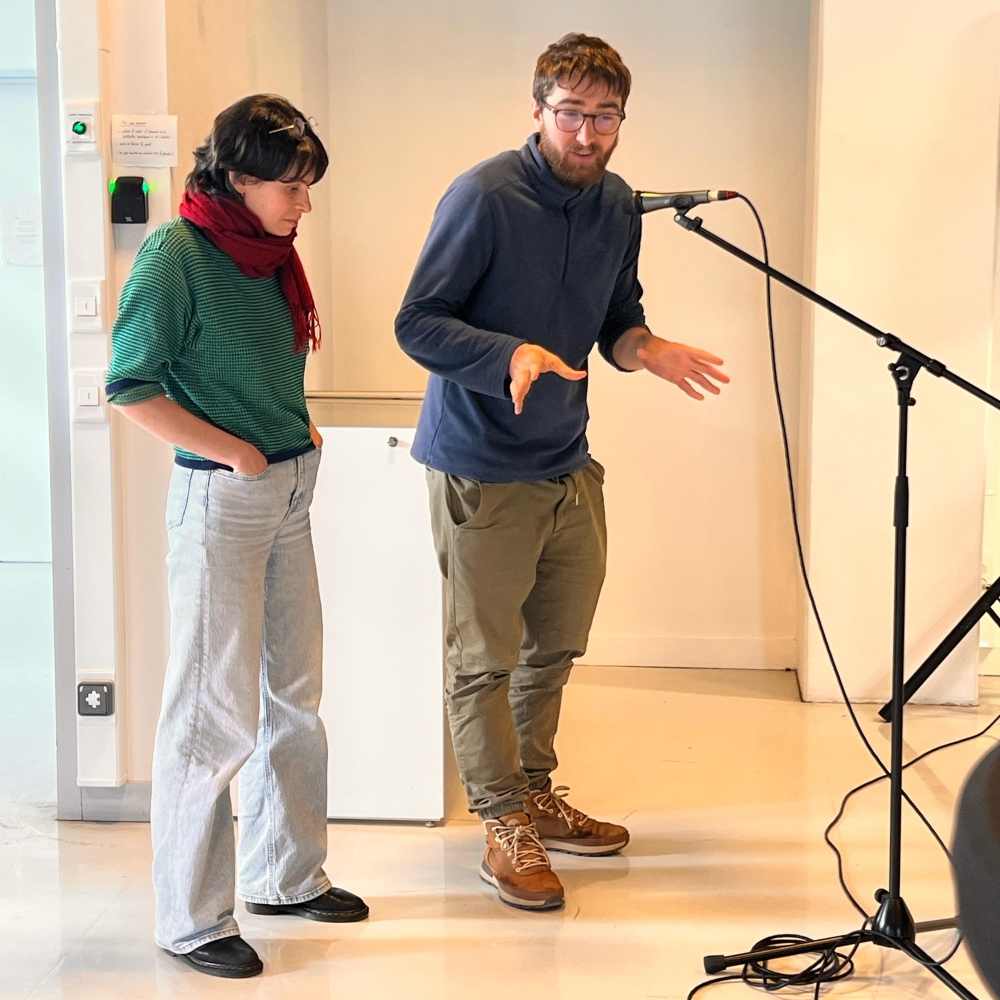
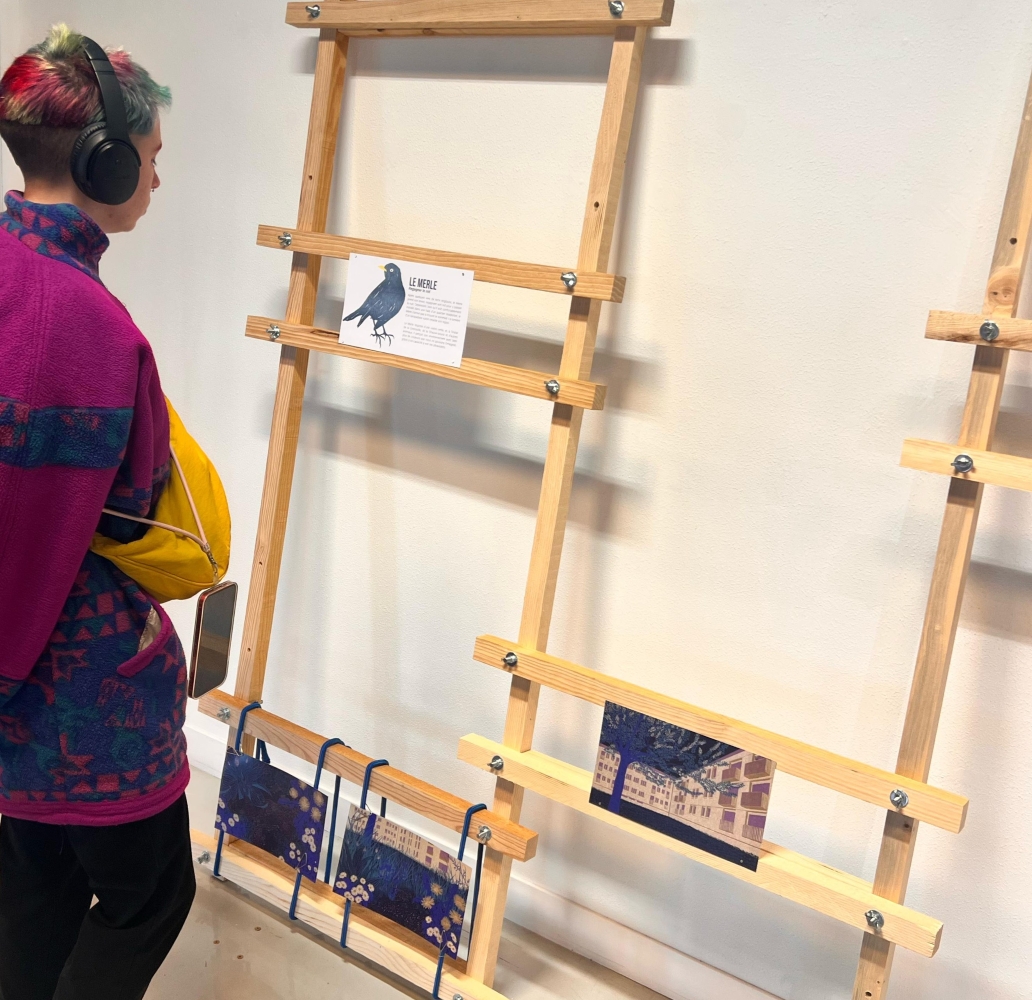
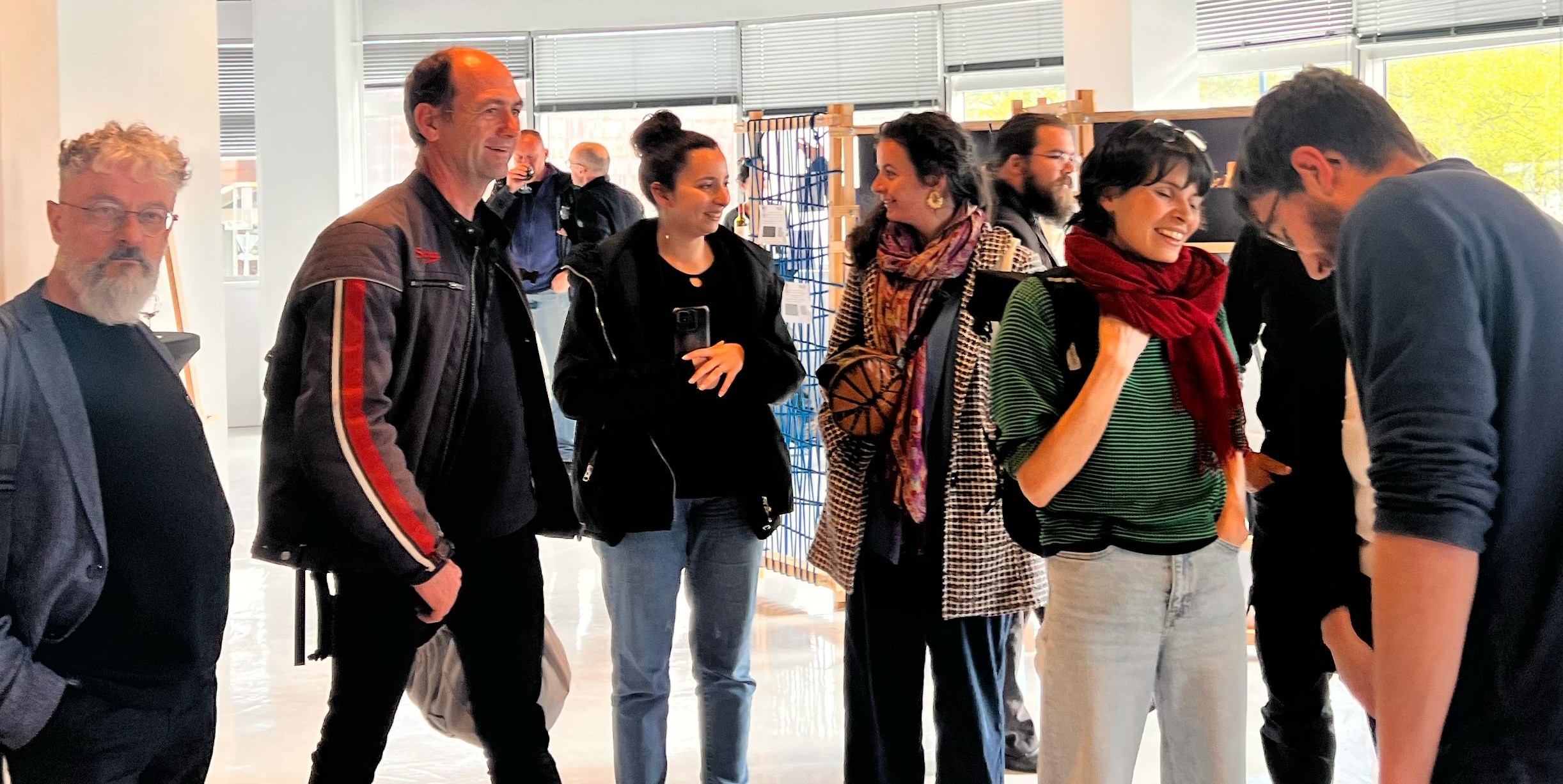
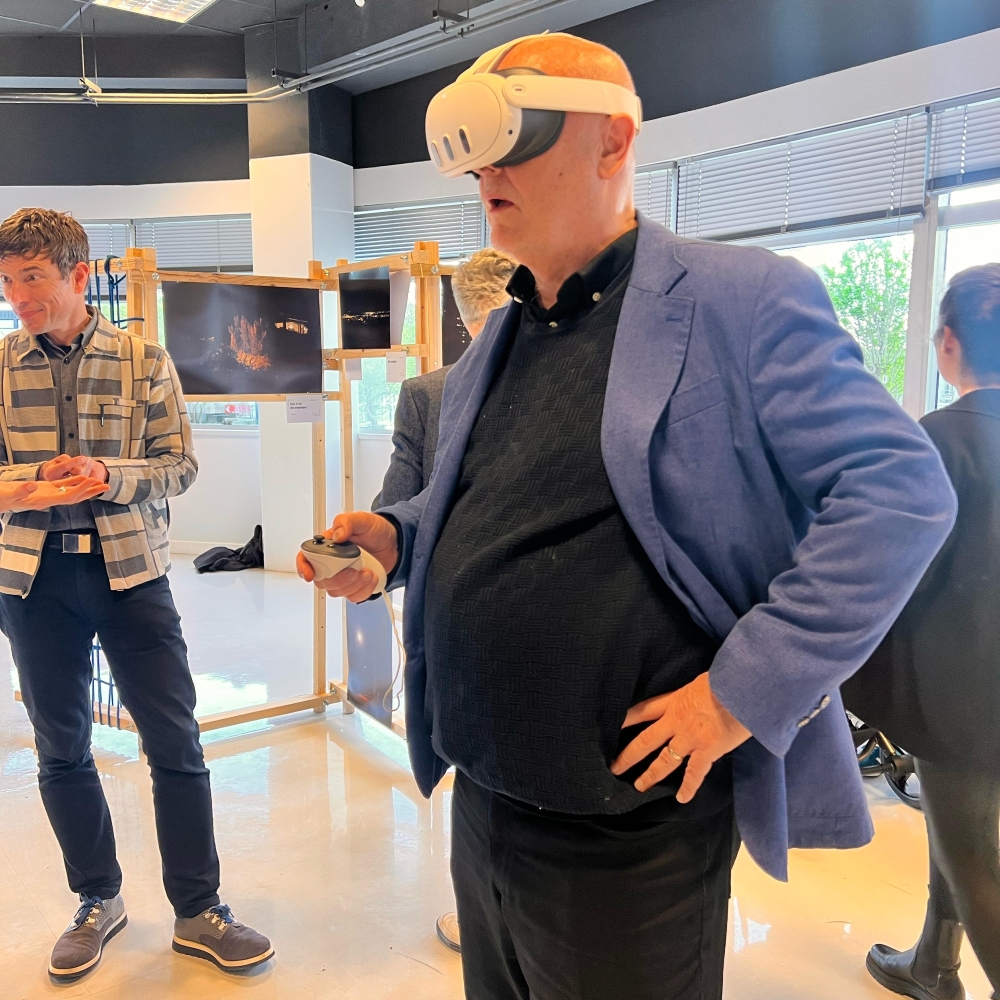
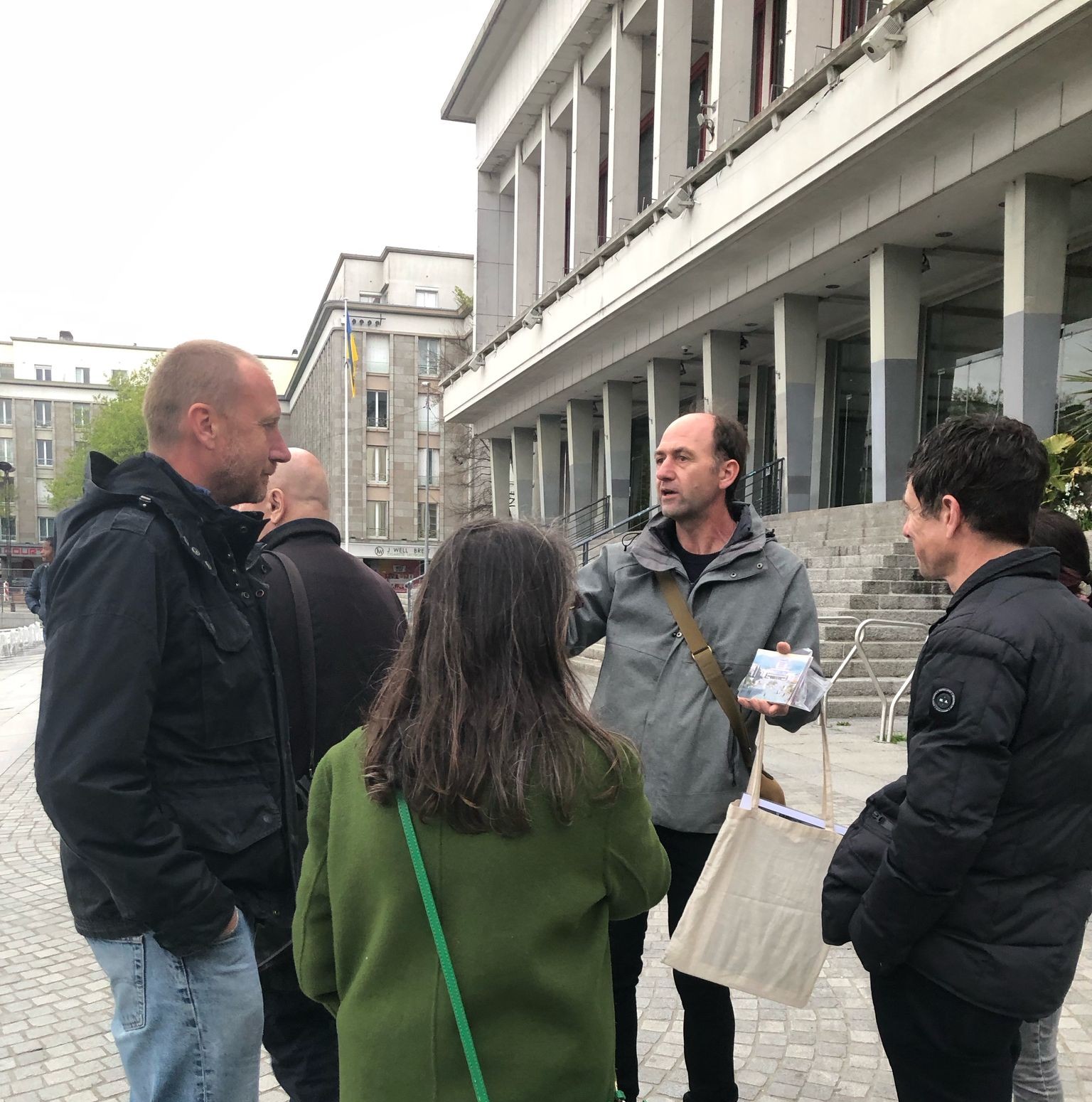
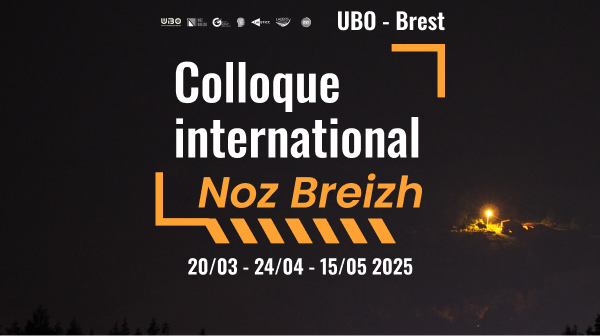
Au printemps 2025, l’UBO a accueilli Fêter la nuit, un colloque international destiné à clôturer trois ans de la vie de la chaire Noz Breizh. Le colloque a réuni ~60 intervenant·e·s afin d’explorer les dimensions et temporalités multiples que recouvrent les pratiques nocturnes urbaines dans le cadre de trois journées thématiques :
- 20 mars - Nuit & Société
- 24 avril - Nuit & Bien commun
- 15 mai - Nuit & Politique
Outre les conférences, tables rondes, posters, démonstrations et animations au programme, les échanges scientifiques ont été enrichis par diverses propositions traitant de la nuit en hybridant les formes créatives et participatives.
Merci aux organisateurs et aux participants !
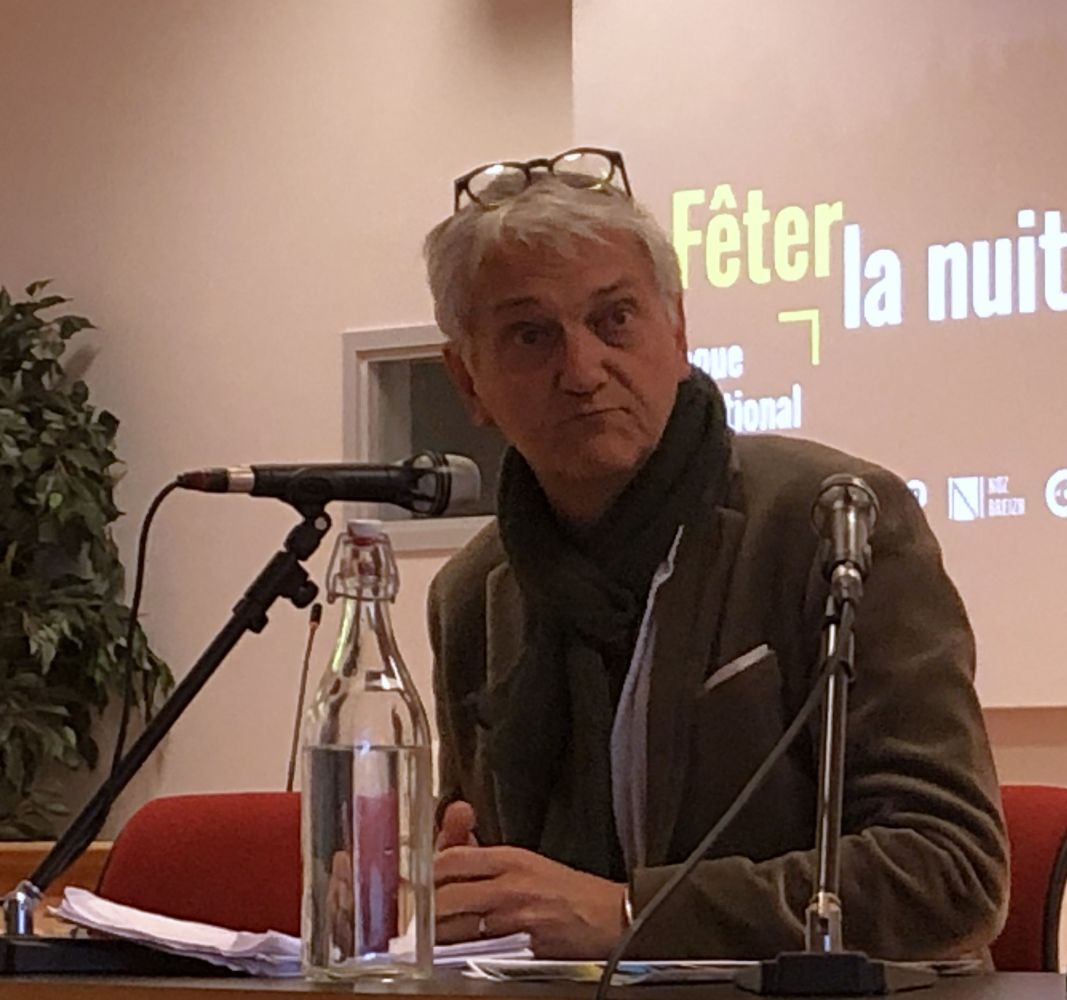
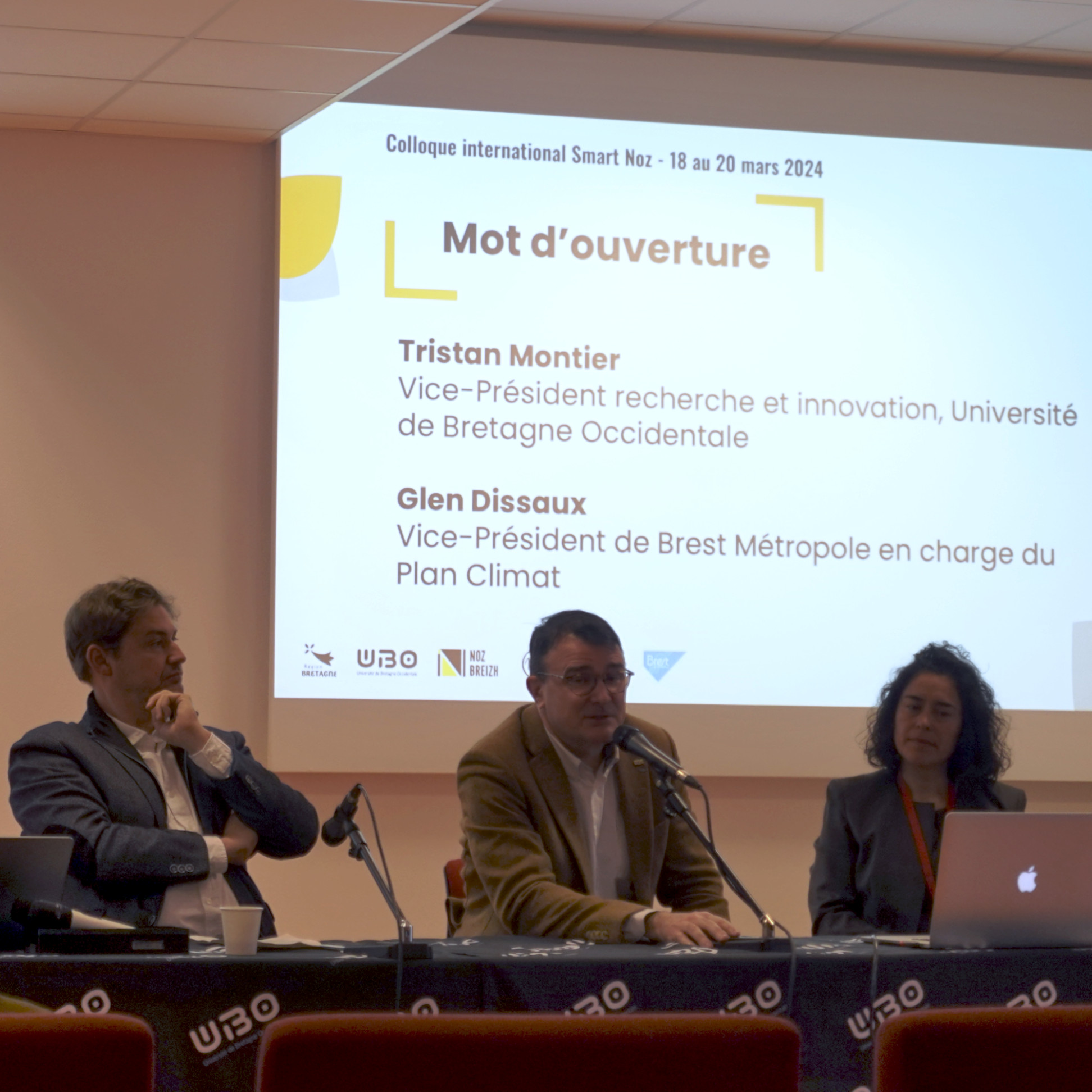
En ouverture du colloque
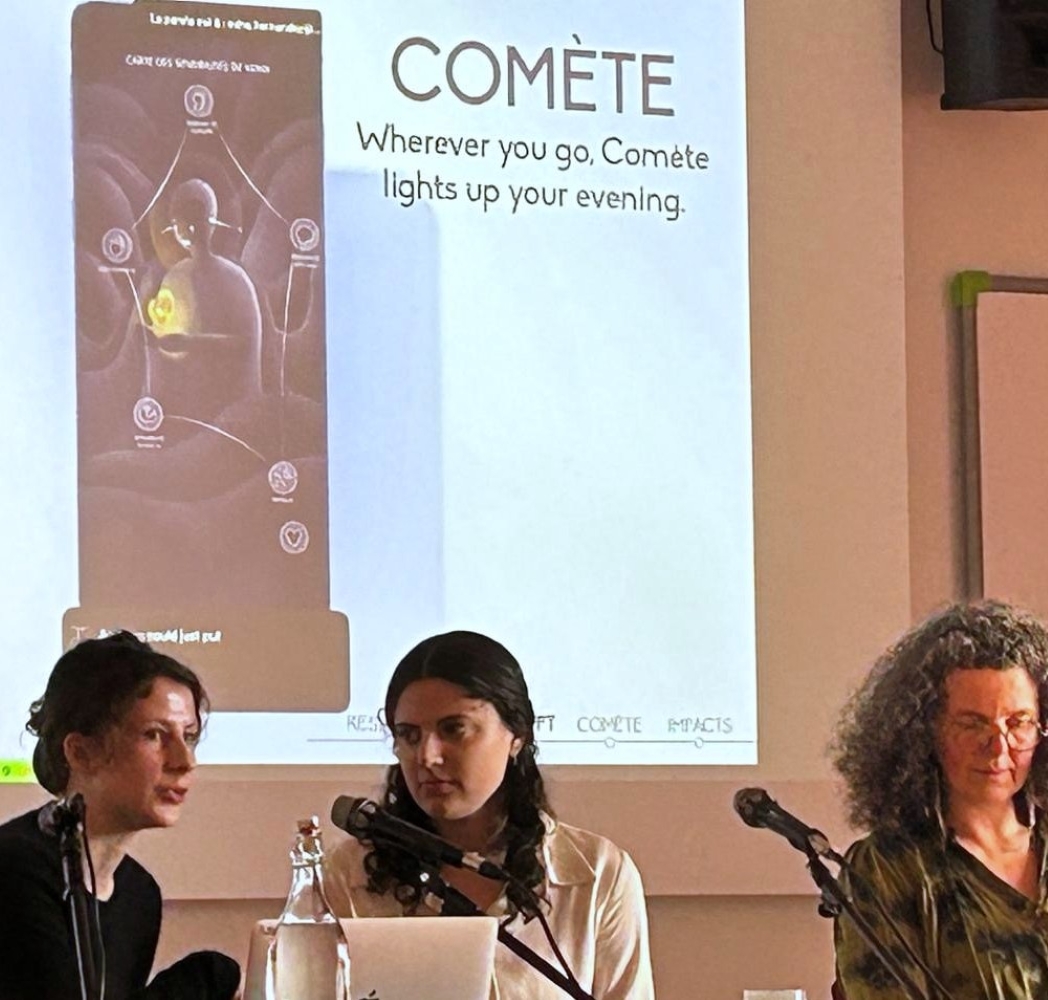
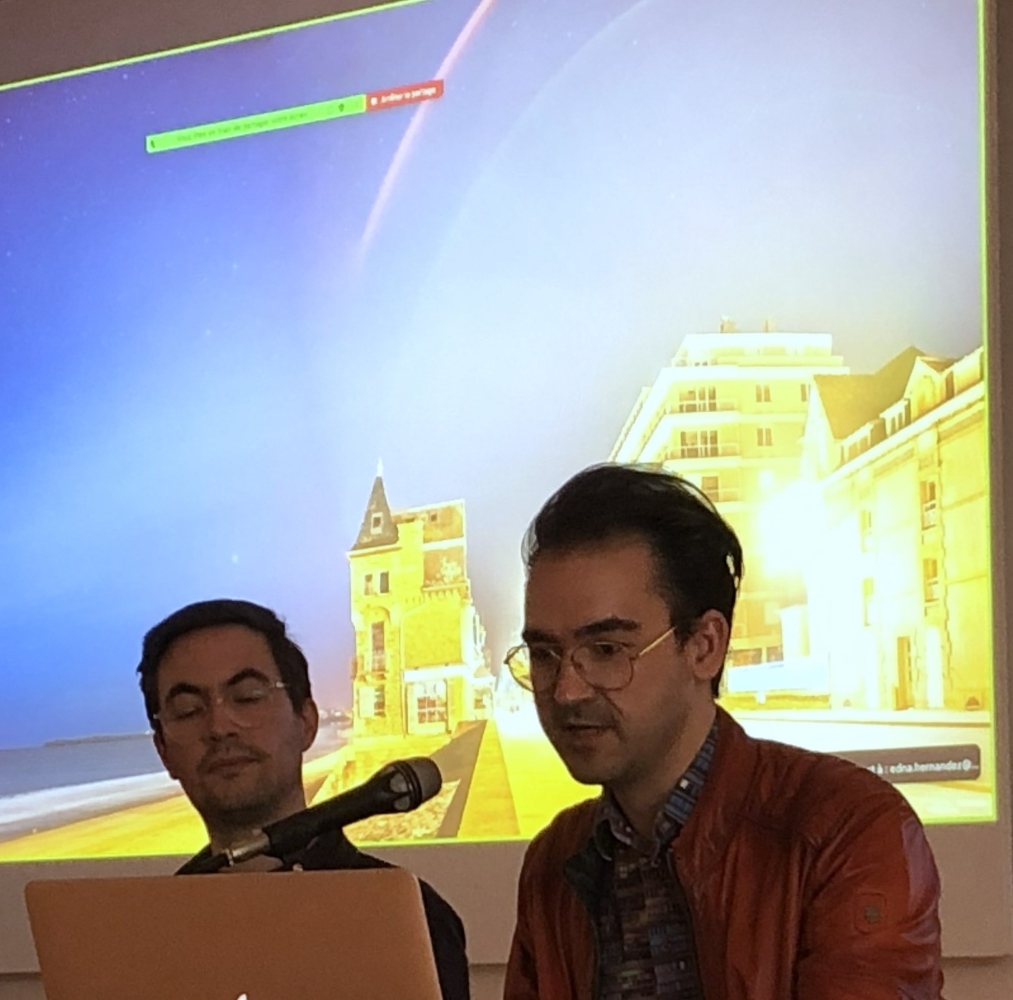
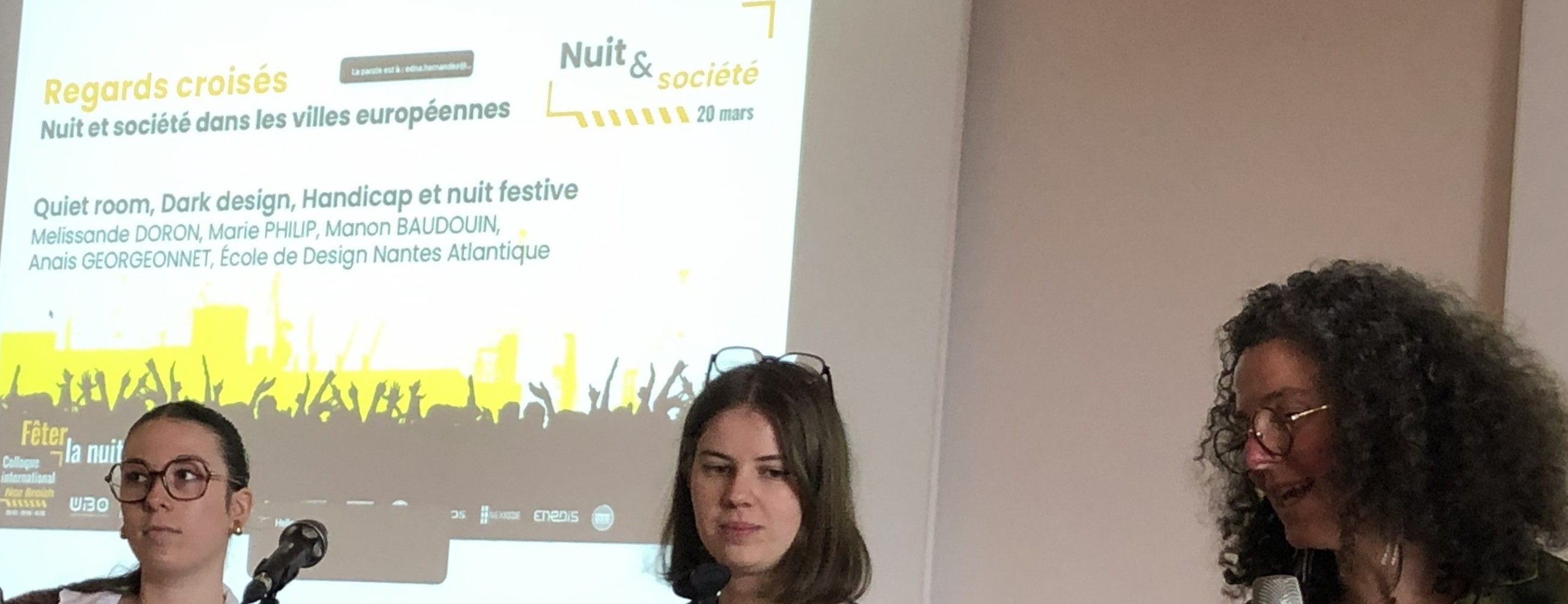
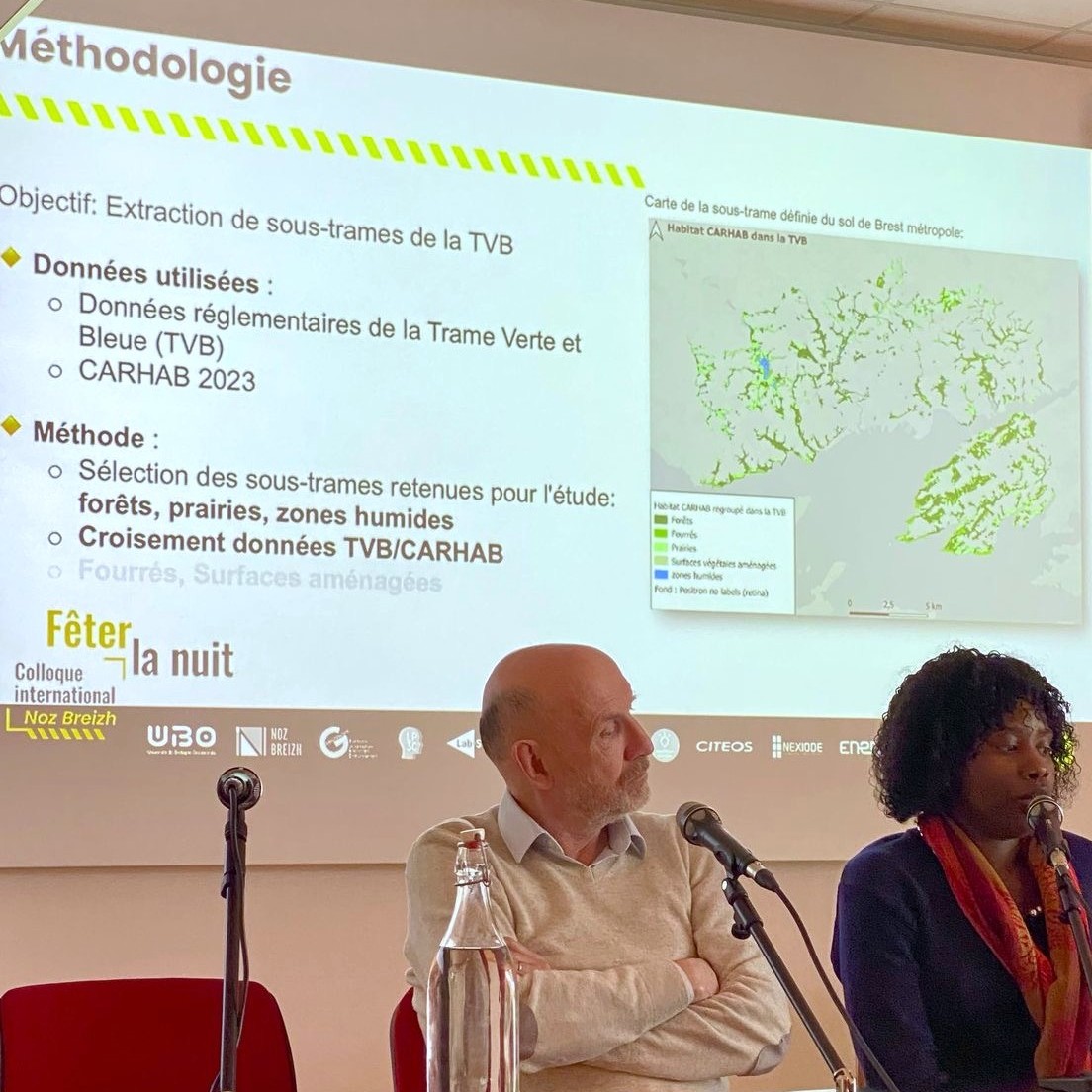
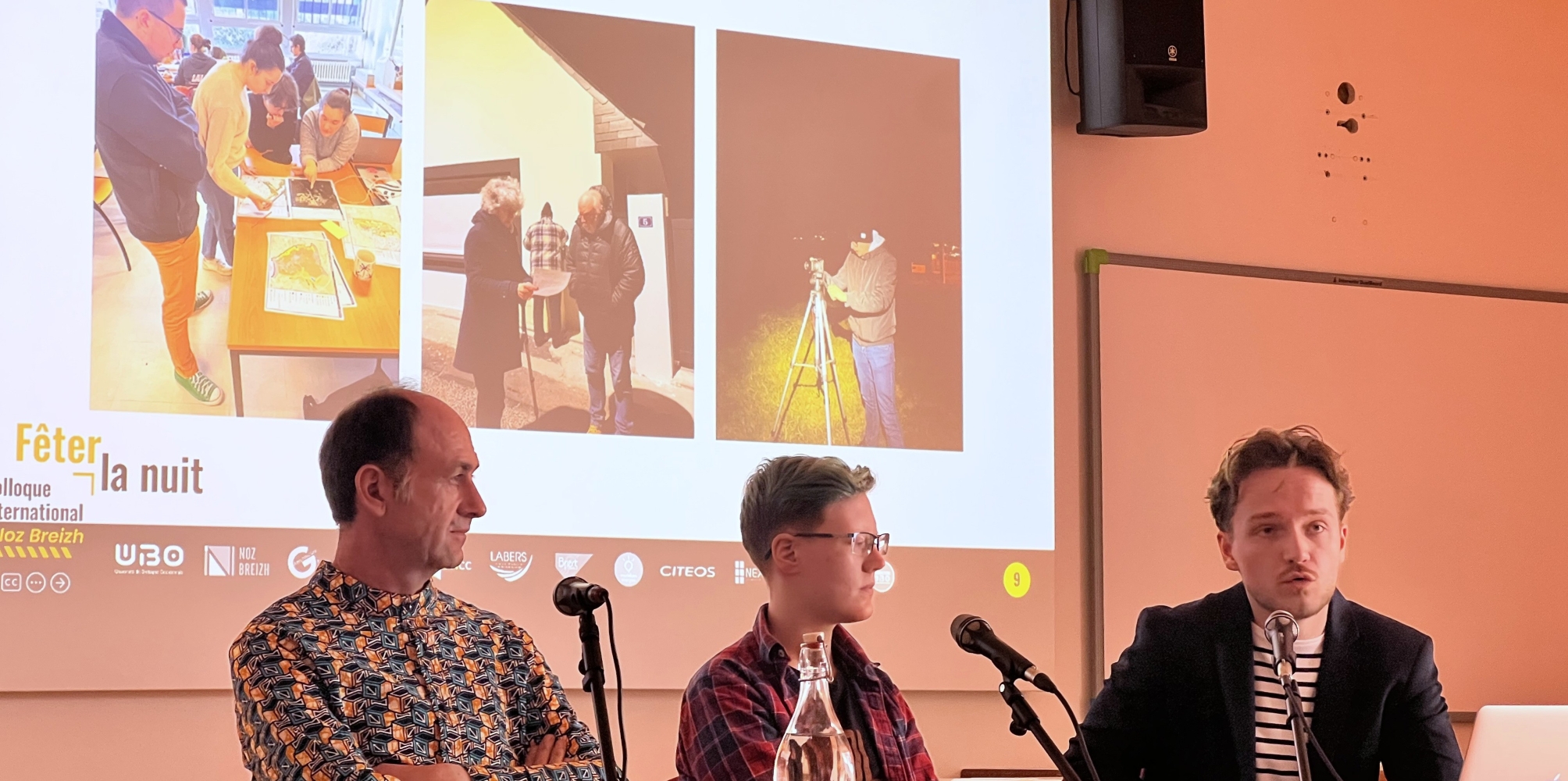
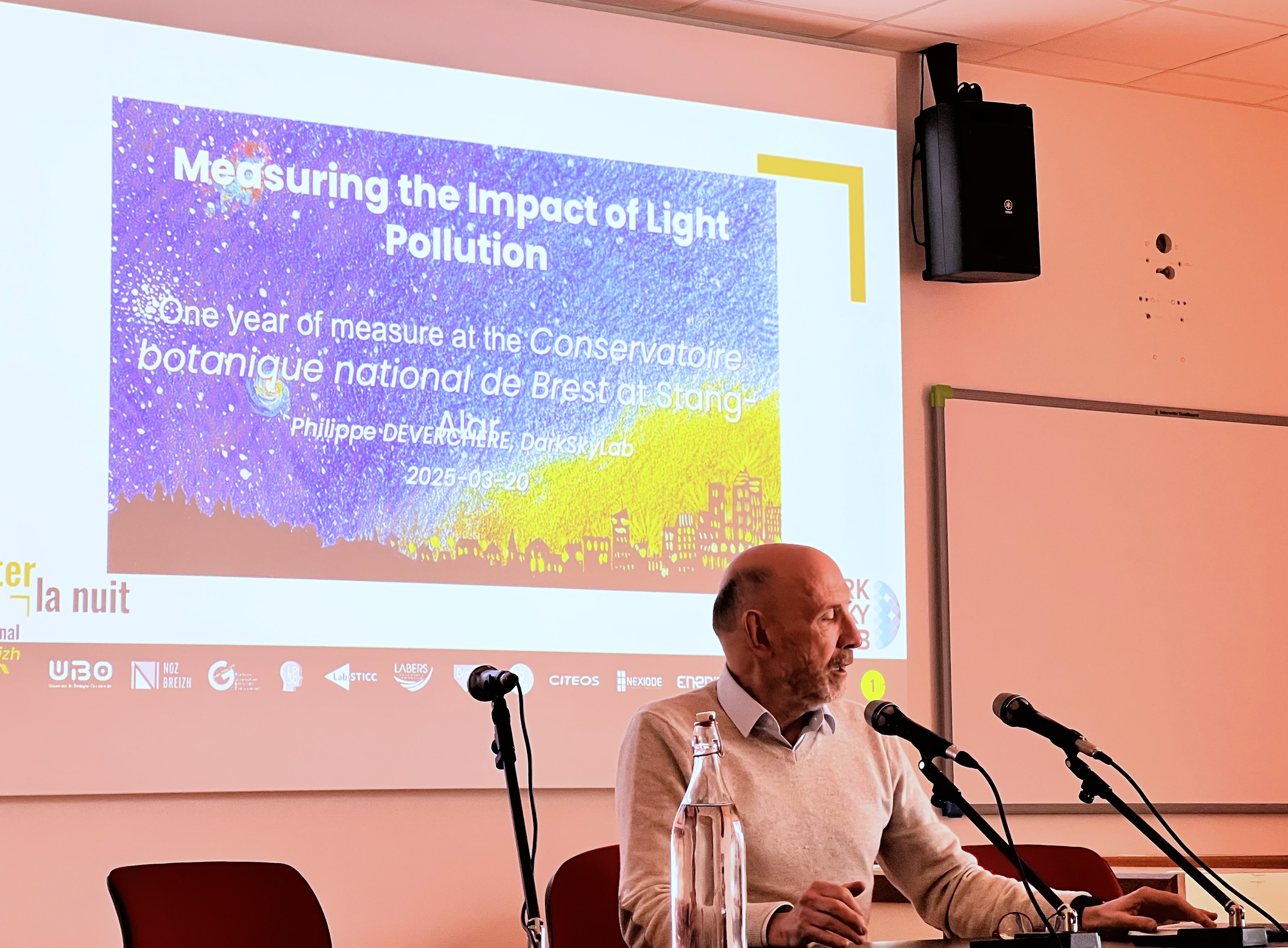
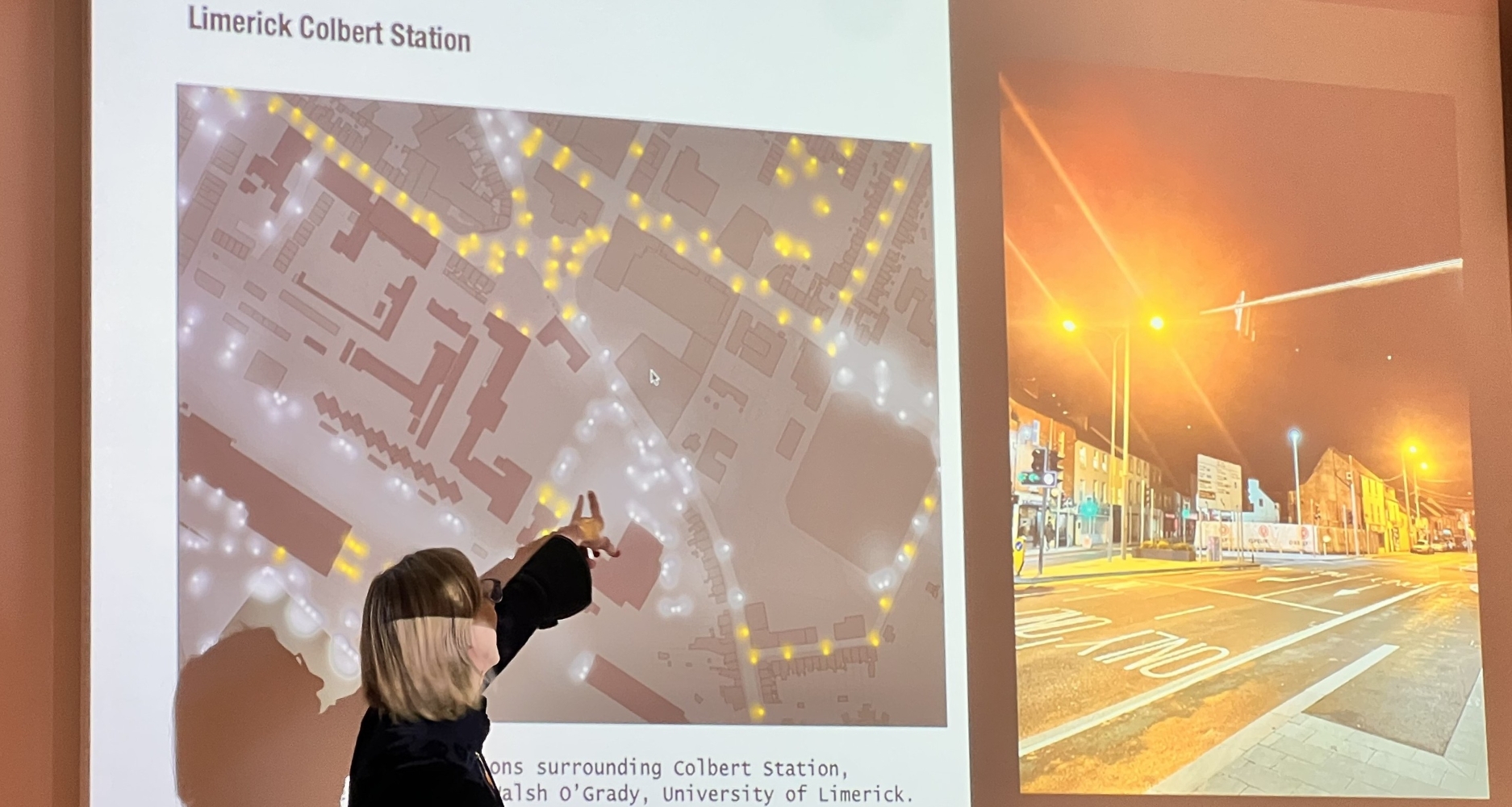
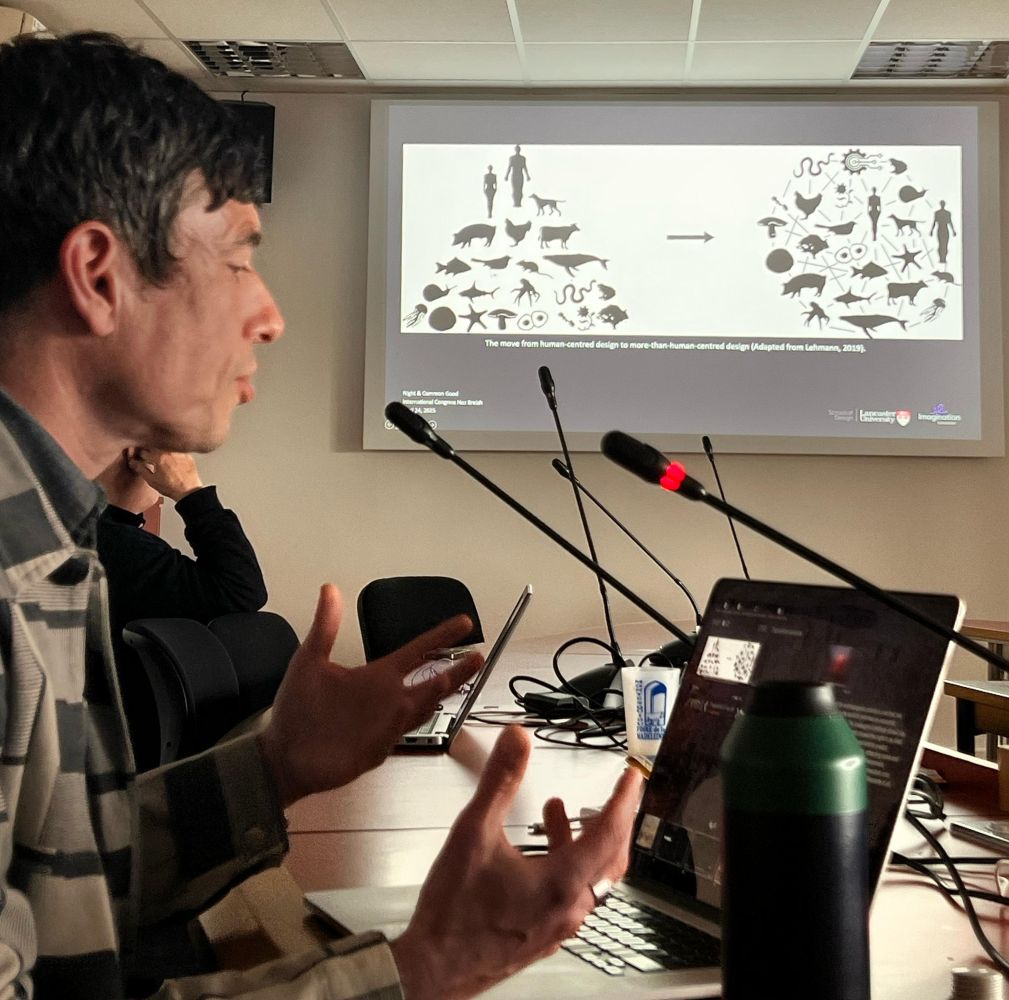
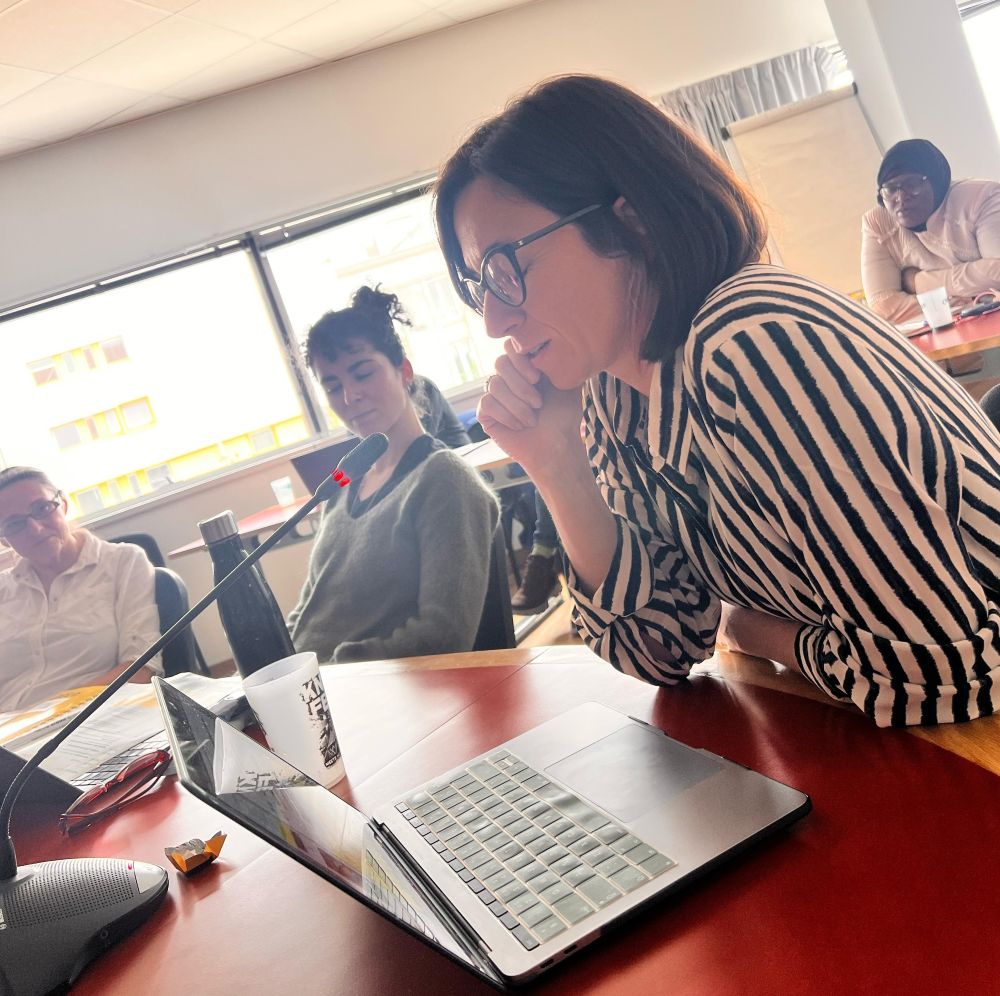
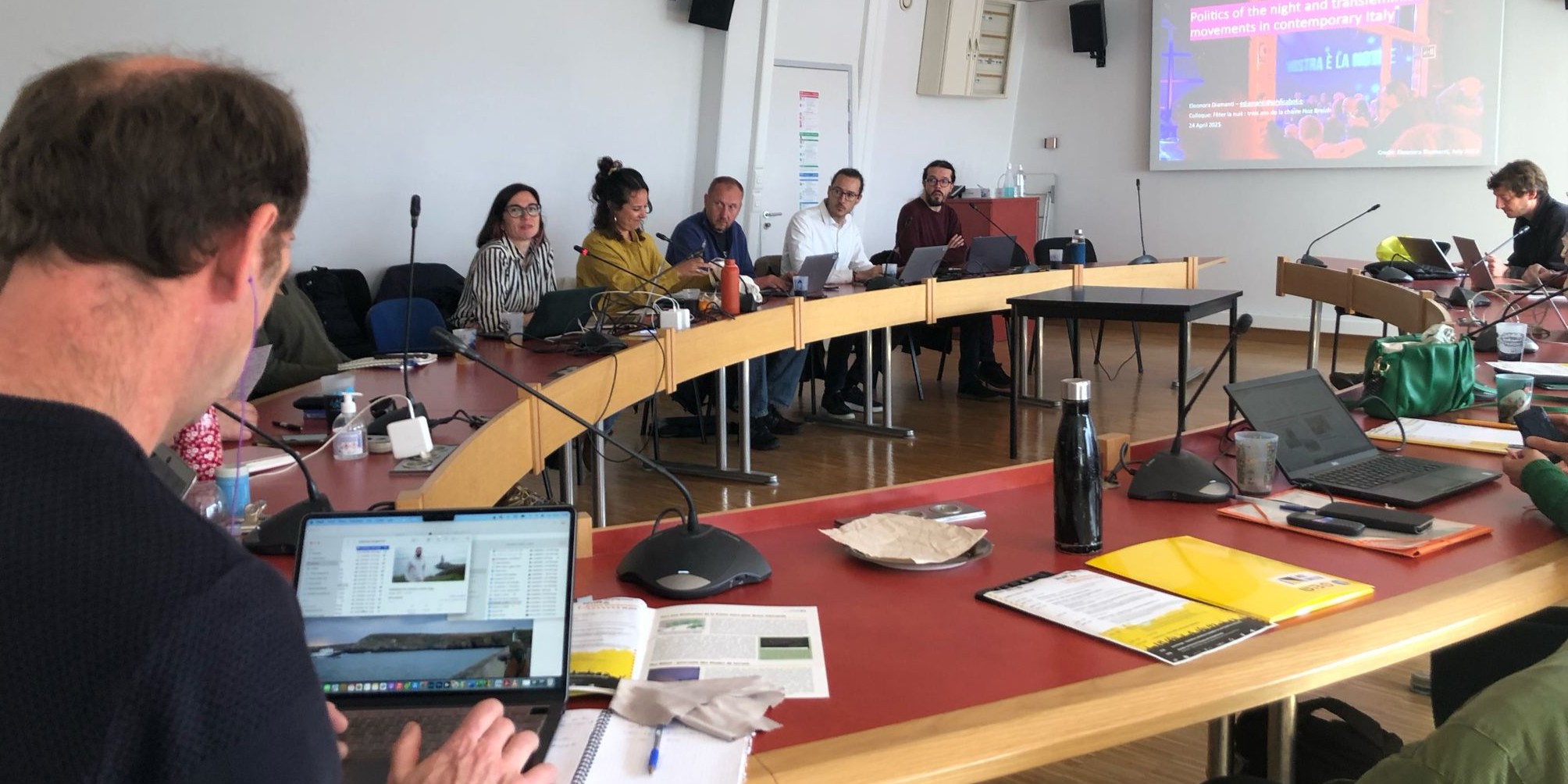
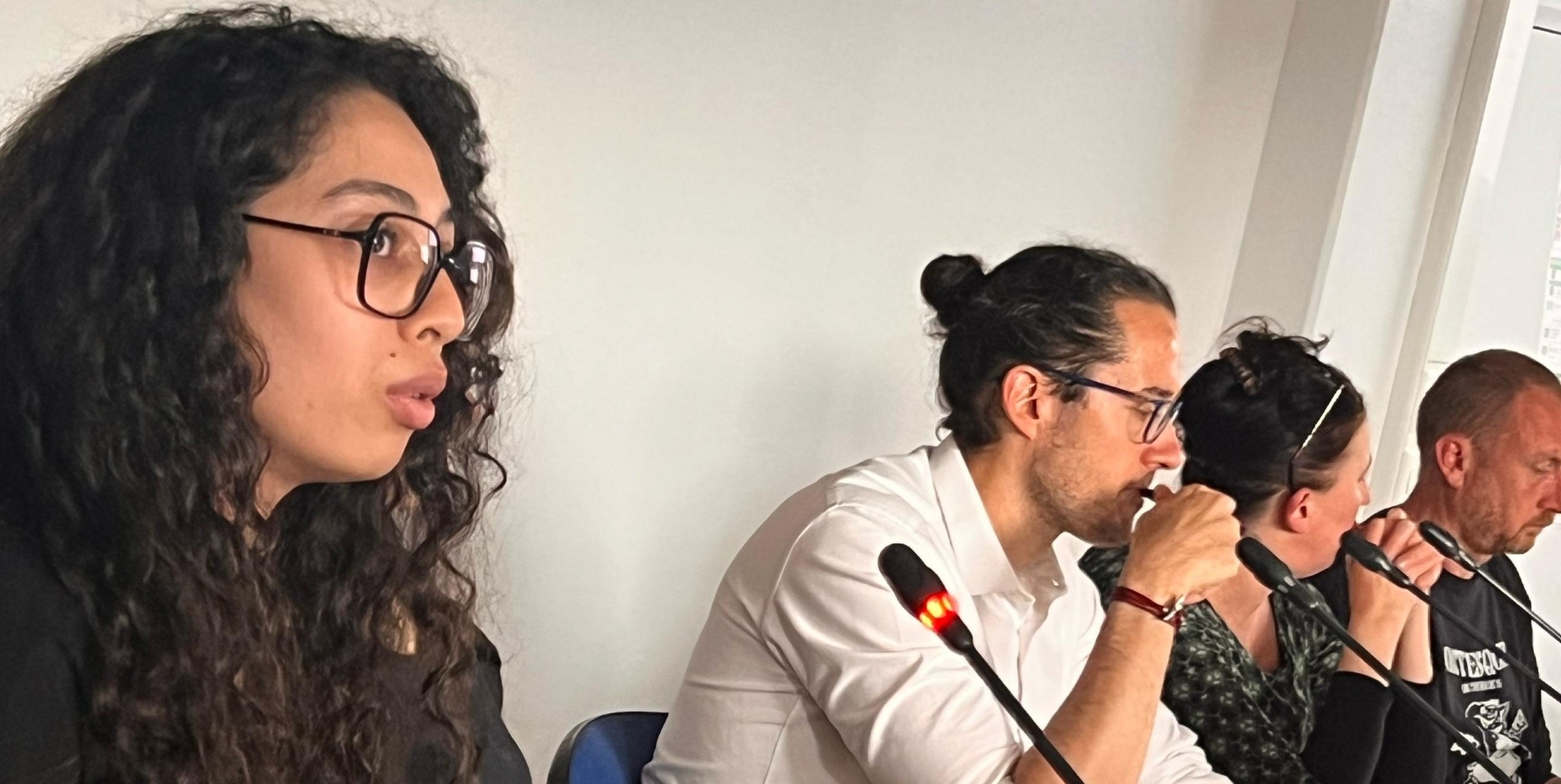
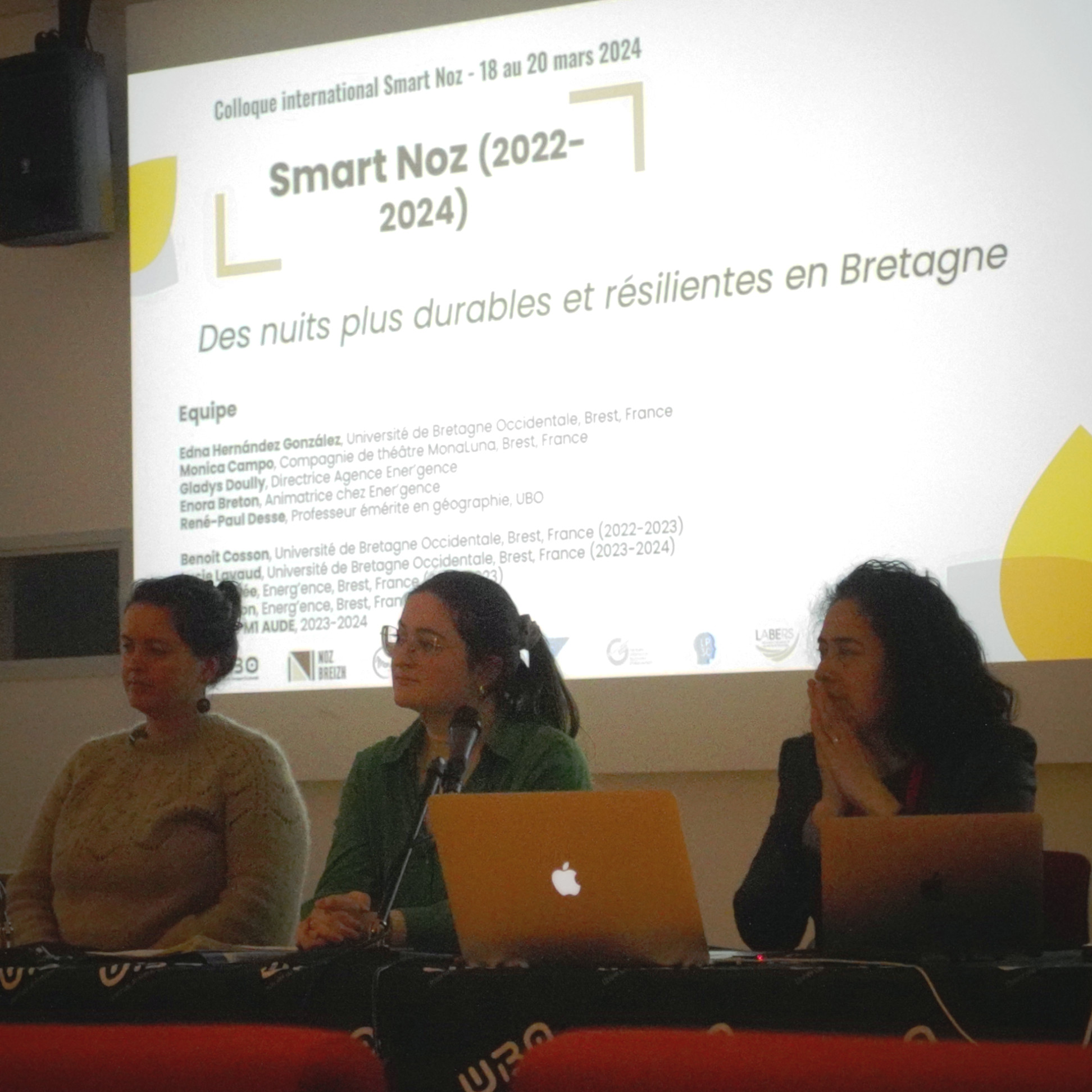
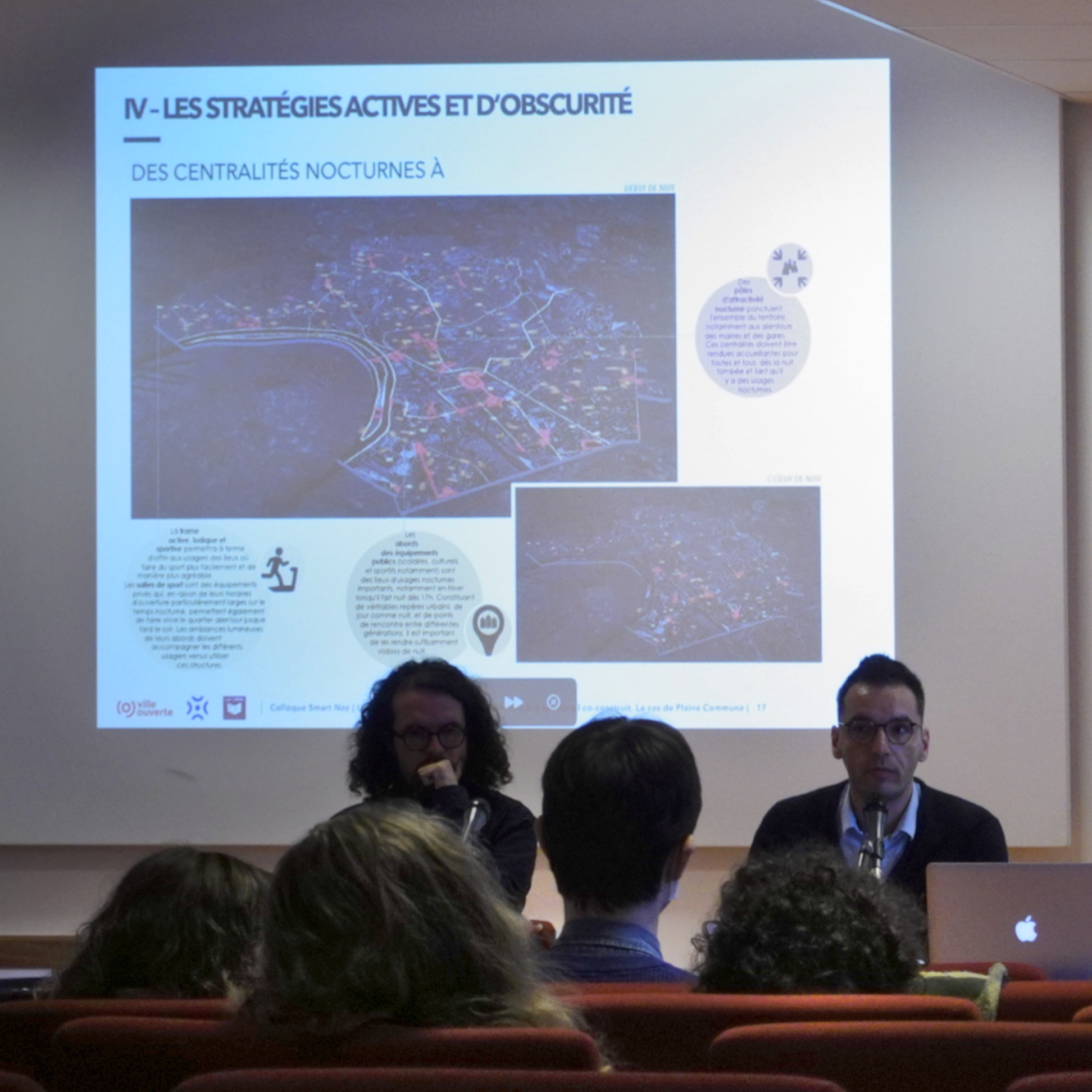
Du 18 au 20 mars 2023, l’UBO a accueilli un colloque international destiné à clôturer le projet Smart Noz, réunissant plus de 40 intervenant·e·s pour l'occasion, dont certain·e·s ont effectué le déplacement depuis l'Espagne, le Canada ou la Pologne.
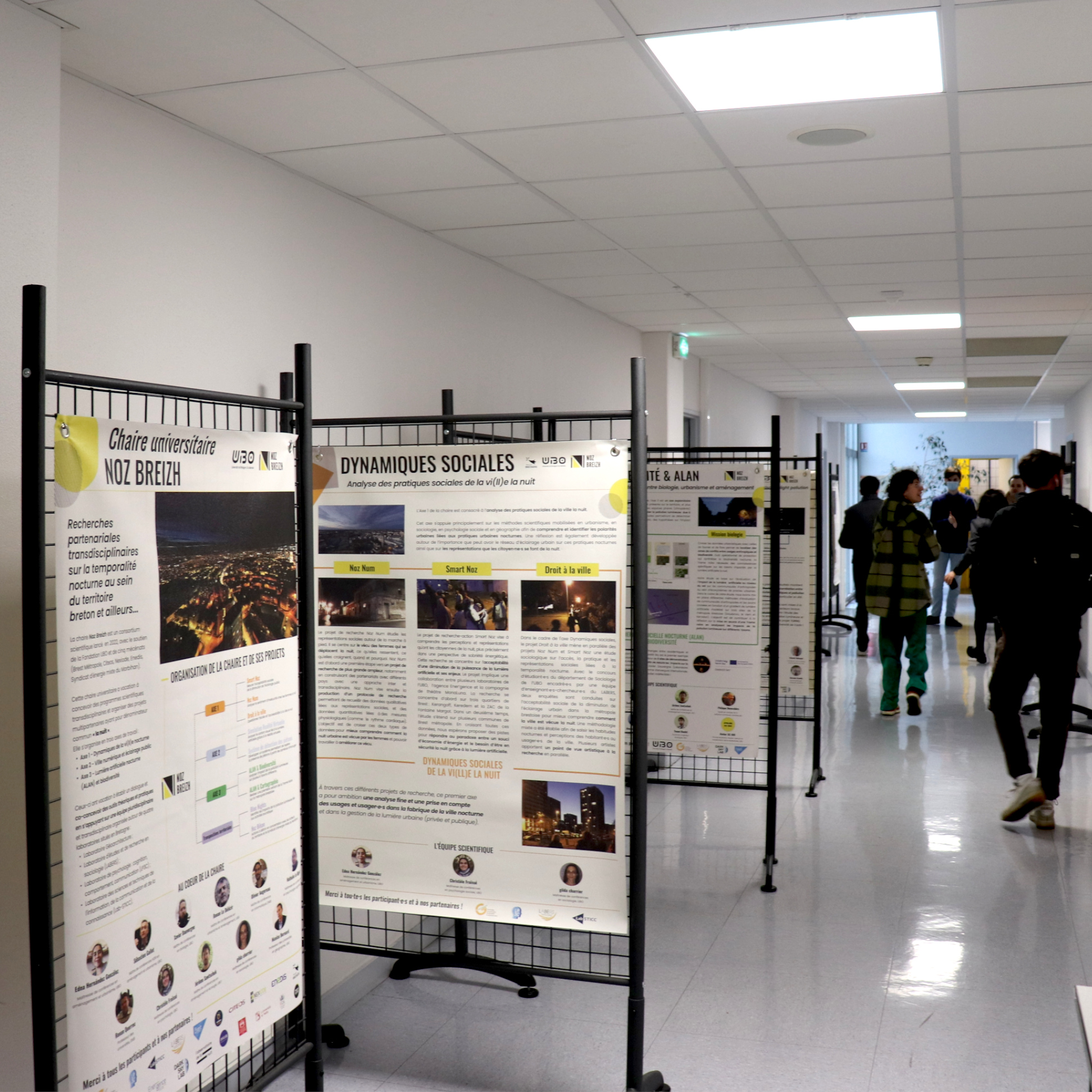
Au-delà des conférences, tables-rondes, présentations de posters, démonstrations et autres animations qui étaient au programme, nos échanges scientifiques ont été enrichis grâce à deux expositions:
- la première, intitulée « Partager la nuit », a été coordonnée par gilda charrier, maîtresse de conférence en sociologie à l’UBO, pour inviter le public à se questionner à partir des nuits contrastées de Brest (France) et de La Plata (Argentine), grâce aux xylogravures de María Renati et aux photographies de Bénédicte de Kersabiec et Nathalie Le Roux.
- la seconde, intitulée « Nights & Lights », a été organisée par Edna Hernández González, coordinatrice de la chaire, afin de mettre en valeur les travaux de Philippe Deverchère (DarkSkyLab) autour de la pollution lumineuse.
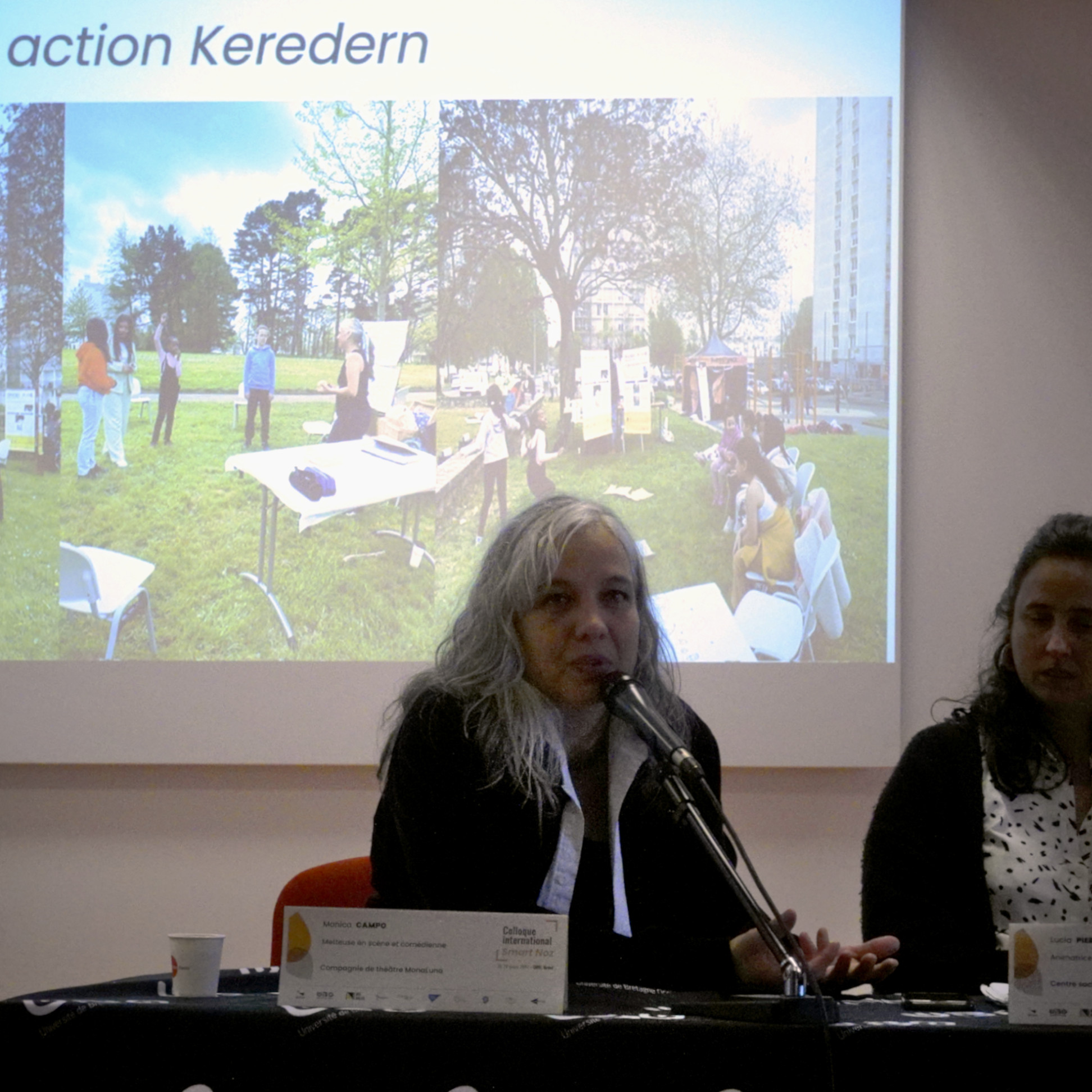
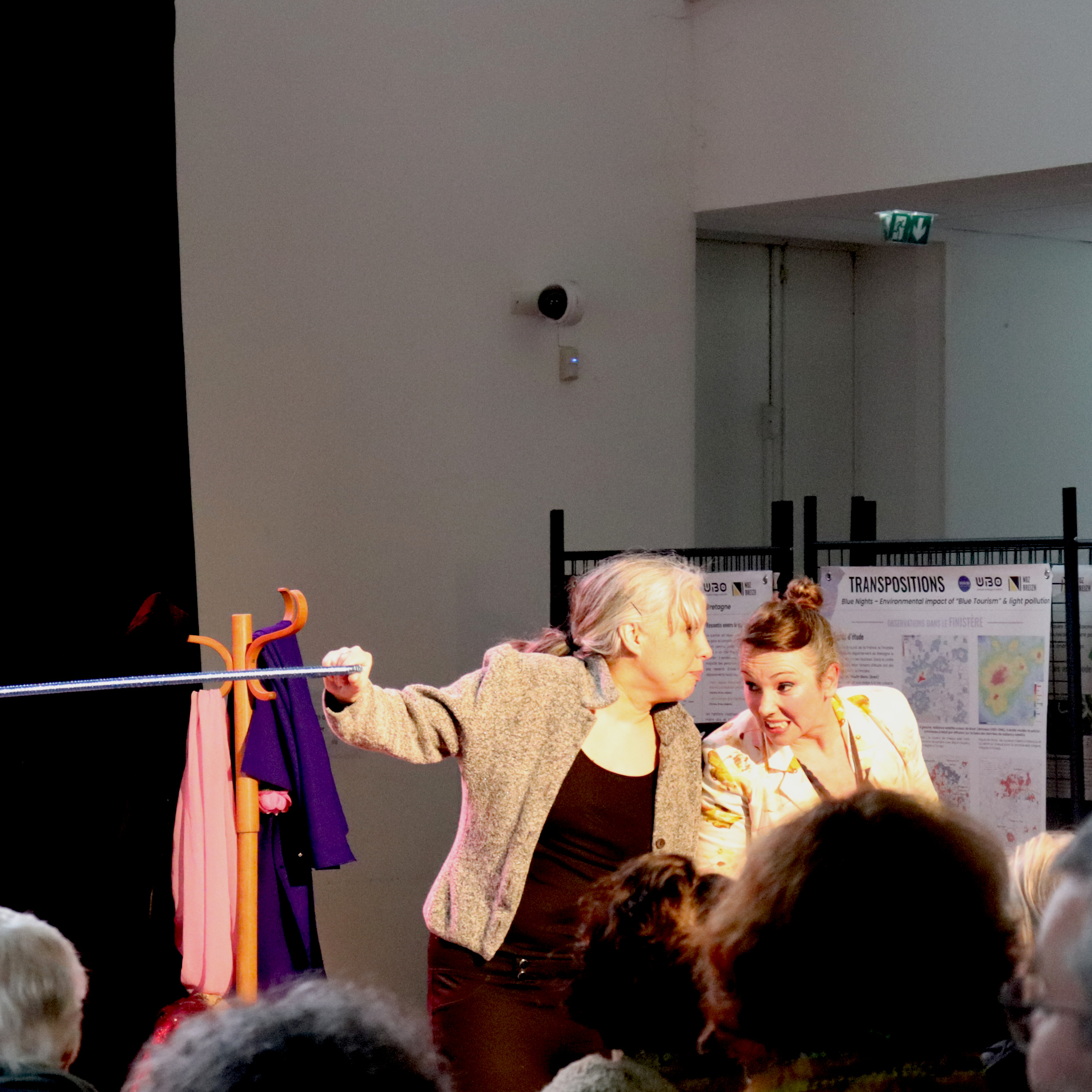
Nous avons également eu le plaisir de pouvoir assister au spectacle Les Lumières de la nuit, restitution théâtrale de la parole des habitant·e·s des quartiers de Brest selon une mise en scène qui retrace les échanges qui ont eu lieu entre l’équipe du projet de recherche-action Smart Noz et les Brestois·e·s entre 2022 et 2024, proposée par la Cie MonaLuna sous la direction de Monica Campo.
Merci aux organisateurs et aux participants !
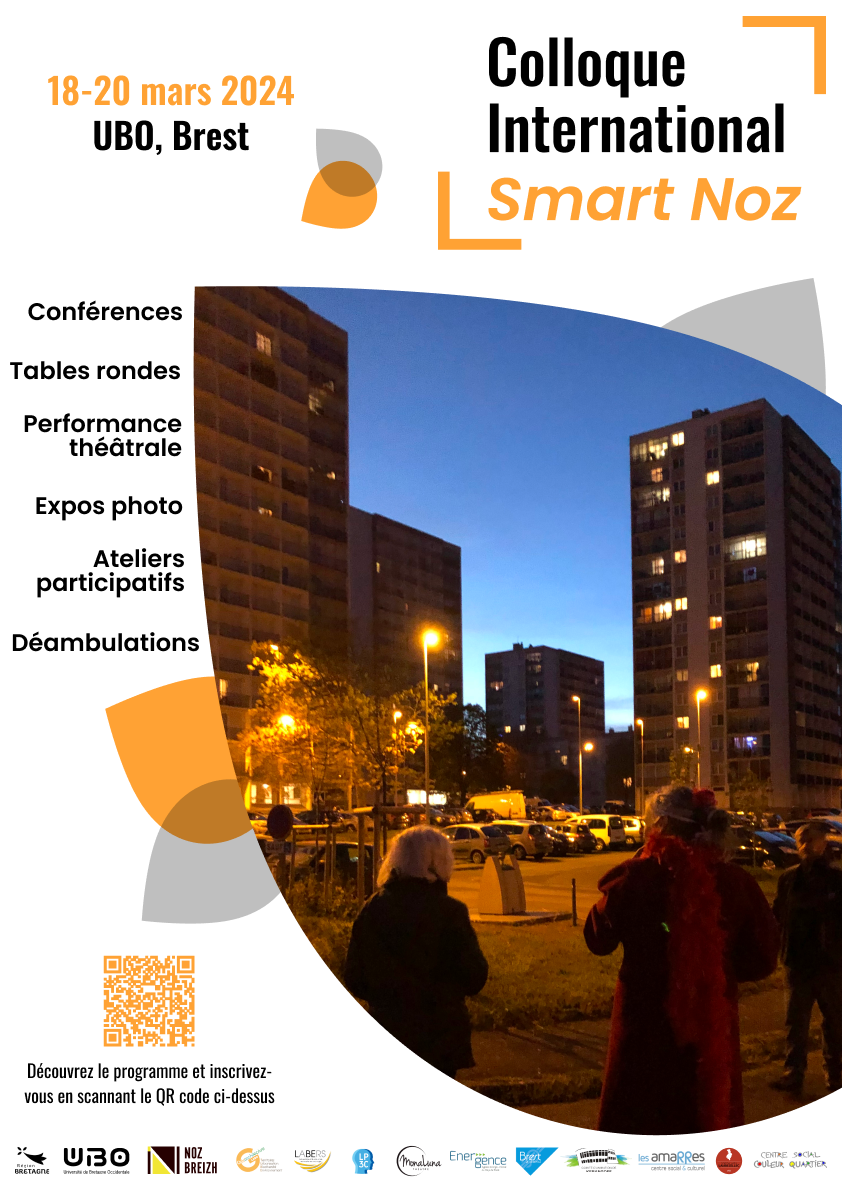

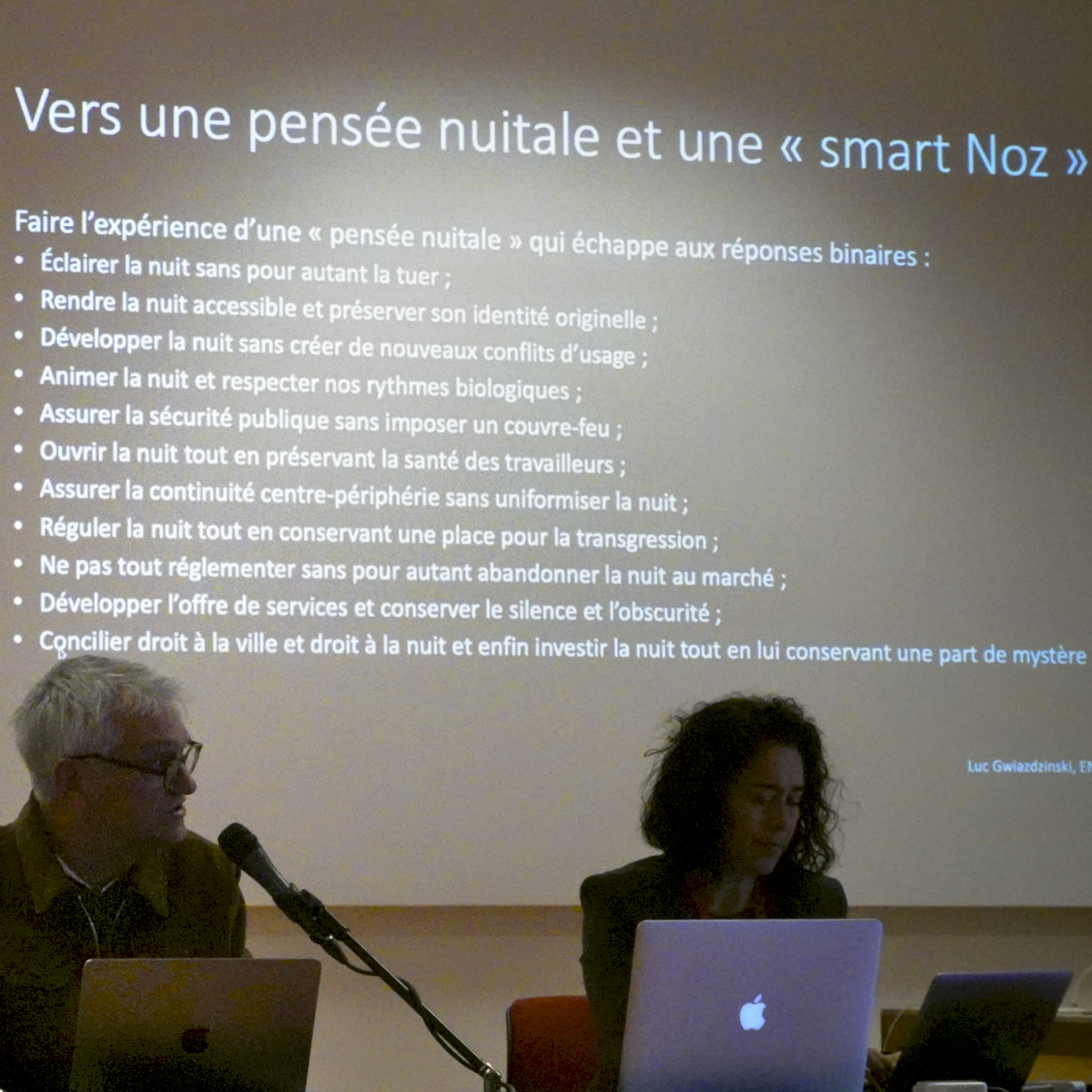
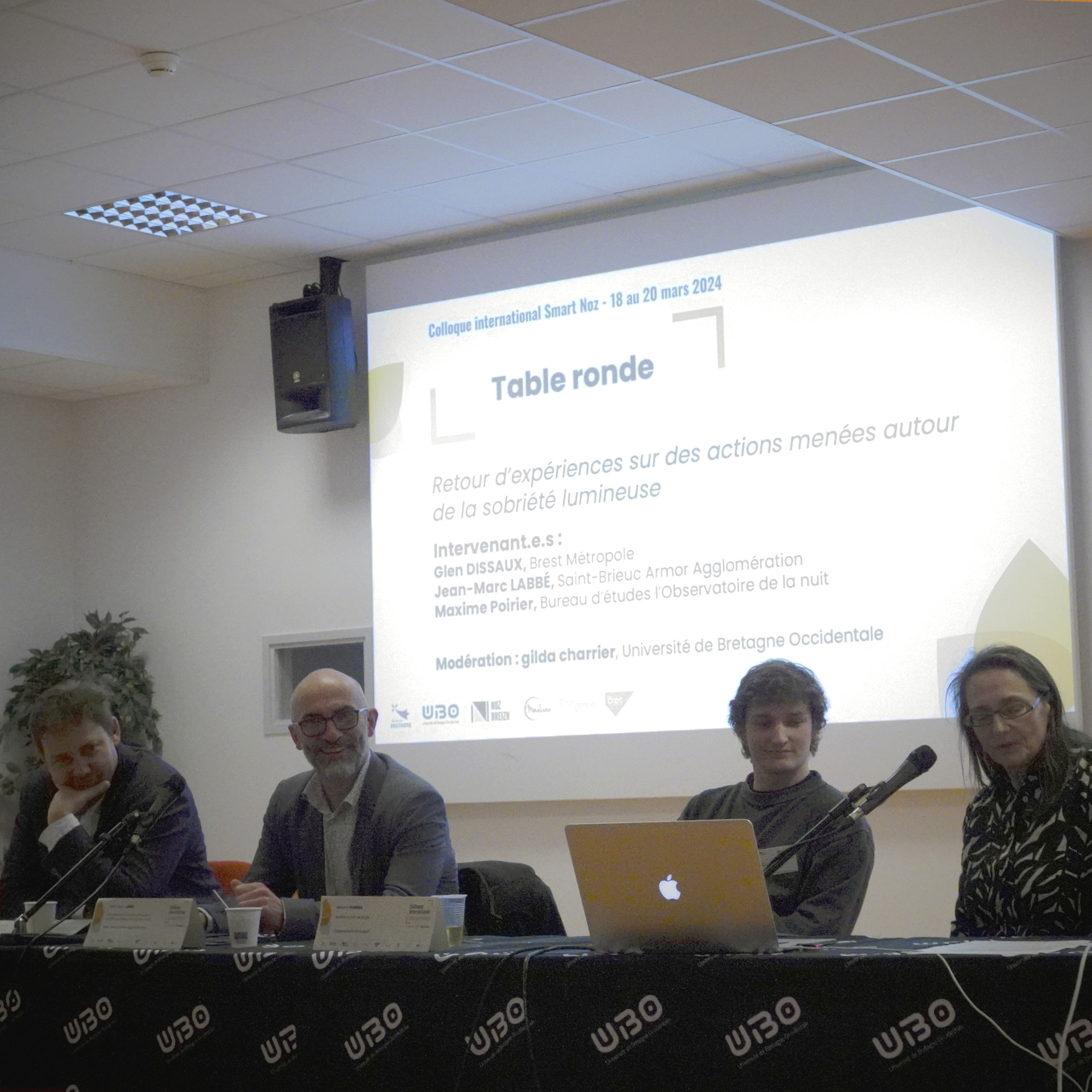
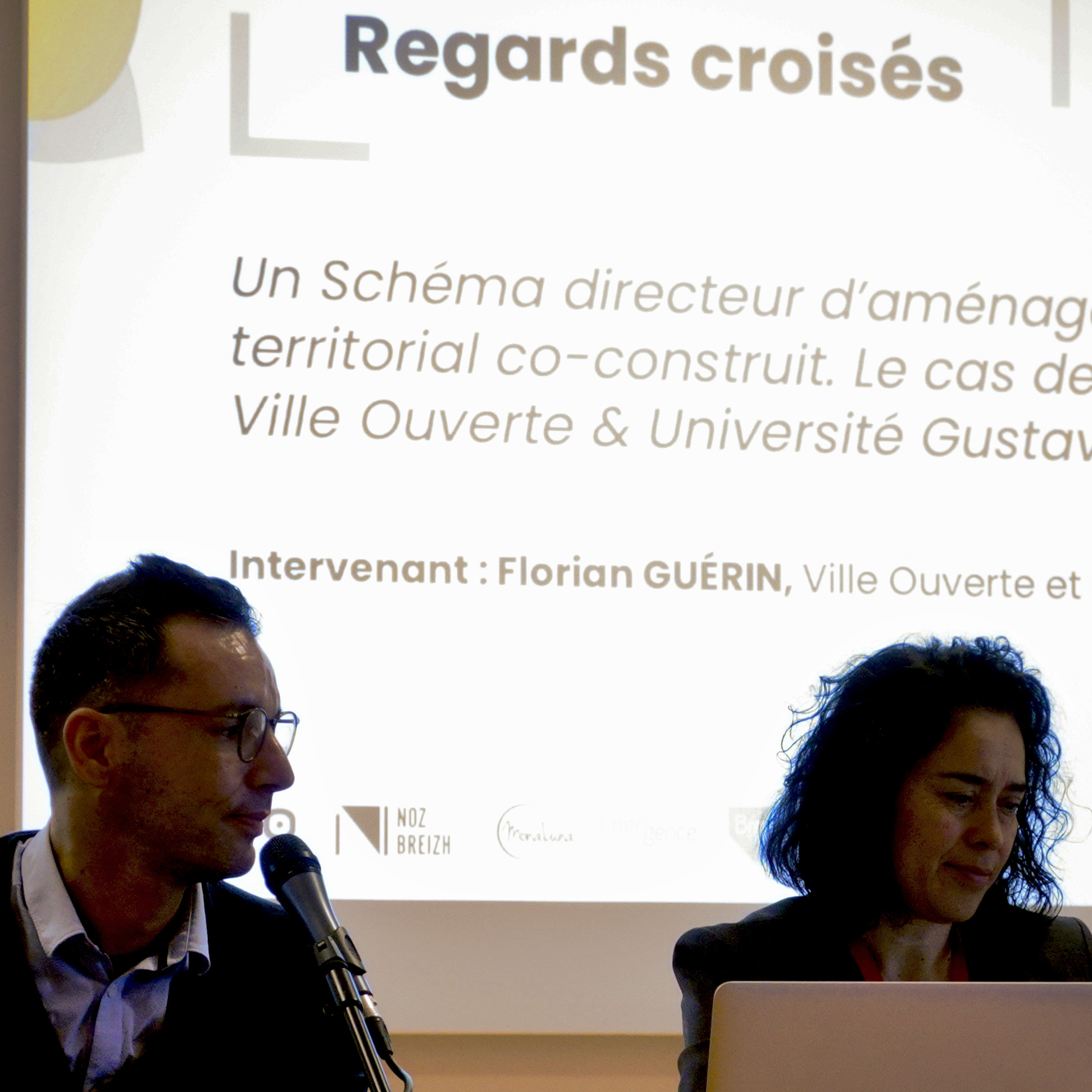
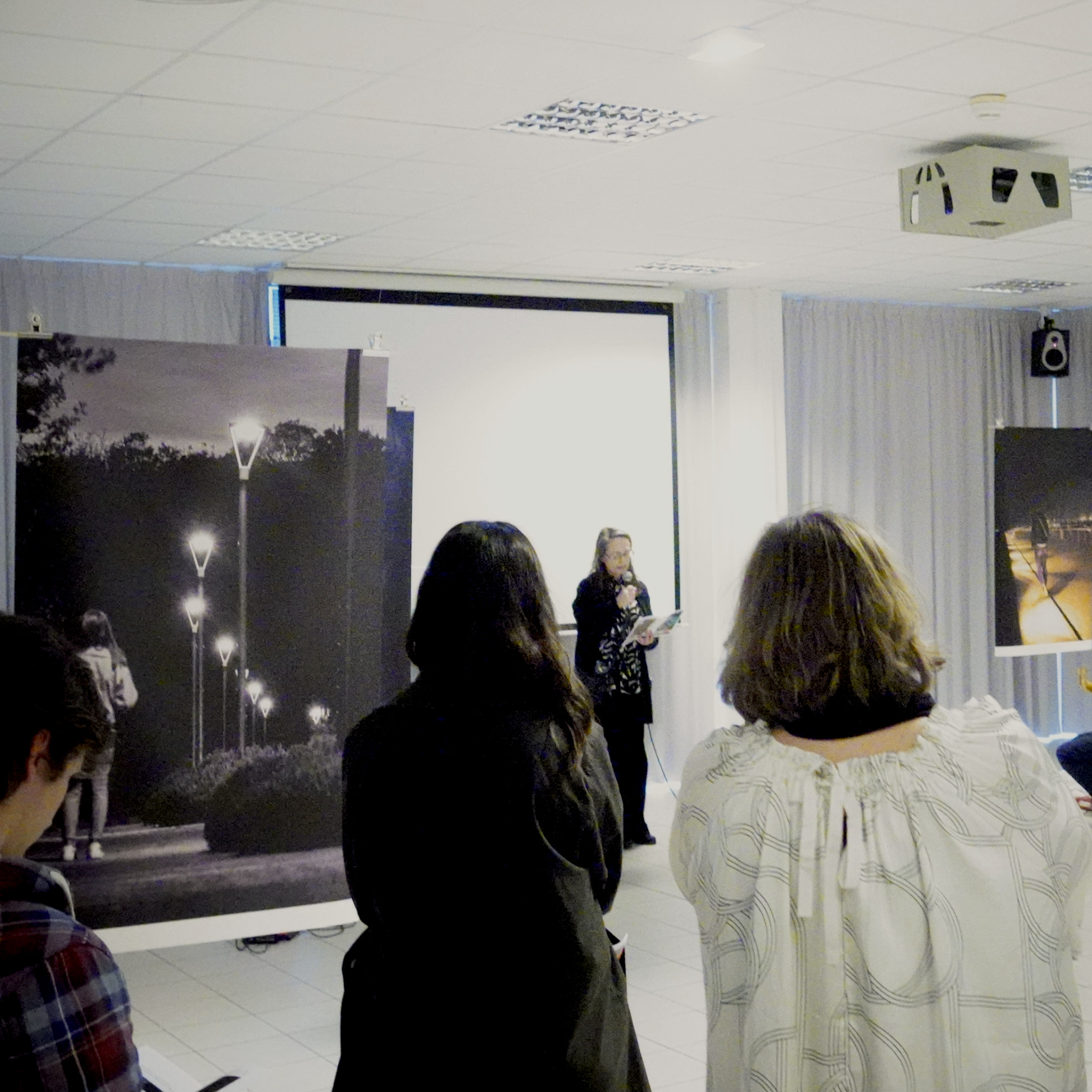
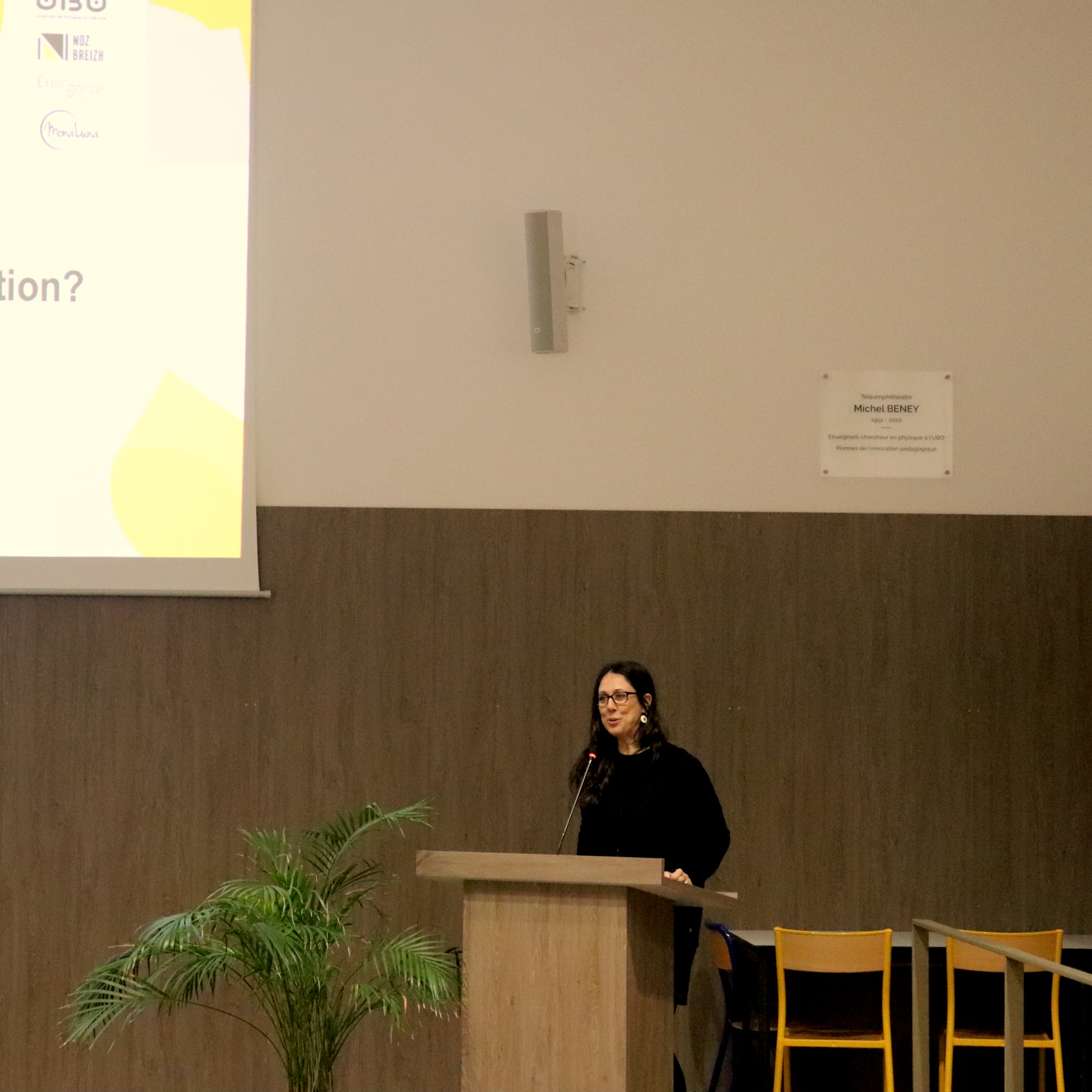
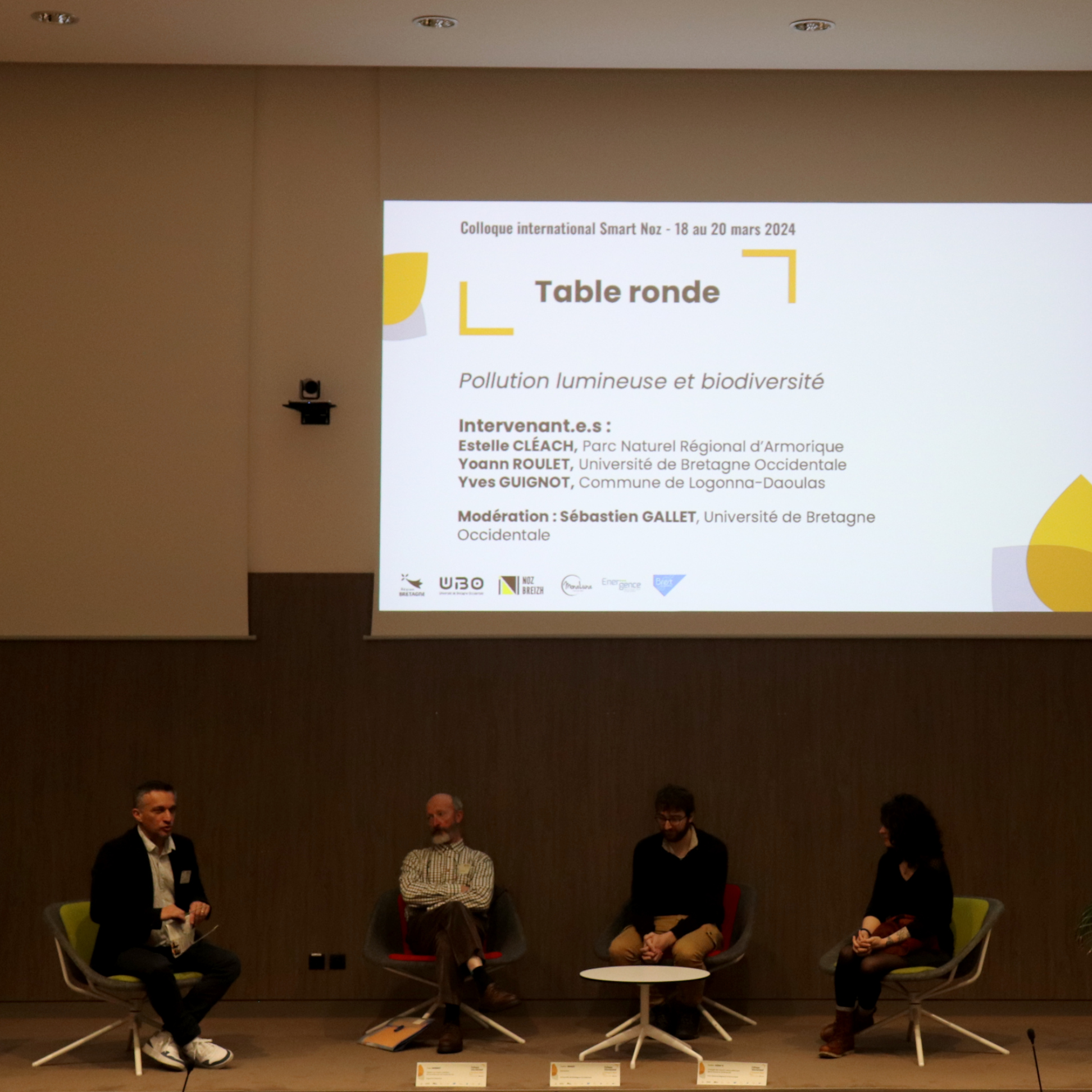
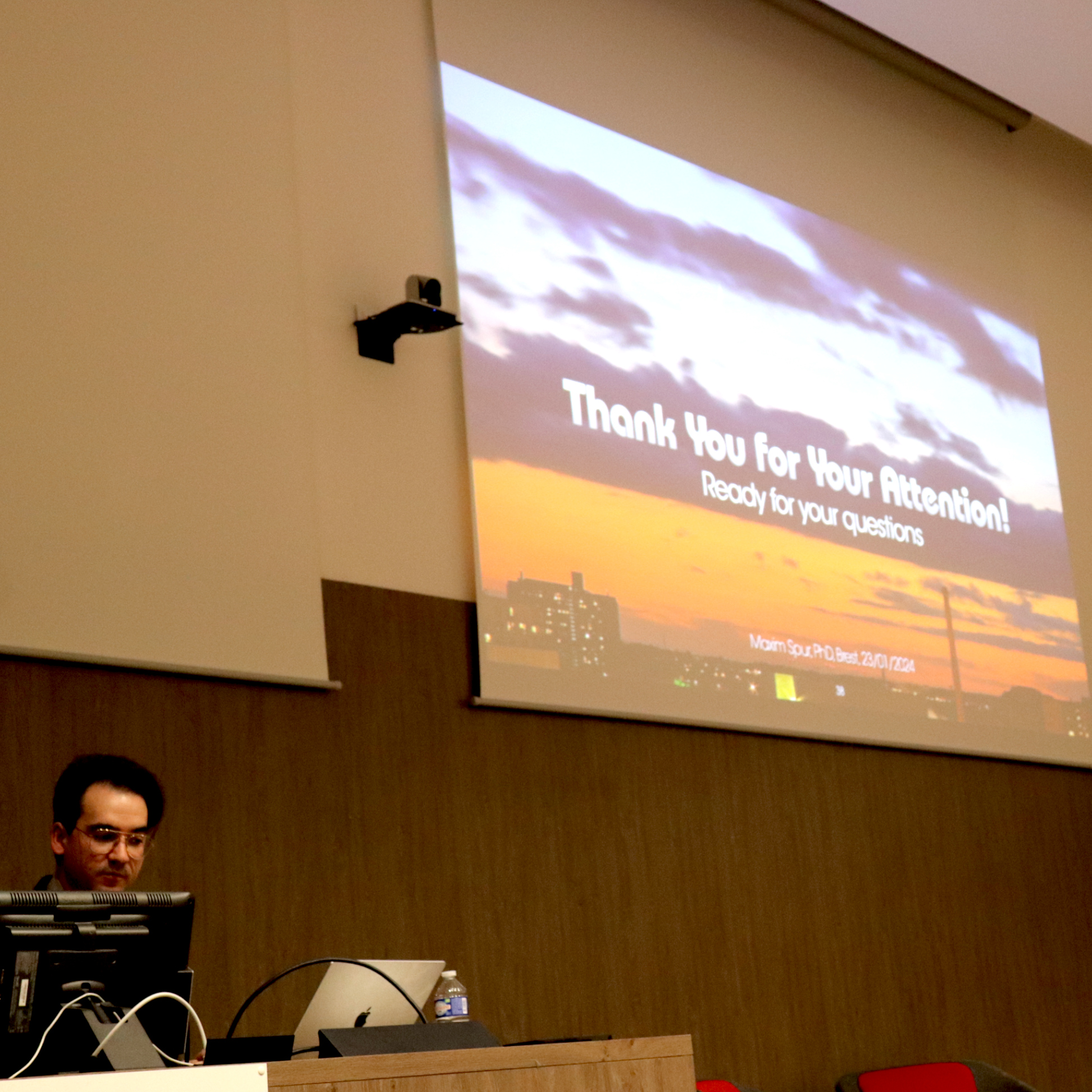
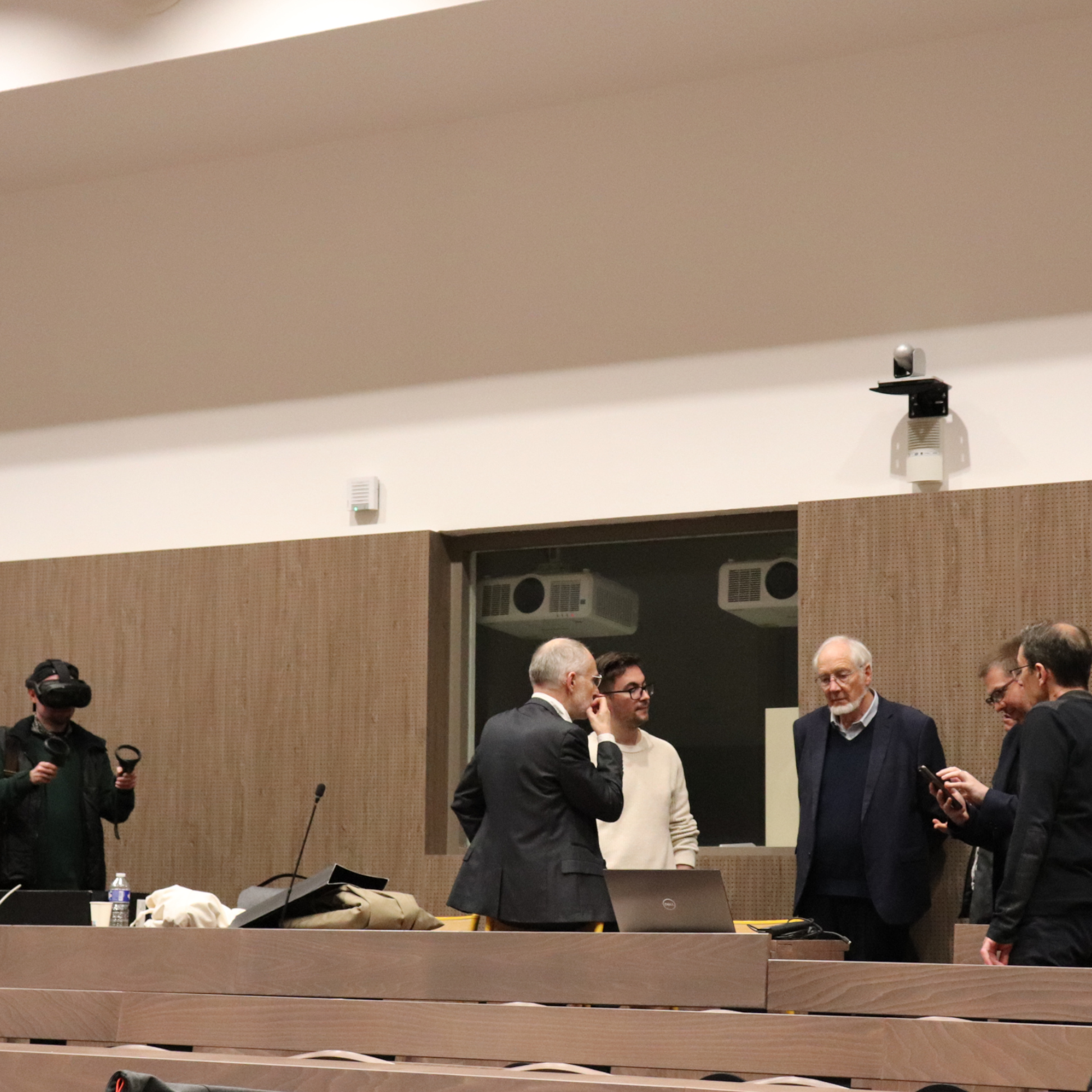
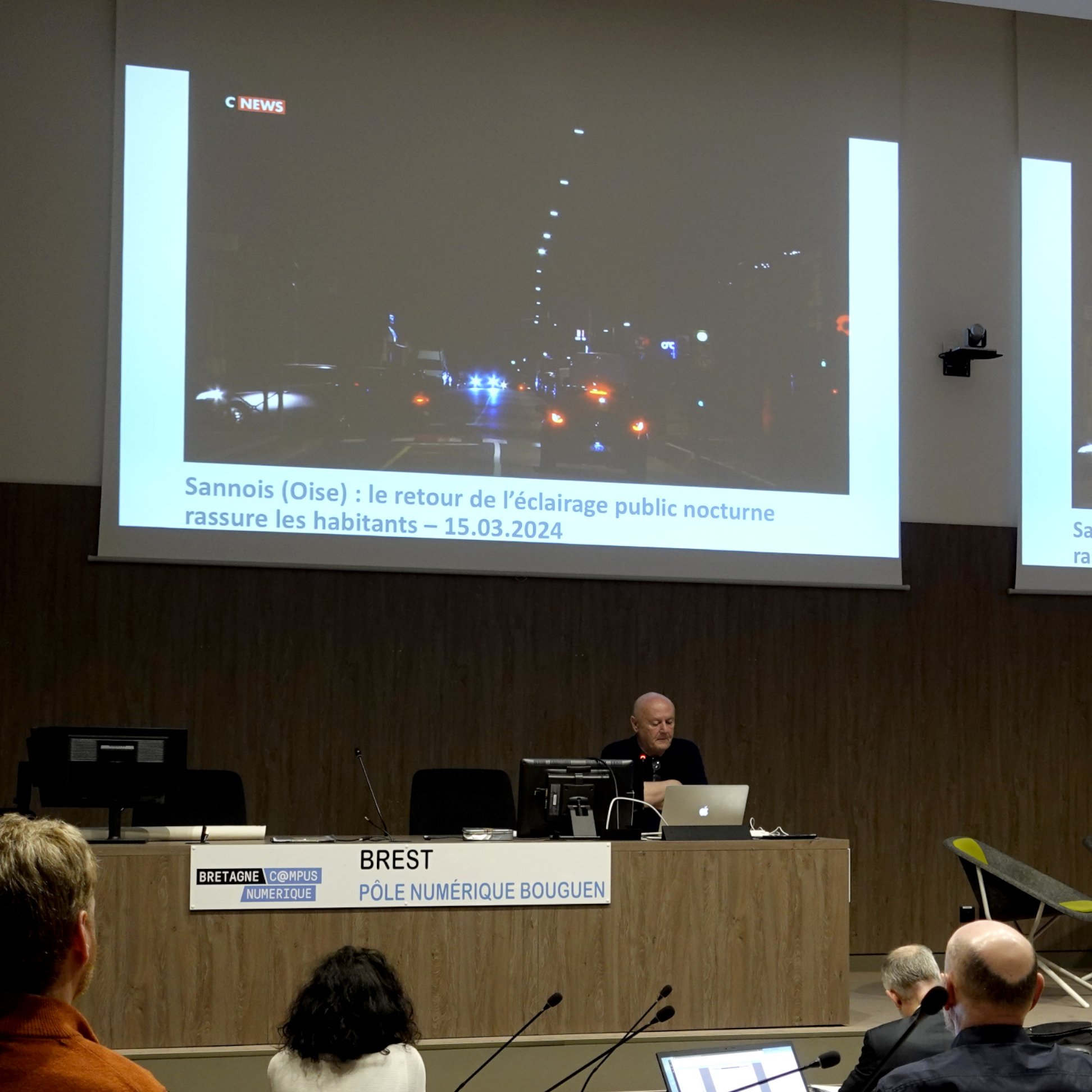
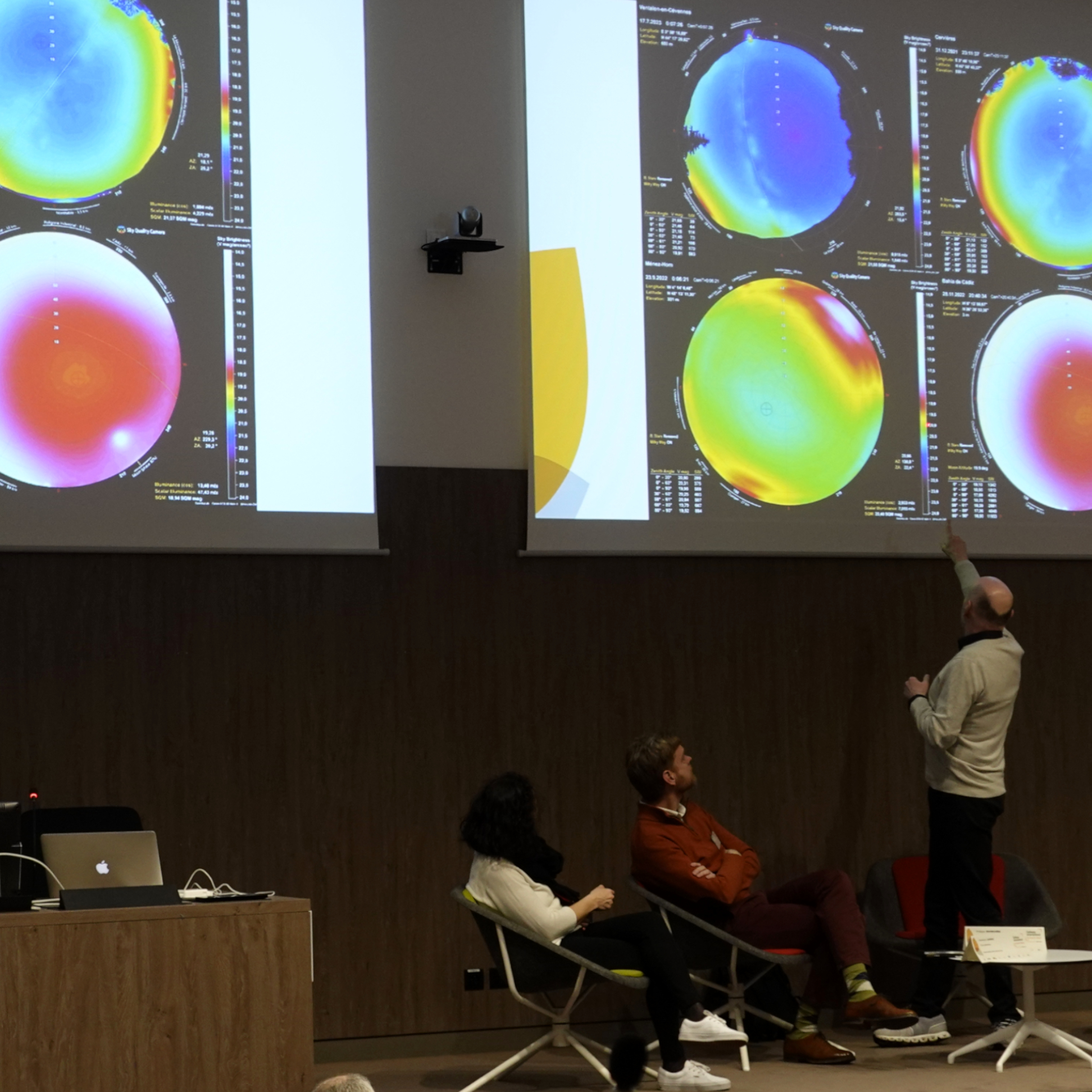
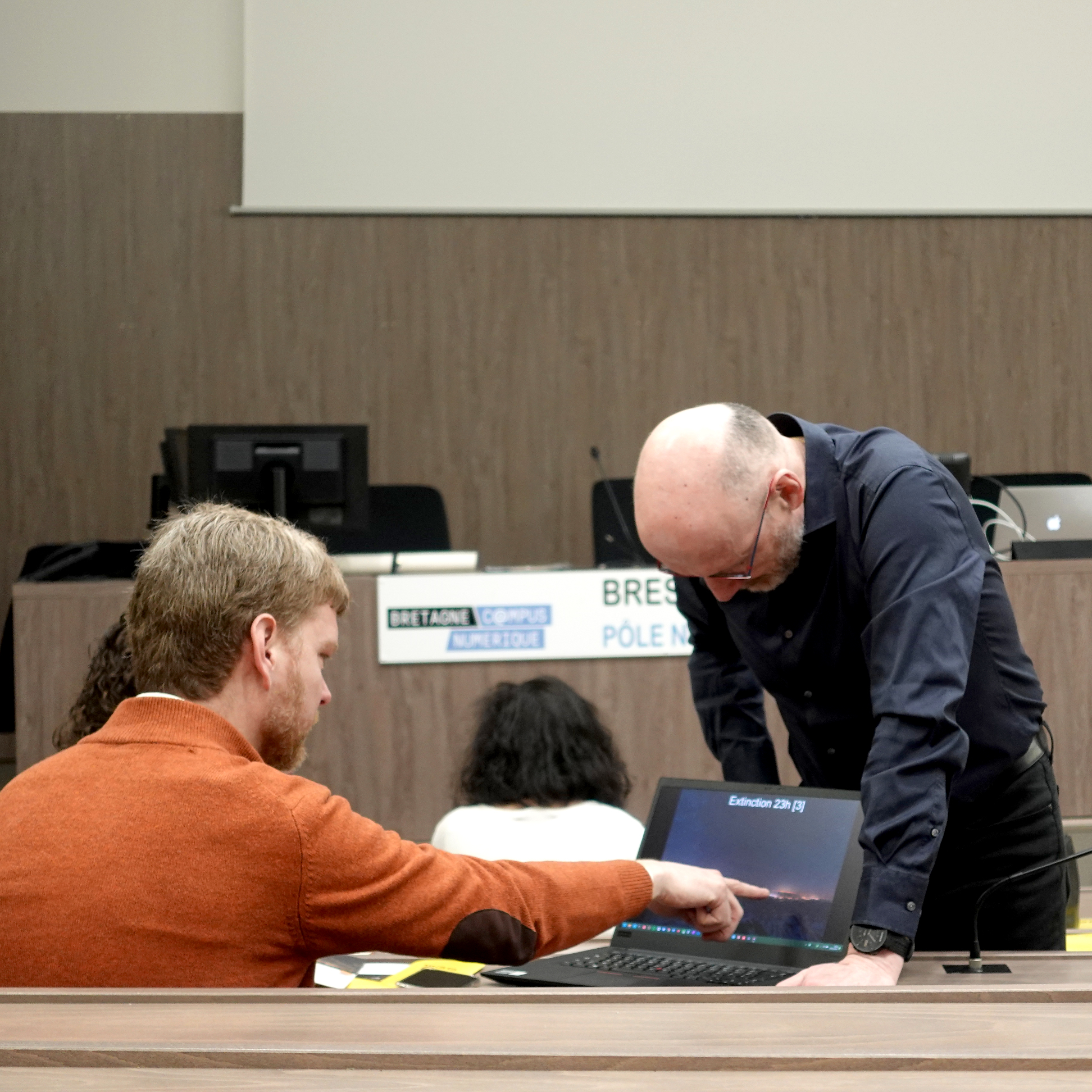
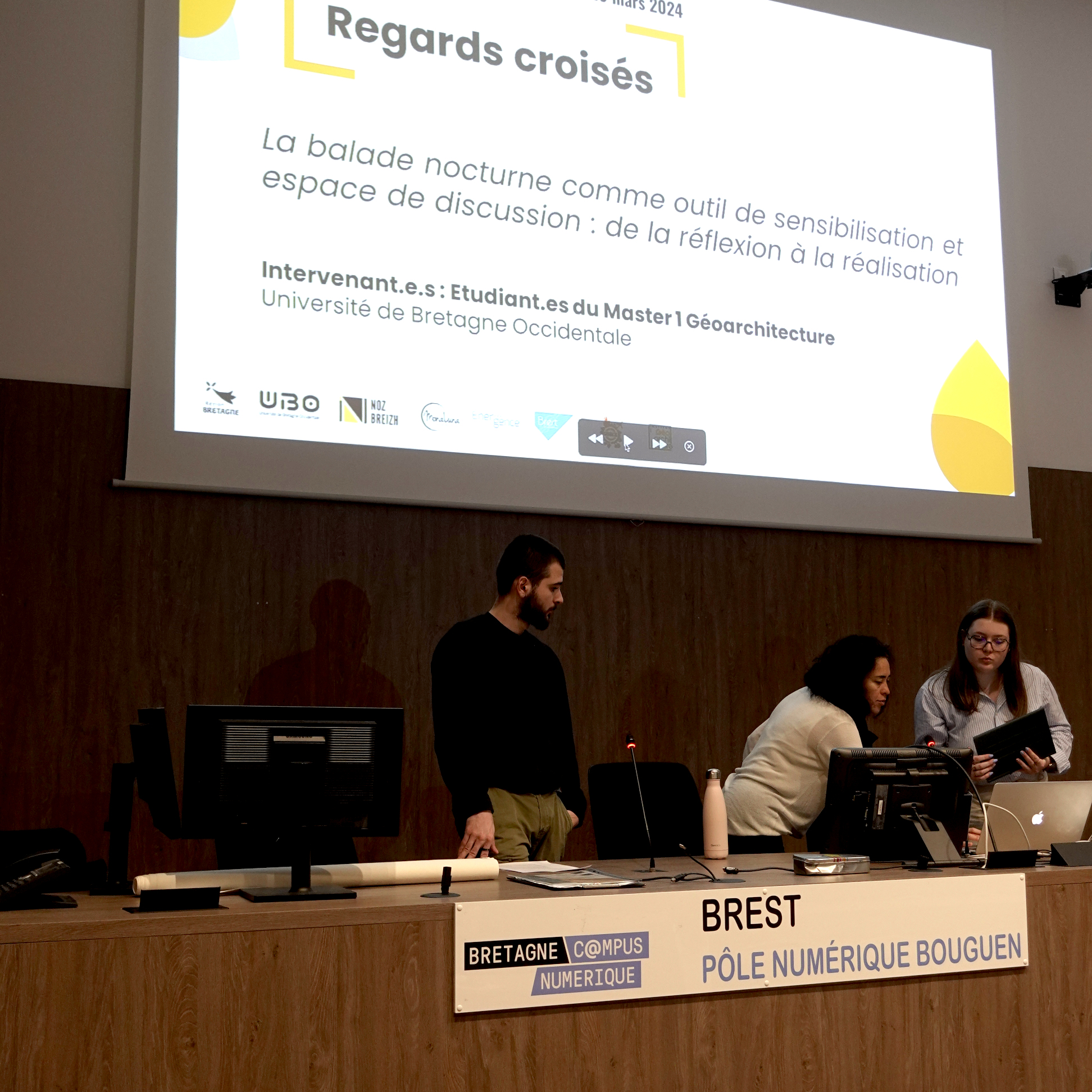
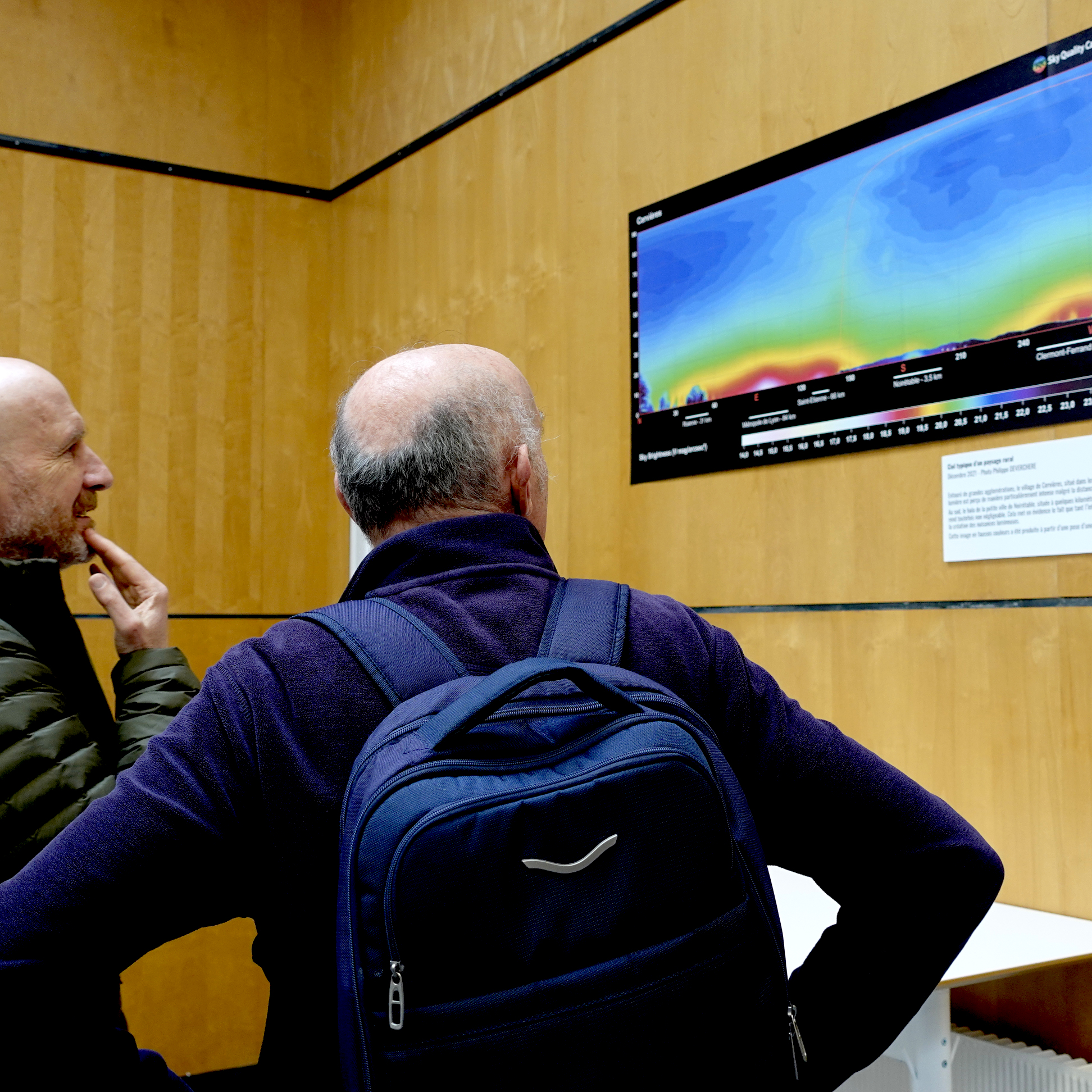
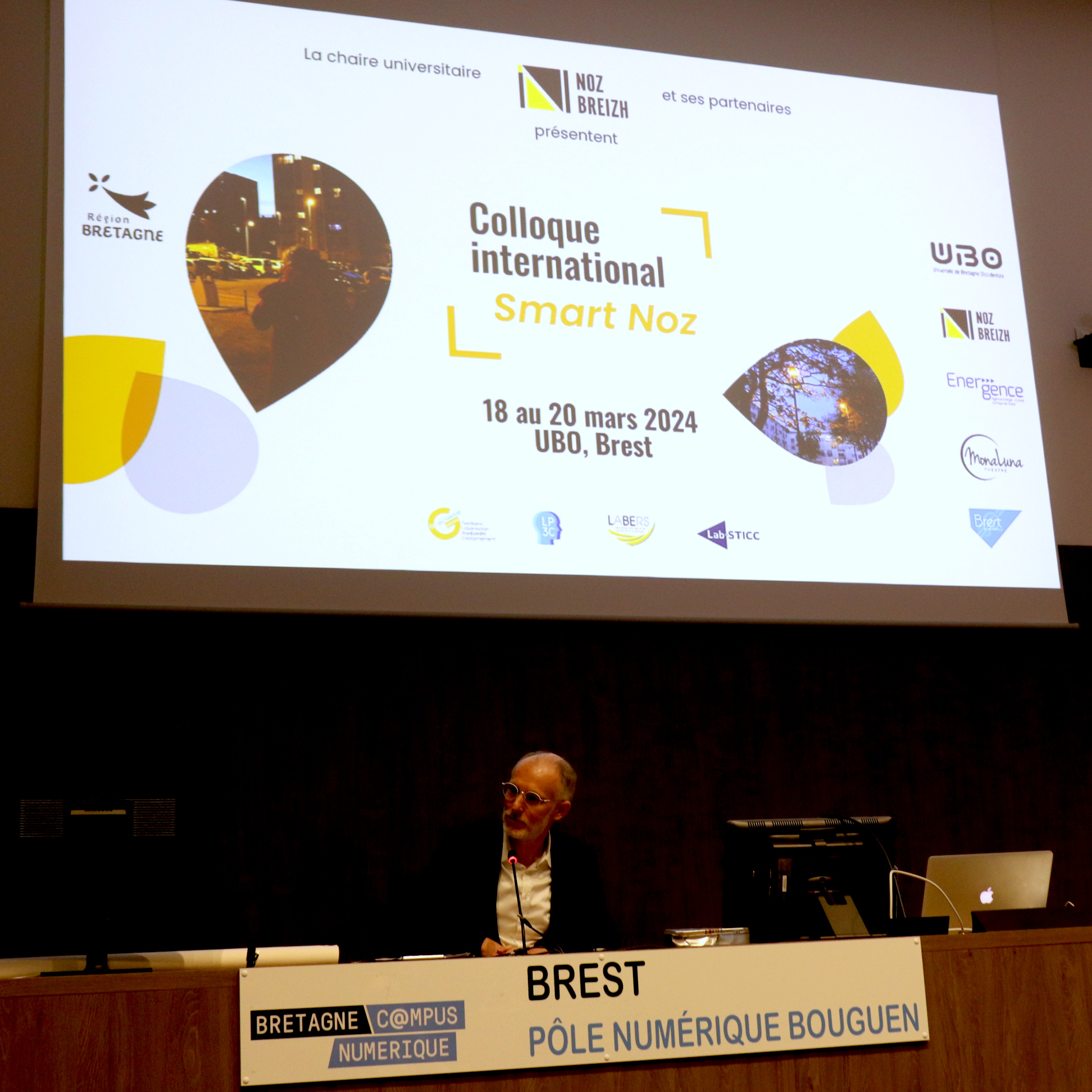

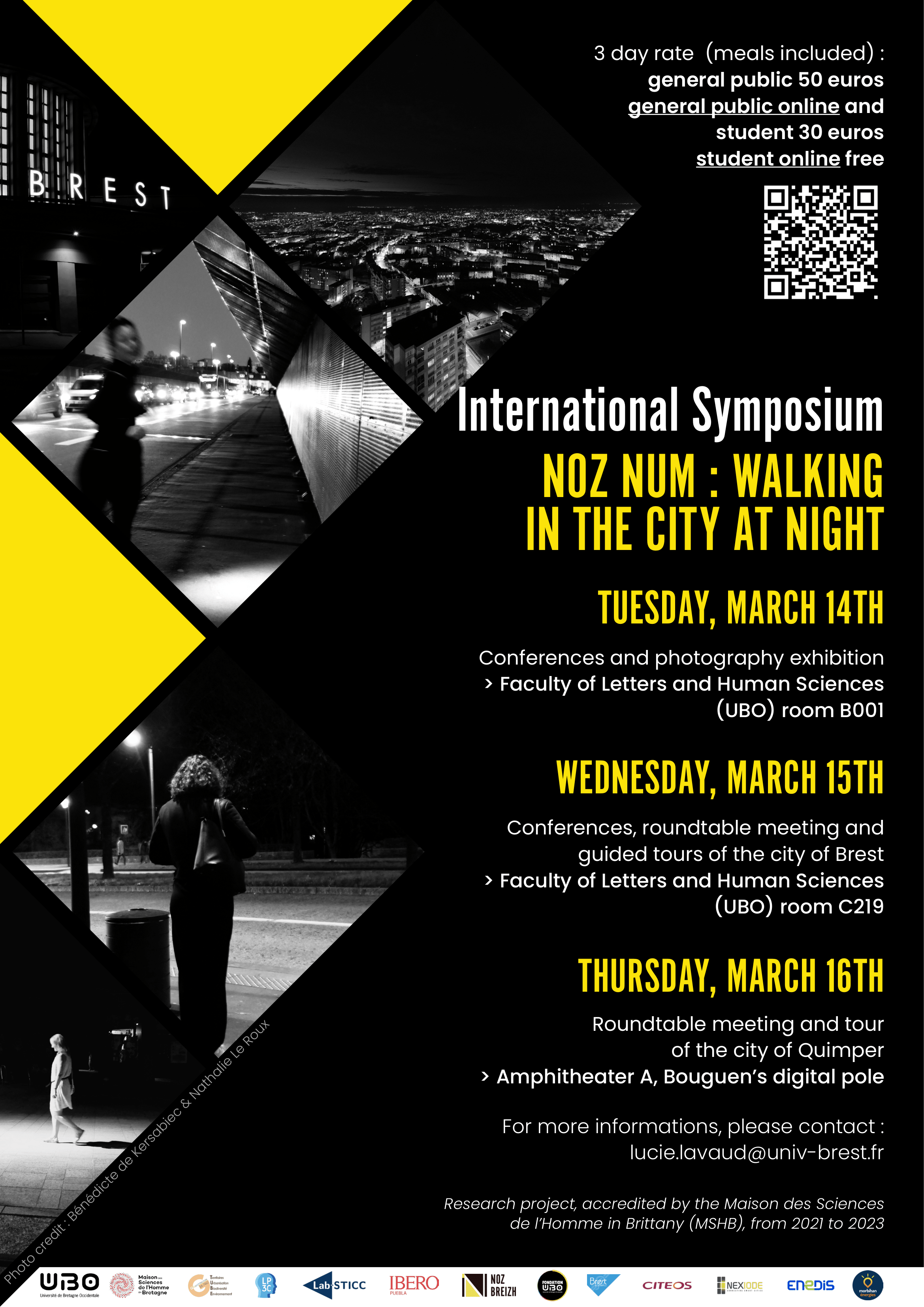
The Noz Num international symposium took place from March 14th to 16th, 2023 at UBO. The main objective was to share the initial results of our exploratory project Noz Num: walking in the city at night, a project accredited by MSHB (2021-2023).
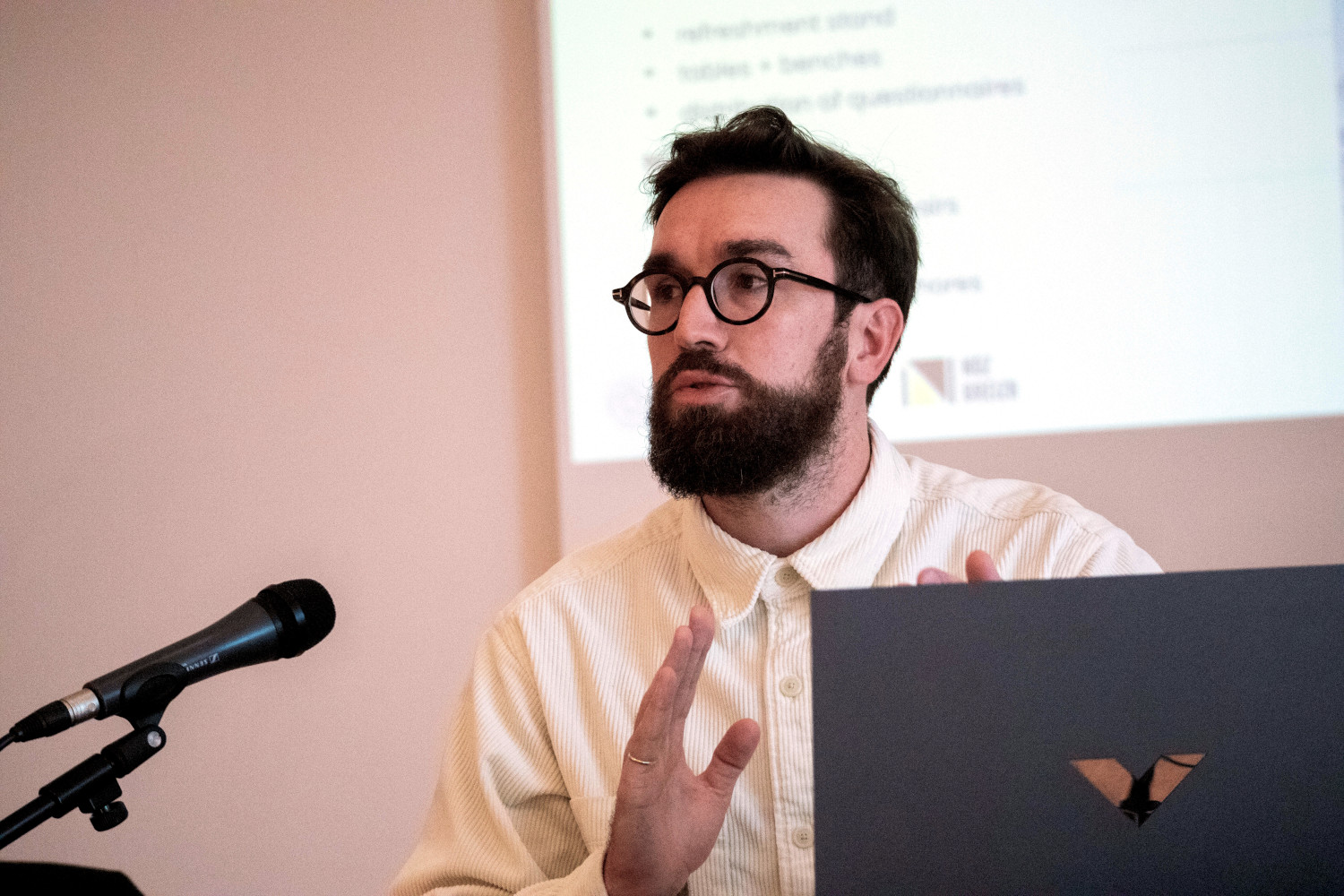
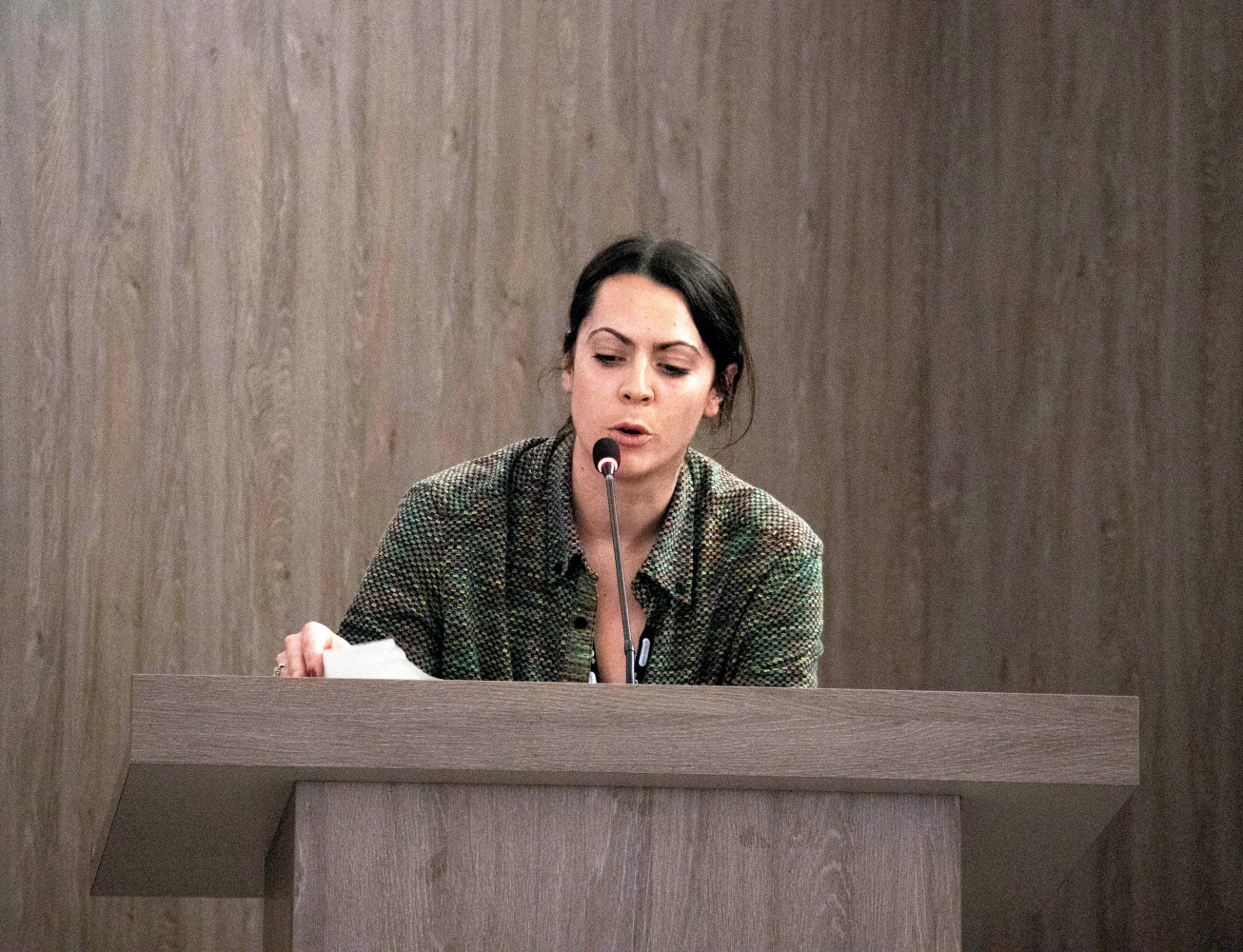
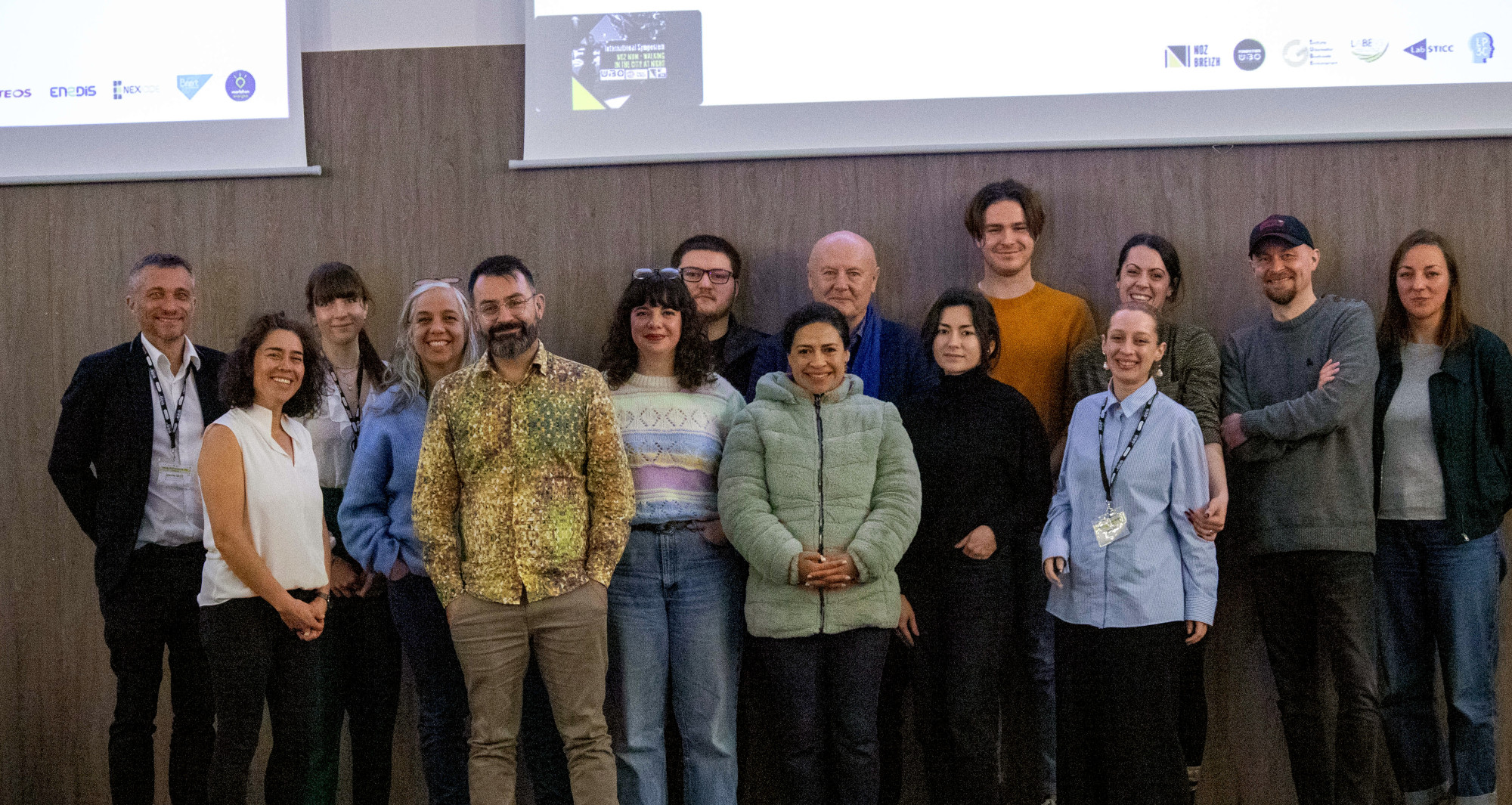
On this occasion, we were delighted to welcome 19 speakers, some of whom travelled from Brazil, Mexico, Canada, Poland and Turkey, as well as a number of participants who were able to follow our exchanges, both in person and remotely.
Our scientific exchanges were enriched by a photographic exhibition entitled "Traverser la nuit". Coordinated by gilda charrier, Senior Lecturer in Sociology at UBO, this exhibition enabled us to establish a dialogue between the data from our fieldwork and the artistic work of two Brest-based photographers: Bénédicte de Kersabiec and Nathalie Le Roux.
Thanks to the host laboratories,
UBO departments
and all our partners
who made this symposium possible!