

The main aim of the IMAGINE team is to develop research and technological innovation from personalized functional imaging to daily-life activity enhancement in patients with Neuro-Musculo-Skeletal (NMS) diseases. The vision that drives us is a scientific continuum to explore and understand the typical and pathological NMS system. We strive to develop new computational imaging tools, such as acquisition protocols, data processing and learning-based methodologies, to improve the diagnosis, treatment and monitoring of NMS diseases. The expected results include automated clinical processes, ranging from data acquisition to diagnosis proposal, which are accurate, robust and explainable to doctors.
A global approach is adopted to investigate command, shape and function relationships, considering the NMS system as an indivisible entity on both physiological and theoretical points of view. This physiological entity integrates the organs of command (brain, spine, nerves, vessels) and the effectors (muscles, bones, cartilage, tendons). All these organs produce the movement of the limbs and posture leading to functional abilities in real daily-life settings (standing, walking, grasping,...)
In 2025, the team broadened its scientific expertise by integrating molecular, cellular, and preclinical approaches, thereby deepening the scope and impact of our research. This expansion will enable the innovative integration of molecular data into multimodal datasets and the development of more biologically relevant preclinical models, enhancing the validity of our disease and therapy studies. The resulting interdisciplinary synergy will accelerate translational applications, such as targeted therapies and predictive biomarkers, while fostering a holistic approach to complex medical challenges and driving advances in both disease understanding and therapeutic innovation.
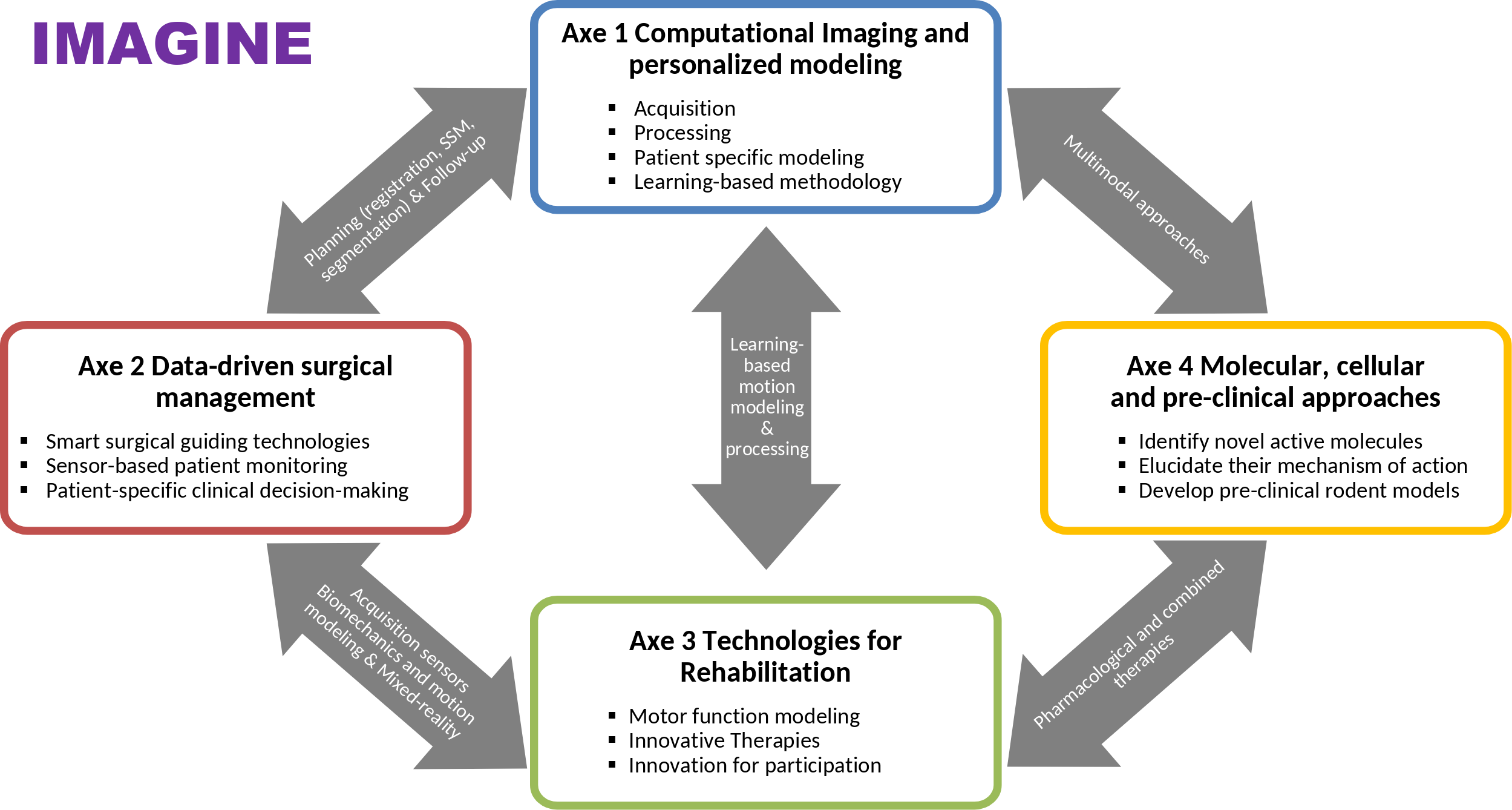
The IMAGINE team is structured on four axes:
- Computational Imaging and functional modelling
- Data-Driven Surgical Management
- Technologies for Rehabilitation, and
- Multimodal approaches for diagnostics and therapeutics.
The links between the axes are either methodological (imaging, computational models and AI, motion analysis) or based on the population/pathology of interest (arthritis, stroke, cerebral palsy, bone deformities, muscular disorders, movement disorders, …).
Each axis is co-led by a pair of scientist, with complimentary backgrounds (physician, engineer, or biologist), guaranteeing a synergistic and efficient approach to translational research.
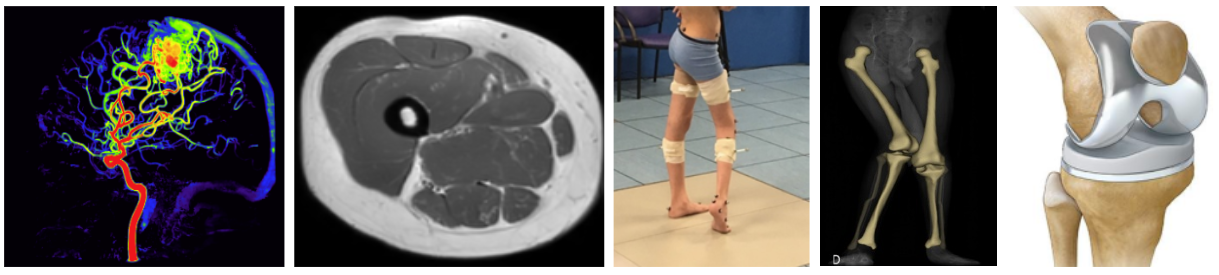
Within the IMAGINE team, this axis has the ambition to cover a complete framework from imaging protocols to a patient specific modelling of the NMS system through data analysis. This axis deals with the development of new computational tools, including machine learning and computational modelling to improve the diagnosis and treatment planning of NMSD.
From a holistic point of view, we aim to address an integrated command/form/function relationship, including several organs as brain, vessels, muscles, tendons, cartilage and bones. Two main clinical applications are targeted:
- Childhood cerebral palsy, where bone/muscle growth is disrupted leading as a consequence to bone deformation and fat infiltration with an impact on body motion.
- Interventional therapies for NMSD, where an efficient recovery may be achieved only through a global management from the diagnosis to post-surgery follow-up.
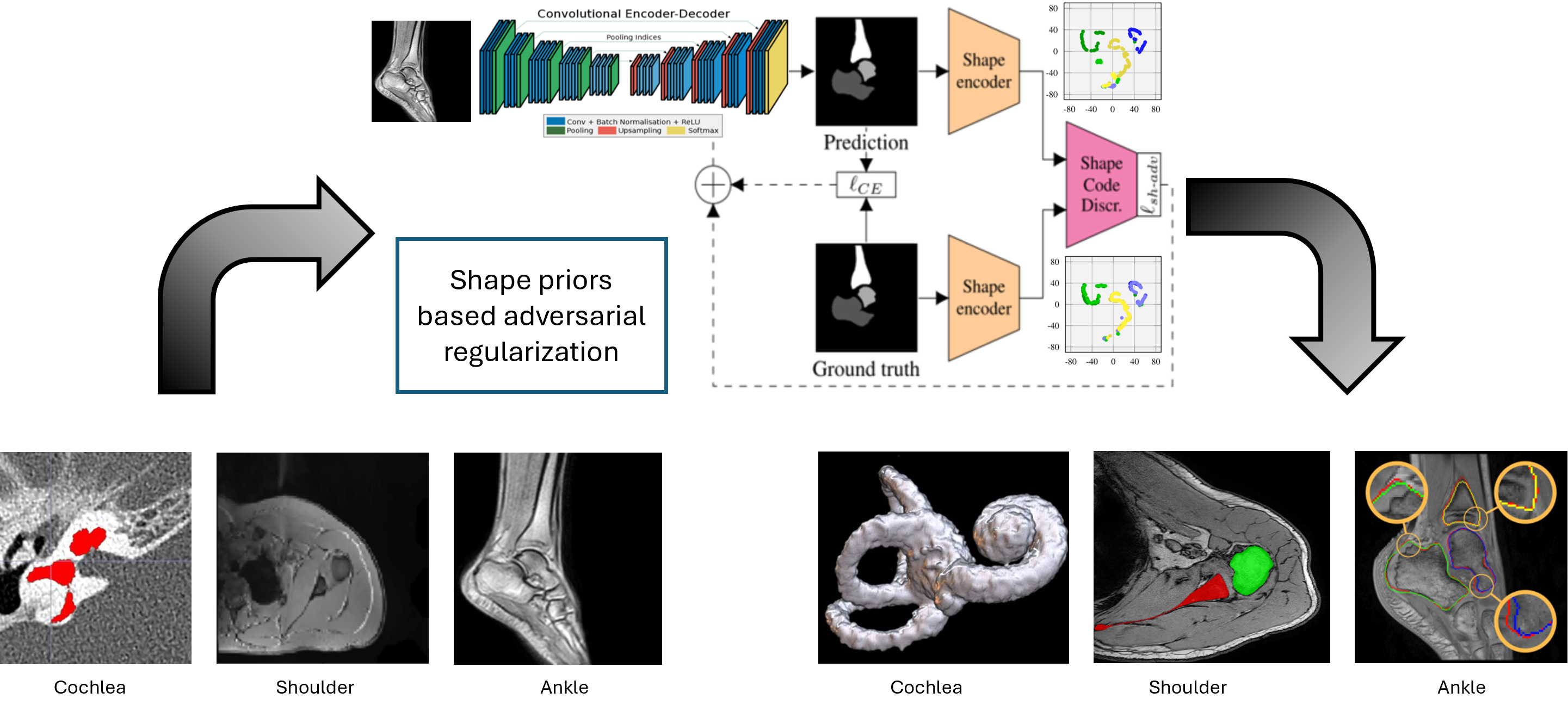
Some projects
- Multi-features class (shape, motion, grey level) model
- Chair AI4Child, “AI for paediatric neurorehabilitation”
- Neurovascular imaging for stroke management
- Project MeGadoRe "Medical Gadolinium Recycling"
Contacts
Valérie Burdin
Douraied Ben Salem
The objective of this axis is to respond to the inevitable changes related to the management of NMS disease patients requiring a surgical intervention. In the future, this management will be more and more global and not exclusively focused on the intervention itself. Because, it is essential to take into account the disease’s continuum from the early phase to the long-term, we want to define here new methodologies allowing the establishment of such new overall patient-centered surgical management for NMS diseases. Solutions and scientific contributions will be thus provided during all the phases of this continuum with
- Pre-operatively, new patient-specific morpho-functional modelling for a personalized surgical decision-making and treatment,
- Intra-operatively, breakthrough intraoperative guiding technologies for an accurate assistance, and
- Post-operatively, innovative sensor-based solutions for the prediction and monitoring of the NMS disease evolution.
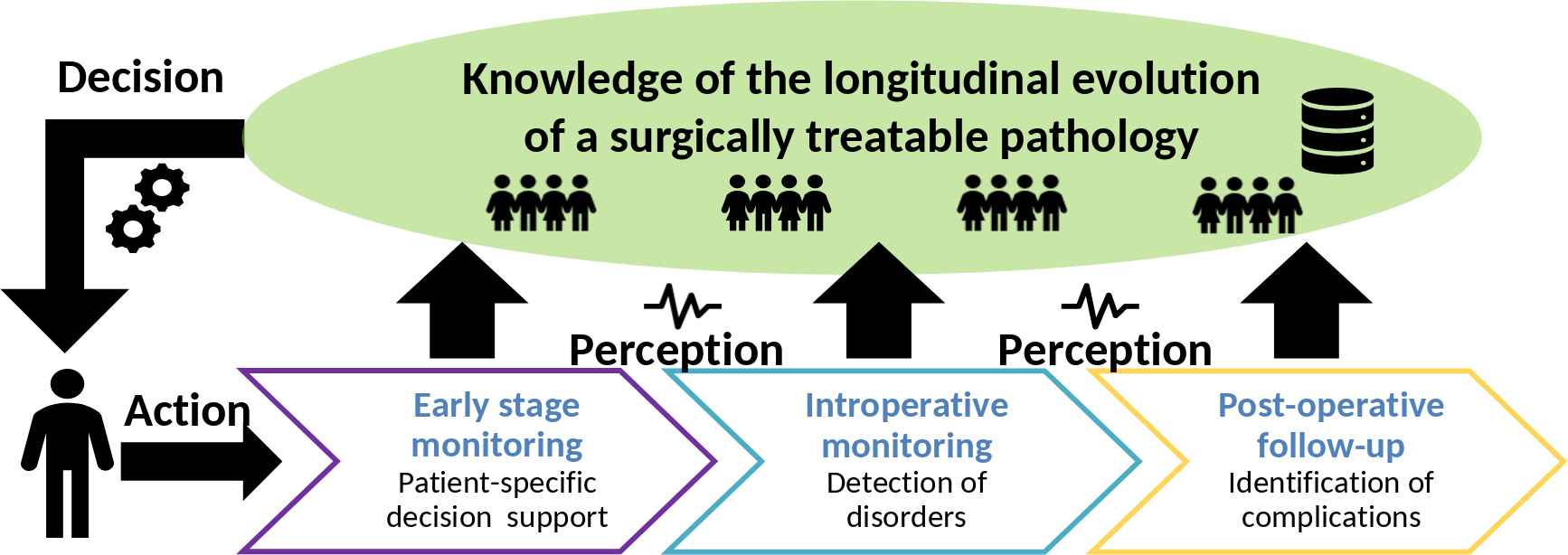
Such a global and personalized surgical management require methods allowing the easy definition of customized surgical strategies, solutions or decisions, given an exhaustive understanding of patient-specific anatomical and functional features. Current surgical interventions only use generic rules, mainly coming from population studies, which are identical whatever the patients but not always adapted for every patients.
We therefore aim to propose patient-specific morpho-functional models, derived from global population features, able to adapt the each patient in order to provide insightful information to drive surgical decision-making.
Some Projects
- Project FollowKnee (ANR RHU), “Improve follow-up in knee surgery”
- Project Rebone (ANR RHU), “Preoperative 3D reconstruction in real time for a better reflection in bone repair and a better precision in fractures reduction using mixed reality and printed-3D model replications to a better patient recovery ”
- Project PERSAPLAN (ANR JCJC), “Personalised Reverse Shoulder Arthroplasty: integrating the patient’s functional and biomechanical characteristics into the Planning"
Contacts
Guillaume Dardenne
Eric Stindel
Children and adults with neurological, muscular and/or skeletal disorders are confronted with a body impairment but also activity limitations and restrictions to social participation as described by the International Classification of Functioning Disability and Health. A person’s health condition affects their daily life and other aspects of their health, as well as the health of their families. Rehabilitation aims to optimize a patient’s self-rated quality of life and degree of social integration through optimizing independence in activities, minimizing pain and distress, and optimizing the ability to adapt and respond to changes in circumstances. It is a problem-solving process, framed in the context of the biopsychosocial model of illness delivered in a person-centred way. One key point in this axis will be to consider the adults and children with disabilities not only as patients in hospital but also in their own environment. The aim of the developments in this axis will be to impact and help rehabilitation management by
- Motor function modelling
- Innovative therapies
- Innovation for participation
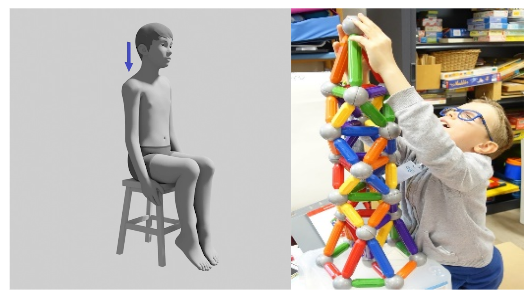
From upstream to downstream of the therapeutic acts, this axis explores and models the neuromusculoskeletal system as a unique entity, based on quantified motion analysis as well as motion models provided by different imaging modalities (MRI, EOS, CT scan, US, optoelectronic systems, electromyography, IMU or force platform). The multimodal function models are then integrated into decision support systems for diagnosis and personalized treatment in patients with motor disorders, to guide the clinical decision and personalise treatments. Finally, the developed tools will be used to evaluate therapeutic and rehabilitation programs, in order to better understand the consequences of innovative treatments and to identify their key ingredients.
Some Projects
- Project PrediMarche
- Project Kaligo+
- Project Deneo KID
Contacts
Mathieu Lempereur
Christelle Pons
This axis integrates multidisciplinary expertise, from characterizing the impact of gene mutations on mouse and human neurodevelopment to engineering cellular models (yeast/mammalian) for disease mechanism studies and pharmacological screening. Identified molecular hits are mechanistically dissected to define cellular targets, informing the rational design of novel therapeutics. Promising candidates are systematically advanced through increasingly complex systems such as organ-specific cell lines, primary neuronal cultures, organotypic brain slices, and in vivo mouse models, to accelerate translational validation.
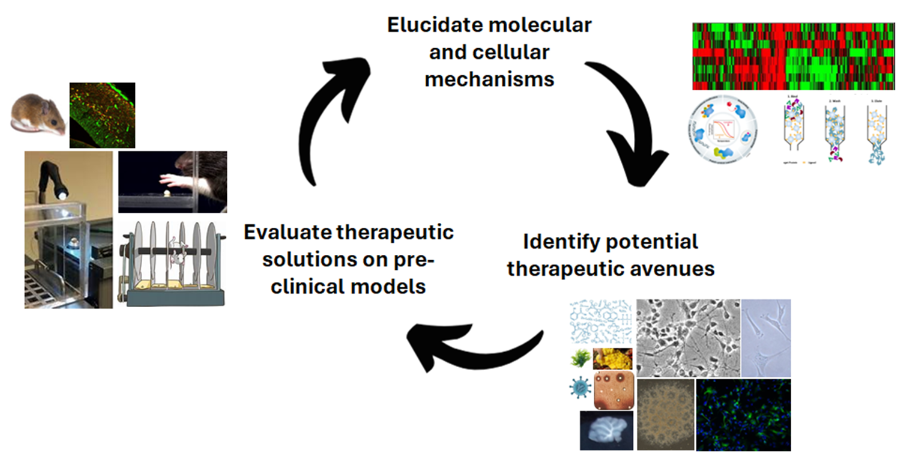
Our research program focuses on neurological and motor disorders, integrating multimodal approaches to decipher the molecular and cellular mechanisms driving these pathologies. Within this framework, the goals of Axis 4 are:
- to identify potential therapeutic avenues,
- to elucidate the molecular and cellular mechanisms underlying some motor disorders, and
- to evaluate therapeutic solutions on pre-clinical models.
Some Projects
- Project PROTEOMAR
- Project AMYLOMED
- Project CBS-iMac
- Project PRARXIS
Contacts
Cécile Voisset
Gaëlle Friocourt